When people disappear often it is with very little trace, the world and the person's family are left wondering what happened to them, where they were and whether they will ever see them again. This was not what happened in the case of Donald Crowhurst.
On October 31st 1968 Crowhurst set out on a great expedition around the world, alone, on a boat as part of the Sunday Times' Golden Globe Competition. On July 10th 1969 his boat was found, unoccupied filled with log books written by Crowhurst describing his entire journey.
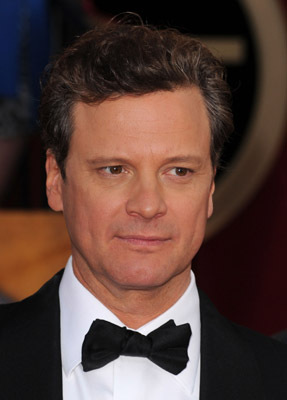
The Mercy is the latest telling of this real story, there having been many books, documentaries, and films made prior to it. Directed by James Marsh, written by Scott Z. Burns and with Colin Firth in the lead role this film tells the tragedy from beginning to end, presenting Crowhurst's experience as well as his wife and children's and the tale being told to the general public by the media. Visually stunning, well acted and tear-jerking, I loved this film for its sincerity and quietness allowing us into the head of a man struggling through crisis.
Firth felt perfectly cast. He brought amazing subtlety to the role, his ability to convey the internal thoughts of the character simply through facial expression and gait shows his phenomenal ability as an actor. He shows the break down of Crowhurst's British 'stiff upper lip' and descent into mental breakdown with constraint and melancholia. This powerful performance bought me to tears, greatly aided by clever slow reveal cinematography and eerie sound design.
And that's something I have to talk about in this film; sound design. An often neglected and unrecognised art this film used sound and silence phenomenally. It created suspense, fear and empathy; as the film progressed both the sound and silence became deafening, adding immensely to our understanding of Crowhurst's mental state. Until this film I never new how maddening simply the sound of a pencil rolling back and forth across a table could be.
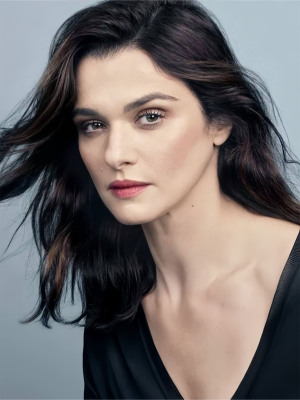
If I have one gripe about this film it must be this; we have yet another example of the female lead feeling under-developed and two dimensional. Although Rachel Weisz's performance as Claire Crowhurst, Donald's wife, was emotional and, too an extent, felt realistic, she looked as if she'd been plucked off a 50's fashion magazine titled 'The housewife'. This is not a criticism of Weisz as an actress but more in the direction and writing. She felt like a cartoon-ish, cardboard cut out of a woman; dressed fashionably, young and beautiful and glossy. She did not feel like the wife of a failing business owner. Personally I feel the film should've spent more time on her developing her emotional depth and character arch making the story about the entire family, or they should've had even less of her, focusing solely on Crowhurst himself. It generally felt as if they couldn't decide if Claire (and a few other of the people back on land) were main characters, supporting roles or extras, so their balance of screen time was wrong.
Despite this, one of my favourite things about this film is it's beautiful sense of reality in Crowhurst himself. There is too often in all films, but significantly in biopics or the beloved based-on-a-true-story films, a tendency to paint characters as all hero or all villain. Here however Firth portrays Crowhurst as a real man; loving, over-ambitious, determined and deeply flawed but not malicious, not conniving. A director could've chosen to paint this man, this non-fictitious man, it the light or good or evil but no. Marsh chose real. And with such a sensitive story to portray this felt the most appropriate voice to give the sailor and his family. He was a real man, struggling with his sense of self, put in the face of an adversity that he could not escape. He did not succeed and win the day, he did not purposely deceive them all as part of a horrible plot, he simply.. broke. And this film showed that amazingly well.


 لامحدود فلمیں اور شوز دیکھیں
 اپنا پسندیدہ مواد ڈاؤن لوڈ کریں اور آف لائن دیکھیں
 آسان انٹرفیس اور ہموار کارکردگی





'%3e%3cpath%20id='Vector'%20d='M17.3996%2025.7999C17.3996%2025.9838%2017.3634%2026.1658%2017.293%2026.3357C17.2227%2026.5055%2017.1196%2026.6598%2016.9896%2026.7899C16.8596%2026.9199%2016.7052%2027.023%2016.5354%2027.0933C16.3655%2027.1637%2016.1835%2027.1999%2015.9996%2027.1999C15.8158%2027.1999%2015.6337%2027.1637%2015.4639%2027.0933C15.294%2027.023%2015.1397%2026.9199%2015.0097%2026.7899C14.8797%2026.6598%2014.7765%2026.5055%2014.7062%2026.3357C14.6358%2026.1658%2014.5996%2025.9838%2014.5996%2025.7999C14.5996%2025.4286%2014.7471%2025.0725%2015.0097%2024.81C15.2722%2024.5474%2015.6283%2024.3999%2015.9996%2024.3999C16.3709%2024.3999%2016.727%2024.5474%2016.9896%2024.81C17.2521%2025.0725%2017.3996%2025.4286%2017.3996%2025.7999Z'%20fill='white'/%3e%3cpath%20id='Union'%20fill-rule='evenodd'%20clip-rule='evenodd'%20d='M8.5%204H23.5C24.0523%204%2024.5%204.44772%2024.5%205V21.5H7.5V5C7.5%204.44772%207.94772%204%208.5%204ZM5.5%2022.5V5C5.5%203.34315%206.84315%202%208.5%202H23.5C25.1569%202%2026.5%203.34315%2026.5%205V22.5V27C26.5%2028.6569%2025.1569%2030%2023.5%2030H8.5C6.84315%2030%205.5%2028.6569%205.5%2027V22.5ZM24.5%2023.5V27C24.5%2027.5523%2024.0523%2028%2023.5%2028H8.5C7.94772%2028%207.5%2027.5523%207.5%2027V23.5H24.5Z'%20fill='white'/%3e%3cpath%20id='Union_2'%20fill-rule='evenodd'%20clip-rule='evenodd'%20d='M17%209C17%208.44772%2016.5523%208%2016%208C15.4477%208%2015%208.44772%2015%209V13.8258L13.1508%2012.2407C12.7315%2011.8813%2012.1002%2011.9299%2011.7408%2012.3492C11.3813%2012.7685%2011.4299%2013.3998%2011.8492%2013.7593L15.345%2016.7556C15.5205%2016.9079%2015.7495%2017%2016%2017C16.2506%2017%2016.4796%2016.9079%2016.6551%2016.7556L20.1508%2013.7593C20.5701%2013.3998%2020.6187%2012.7685%2020.2593%2012.3492C19.8999%2011.9299%2019.2686%2011.8813%2018.8492%2012.2407L17%2013.8258V9Z'%20fill='white'/%3e%3c/g%3e%3c/svg%3e)