Poor Lars von Trier. Why do people hate you so? Perhaps it is because you have come into existence so late in the chronology of film history. I personally do not believe that the filmic art has died or even weakened. It is as strong as ever right now. Every decade has its masterpieces. The only difference between them is that in a few decades the great films all contain similar themes via the tempora and mores. People will tell you that the worst dry spell for film was the 1980s, and a lot of people in the near future will carry this over into the 1990s. It is total bunk, untrue. There was just no dominant theme.
The actual reason, though, why people refuse to notice the masterpieces of the last two decades is not because there either were none or that there was no dominant theme. It is because the definitions of greatness have changed amongst the critics. They have grown bitter, and refuse to pay attention, ready at the drop of a hat to come up with a really creative phrase in their criticism or to use one of their favorite words, "overwrought," "pretentious," "self-indulgent."
I think the word "overwrought" perfectly describes Citizen Kane, though I will be the first to call it one of the greatest films ever made. Orson Welles is almost hubristic in the techniques he uses to make the film. All the words listed above could probably be used to describe that film. These words all have a common synonym not found in Roget's: "original."
Critics today are so cynical, they refuse to admit anything original into their intellects. Here fits all the works of Lars von Trier. Previous to The Element of Crime, I had seen his three latest films, all Dogmaesque (Dogma 95, of course, authored by Trier; only one of his films, The Idiots, was actually made under the banner of Dogma 95. Breaking the Waves was its immediate precursor and Dancer in the Dark, made right after The Idiots, is the immediate next step in the director's evolution). These films were made with a certain "vow of chastity" that gave them an emotional immediacy like no other films I've ever seen. Breaking the Waves is Trier's only enormous hit in the USA. Even though there are many people who do see an enormously sexist view behind it, most people were deeply affected by it. I am included here, as it was the first film of his that I saw. I cried my eyes out for about the final hour of that film. Many people find Dancer in the Dark similar in power, but there is a much louder criticism and hatred for this film. It seems less complex than Breaking the Waves, and the sexism which was accused in Breaking can be seen much more clearly here, or at least that is what the critics claim. Me, again, I found it utterly powerful. And then there is the Idiots, which must be the most misunderstood film made. It is almost universally hated. Barely released in the US, it is apparently not going to be released on DVD (those creeps). Me? Well, I love it and feel sorry for its director, who just happens to be the genius whom he claims to be so often.
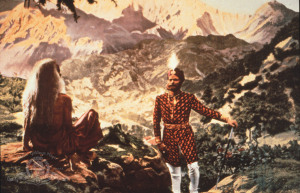
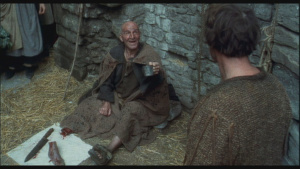
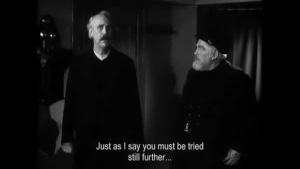
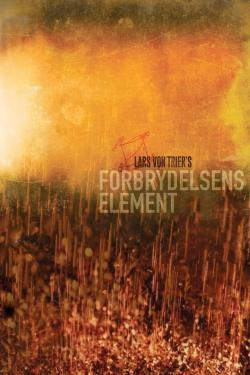
Now I finally get to journey back to his pre-Dogmaesque films with Element of Crime. I've already wasted most of my space on a rather useless diatribe, but I'd just like to say, as part of the genre of the apocalyptic future, it is better than Brazil, Blade Runner, and even A Clockwork Orange. It is the complete opposite of the Dogmaesque films. Whereas they are an exploration of emotion, this film, and I assume the other pre-Dogmaesque films, is an exploration of the intellect. It relies on its sly style more than on its content, where the Dogmaesque films are the opposite. There is hardly a better film in terms of artistry of composition. Only Sejun Sezuki's Branded to Kill matches it in pure audacity. I say, if you are wondering whether you should buy this film (on DVD, Criterion) just to see it, YES. DO IT. It is well worth your money. 10/10


 لامحدود فلمیں اور شوز دیکھیں
 اپنا پسندیدہ مواد ڈاؤن لوڈ کریں اور آف لائن دیکھیں
 آسان انٹرفیس اور ہموار کارکردگی






















'%3e%3cpath%20id='Vector'%20d='M17.3996%2025.7999C17.3996%2025.9838%2017.3634%2026.1658%2017.293%2026.3357C17.2227%2026.5055%2017.1196%2026.6598%2016.9896%2026.7899C16.8596%2026.9199%2016.7052%2027.023%2016.5354%2027.0933C16.3655%2027.1637%2016.1835%2027.1999%2015.9996%2027.1999C15.8158%2027.1999%2015.6337%2027.1637%2015.4639%2027.0933C15.294%2027.023%2015.1397%2026.9199%2015.0097%2026.7899C14.8797%2026.6598%2014.7765%2026.5055%2014.7062%2026.3357C14.6358%2026.1658%2014.5996%2025.9838%2014.5996%2025.7999C14.5996%2025.4286%2014.7471%2025.0725%2015.0097%2024.81C15.2722%2024.5474%2015.6283%2024.3999%2015.9996%2024.3999C16.3709%2024.3999%2016.727%2024.5474%2016.9896%2024.81C17.2521%2025.0725%2017.3996%2025.4286%2017.3996%2025.7999Z'%20fill='white'/%3e%3cpath%20id='Union'%20fill-rule='evenodd'%20clip-rule='evenodd'%20d='M8.5%204H23.5C24.0523%204%2024.5%204.44772%2024.5%205V21.5H7.5V5C7.5%204.44772%207.94772%204%208.5%204ZM5.5%2022.5V5C5.5%203.34315%206.84315%202%208.5%202H23.5C25.1569%202%2026.5%203.34315%2026.5%205V22.5V27C26.5%2028.6569%2025.1569%2030%2023.5%2030H8.5C6.84315%2030%205.5%2028.6569%205.5%2027V22.5ZM24.5%2023.5V27C24.5%2027.5523%2024.0523%2028%2023.5%2028H8.5C7.94772%2028%207.5%2027.5523%207.5%2027V23.5H24.5Z'%20fill='white'/%3e%3cpath%20id='Union_2'%20fill-rule='evenodd'%20clip-rule='evenodd'%20d='M17%209C17%208.44772%2016.5523%208%2016%208C15.4477%208%2015%208.44772%2015%209V13.8258L13.1508%2012.2407C12.7315%2011.8813%2012.1002%2011.9299%2011.7408%2012.3492C11.3813%2012.7685%2011.4299%2013.3998%2011.8492%2013.7593L15.345%2016.7556C15.5205%2016.9079%2015.7495%2017%2016%2017C16.2506%2017%2016.4796%2016.9079%2016.6551%2016.7556L20.1508%2013.7593C20.5701%2013.3998%2020.6187%2012.7685%2020.2593%2012.3492C19.8999%2011.9299%2019.2686%2011.8813%2018.8492%2012.2407L17%2013.8258V9Z'%20fill='white'/%3e%3c/g%3e%3c/svg%3e)