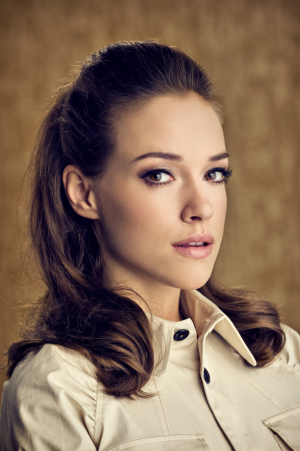
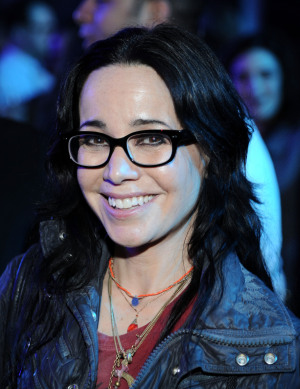
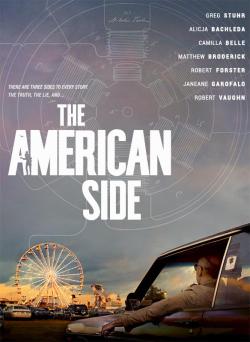
The American Side Noir films are famous for their convoluted story lines. Noir fans love to find themselves in a labyrinthine maze of characters and sub-plots that seem to have no exit but a very, very dark one. There are plenty of classics that come to mind, but there are only two new films that measure up: 2005's Brick (dir. Rian Johnson) and 2016's The American Side (dir. Jenna Ricker, who also co-wrote it). Both of these films are self-aware of their own participation in the genre, so they may appropriately be called "meta noir." But whereas Brick seems to make its teenage characters awkwardly fit the noir archetypes, The American Side is more interested in testing noir archetypes against both a sense of place (Buffalo, Niagara Falls) and American history—really, a micro history of Buffalo's relationship with Nikola Tesla, the Serbian inventor who lit up the city using the kinetic energy of the falls. Buffalo plays a central role in the story, and it's a city that, like much of noir, gives us a Gothic sense of the past living in tandem with the present. For instance, protagonist Charlie Paszynski (Greg Stuhr, who co-wrote it as well) is a detective who seeks answers concerning a mysterious invention of Tesla's, and for a while you think the film takes place in the 1970s, alluding to conspiracy thrillers like All the President's Men. But then you see someone driving a car that can only be from the 2000s. These intentional anachronisms play into the classic noir sense of "space inheriting time"—that is, the spaces in which noir characters inhabit (dim offices, bars, grain elevators—it's Buffalo, NY, after all) say a lot about how characters feel and think. It's part of the expressionist movement that made its way into noir cinema. As you watch The American Side, you get the sense that you can read the motives people have, despite their best efforts to present a poker face. As you might guess, a half-dozen or more personages have some as yet unspecified relationship to Tesla's mysterious invention: a billionaire played by Matthew Broderick, a physics professor played by Grant Shaud, and at least four women who, taken together, both echo and defy how women in noir films seek and gain agency in a world of powerful men. Emily Chase is perhaps the classic femme fatale counterpart to Stuhr's private eye archetype, but don't expect some pat betrayal you might find in Double Indemnity or The Postman Always Rings Twice. Just when the hard-boiled dialogue is about to spill over, FBI agent Janeane Garafolo, prodigy scientist Nikki Meeker, or con-artist Kelsey Siepser are there to double down and ratchet up the suspense. With danger always around the corner, but Tesla's invention just out of Charlie's grasp (does it even exist?), the casual viewer will get lost in the maze just as so many have tried--and failed--to understand both Tesla the man and his inventions. Thus the plot echoes noir viewership: Don't be that casual viewer. Pay attention, take notes, and be rewarded for your own diligent sleuthing. I think there is a reason why The American Side stands out among thrillers: too often the violence is showy. Not so with Ricker's expert direction: I found one particular scene—let's just say it involves a lot of chasing and shooting—to fall much more in line with the way 40s noir films use violence to propel the narrative forward, even if studio heads used it to titillate and sensationalize. William Faulkner once professes having trouble figuring out who killed a key character in Chandler's The Big Sleep. Not even Chandler could say for sure. Now that's a story worth watching.


 لامحدود فلمیں اور شوز دیکھیں
 اپنا پسندیدہ مواد ڈاؤن لوڈ کریں اور آف لائن دیکھیں
 آسان انٹرفیس اور ہموار کارکردگی






















'%3e%3cpath%20id='Vector'%20d='M17.3996%2025.7999C17.3996%2025.9838%2017.3634%2026.1658%2017.293%2026.3357C17.2227%2026.5055%2017.1196%2026.6598%2016.9896%2026.7899C16.8596%2026.9199%2016.7052%2027.023%2016.5354%2027.0933C16.3655%2027.1637%2016.1835%2027.1999%2015.9996%2027.1999C15.8158%2027.1999%2015.6337%2027.1637%2015.4639%2027.0933C15.294%2027.023%2015.1397%2026.9199%2015.0097%2026.7899C14.8797%2026.6598%2014.7765%2026.5055%2014.7062%2026.3357C14.6358%2026.1658%2014.5996%2025.9838%2014.5996%2025.7999C14.5996%2025.4286%2014.7471%2025.0725%2015.0097%2024.81C15.2722%2024.5474%2015.6283%2024.3999%2015.9996%2024.3999C16.3709%2024.3999%2016.727%2024.5474%2016.9896%2024.81C17.2521%2025.0725%2017.3996%2025.4286%2017.3996%2025.7999Z'%20fill='white'/%3e%3cpath%20id='Union'%20fill-rule='evenodd'%20clip-rule='evenodd'%20d='M8.5%204H23.5C24.0523%204%2024.5%204.44772%2024.5%205V21.5H7.5V5C7.5%204.44772%207.94772%204%208.5%204ZM5.5%2022.5V5C5.5%203.34315%206.84315%202%208.5%202H23.5C25.1569%202%2026.5%203.34315%2026.5%205V22.5V27C26.5%2028.6569%2025.1569%2030%2023.5%2030H8.5C6.84315%2030%205.5%2028.6569%205.5%2027V22.5ZM24.5%2023.5V27C24.5%2027.5523%2024.0523%2028%2023.5%2028H8.5C7.94772%2028%207.5%2027.5523%207.5%2027V23.5H24.5Z'%20fill='white'/%3e%3cpath%20id='Union_2'%20fill-rule='evenodd'%20clip-rule='evenodd'%20d='M17%209C17%208.44772%2016.5523%208%2016%208C15.4477%208%2015%208.44772%2015%209V13.8258L13.1508%2012.2407C12.7315%2011.8813%2012.1002%2011.9299%2011.7408%2012.3492C11.3813%2012.7685%2011.4299%2013.3998%2011.8492%2013.7593L15.345%2016.7556C15.5205%2016.9079%2015.7495%2017%2016%2017C16.2506%2017%2016.4796%2016.9079%2016.6551%2016.7556L20.1508%2013.7593C20.5701%2013.3998%2020.6187%2012.7685%2020.2593%2012.3492C19.8999%2011.9299%2019.2686%2011.8813%2018.8492%2012.2407L17%2013.8258V9Z'%20fill='white'/%3e%3c/g%3e%3c/svg%3e)