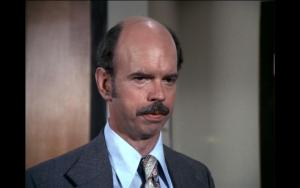
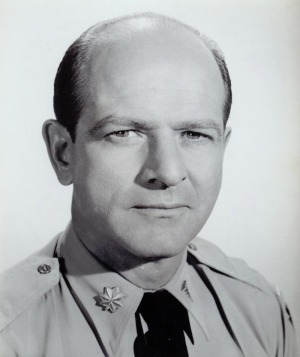
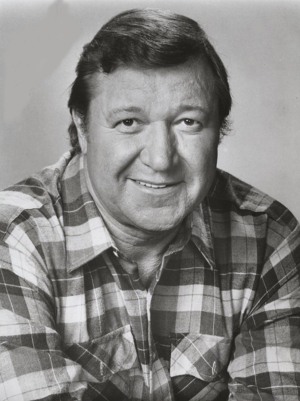
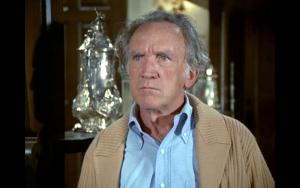
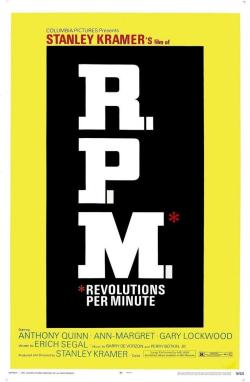
R.P.M. stands for (political) revolutions per minute. Anthony Quinn plays a liberal college professor at a west coast college during the heady days of campus activism in the late 1960's. Radical students take over the college, the president resigns, and Quinn's character, who has always been a champion of student activism, is appointed president.
More
5.3 /10
740 people rated
R.P.M.
1971
R
1 h 32 m
امریکہ
ڈرامہ
R.P.M. stands for (political) revolutions per minute. Anthony Quinn plays a liberal college professor at a west coast college during the heady days of campus activism in the late 1960's. Radical students take over the college, the president resigns, and Quinn's character, who has always been a champion of student activism, is appointed president.
More
5.3 /10
740 people rated
آن لائن دیکھیں
ایپ میں دیکھیں
اقساط
ٹاپ کاسٹ
صارف کا جائزہ
اقساط
ٹاپ کاسٹ
صارف کا جائزہ
اقساط
film
lklk
Netflix
Plex
ٹاپ کاسٹ(18)
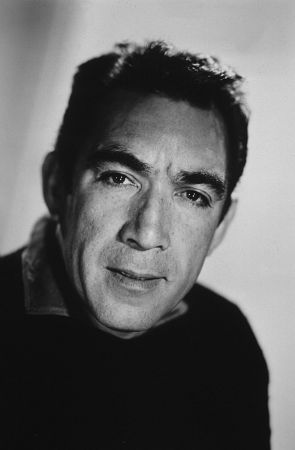
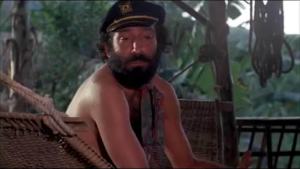
Anthony Quinn
Prof. F.W.J. 'Paco' Perez
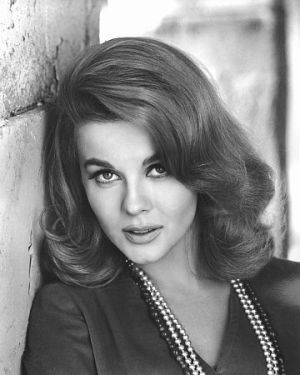
Ann-Margret
Rhoda
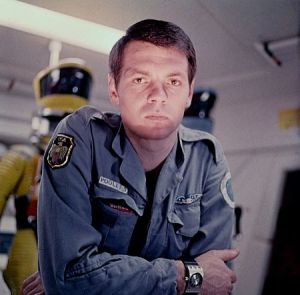
Gary Lockwood
Rossiter
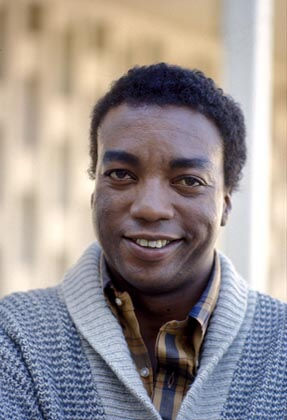
Paul Winfield
Steve Dempsey
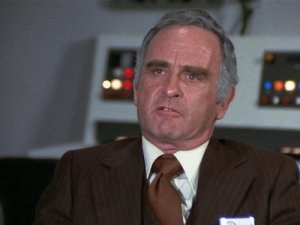
Graham Jarvis
Police Chief Henry J. Thatcher
Alan Hewitt
Hewlett
Ramon Bieri
Brown
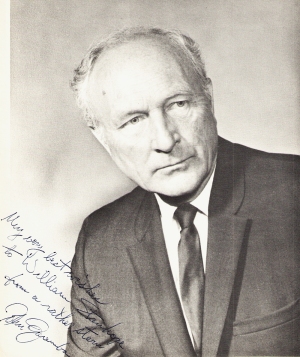
John McLiam
Rev. Blauvelt
Don Keefer
Dean George Cooper
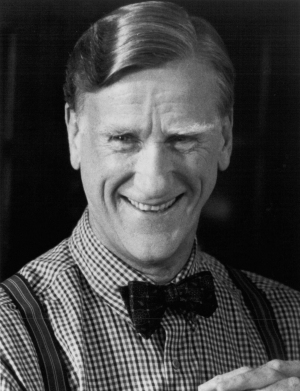
Donald Moffat
Perry Howard
Norman Burton
Coach McCurdy
John Zaremba
President Tyler
Inez Pedroza
Estella
Teda Bracci
Student
Linda Meiklejohn
Student
Bruce Fleischer
Student
David Ladd
Student
John David Wilder
Student
صارف کا جائزہ
Zamani Mbatha 🇿🇦
29/05/2023 12:37
source: R.P.M.
FAD
23/05/2023 05:23
Anthony Quinn is a liberal college professor (redundant) who is the student body's third choice to take over as College President. The first two choices were Che Guevara (unavailable due to being dead) and Eldridge Cleaver (unavailable for comment). Quinn sports a bad rug and a Rocky Balboa hat. He drives to work on a motorcycle. And he is shagging grad student Ann-Margret, even though her cooking would make anyone hurl. What a cool dude.
The campus radicals, led by 33-year-old long-haired undergraduate Gary Lockwood, have occupied one of the buildings on campus, and have a list of demands. One of them is that the students should hire the faculty. (After being in academia for 40 years, I will admit they may be on to something.) Token black radical Paul Winfield also wants a black man on the Board of Trustees. When Quinn suggests a candidate, Winfield wants to know how black he is. Quinn asks if he wants a skin sample. One of the trustees points out that there are no engineering students taking part in the rebellion; just English and psychology majors. That's the extent of the hilarity in this film.
Now settle in for lots of blather and inaction, as the students accuse Quinn of being part of the "establishment." There are a couple of "right-ons" and other dialogue I could not understand. Lockwood et al finally threaten to destroy the campus computer (Lockwood is apparently still ticked off at HAL). Enter the club-wielding campus police, who, oddly, are not referred to as the "fuzz" or even "pigs." What kind of campus is this? A few skulls get cracked, butts get kicked, all this while director Stanley Kramer shoots the scenes through a blurred lens. Great. The one time we finally get some action, and we might as well be underwater. There was probably more violence taking place in theaters, as audiences rushed to the exits.
In the final scene, Quinn tells Lockwood to "stay loose, man." Then Melanie sings a song.
Jameel Abdula
23/05/2023 05:23
As Shirley MacLaine says in Rumor Has It, "Everyone needs someone in their life to let them know when youth has come to an end." For Anthony Quinn, that someone was Stanley Kramer, a director whom I normally love. Fresh off their success of The Secret of Santa Vittoria, Kramer cast Quinn as a middle-aged professor in R. P. M., standing for "Revolutions Per Minute". Quinn plays the "cool" professor who beds his students, rides a motorcycle, and talks with modern slang. When a group of protesting hippies take over the administration building and give "demands" as they hold the college's computer system hostage, an emergency board meeting is called and Quinn is sent as a mediator since the kids like him.
But here's the insulting part of the film, why dear vibrant, sexy Tony should never have taken the part: he's shown as over-the-hill and unable to relate to the wild generation. He wears reading glasses, he takes terrible insults from the students, and his girlfriend tells him "Pull in your gut" when he walks around naked. (Sorry ladies, he's given a flesh-colored thong to protect his modesty.) One could argue that he's still young and hip enough to go to bed with Ann-Margret, but as the movie progresses, the students are so disrespectful, they show the real generation gap: manners and decency. Even though Tony doesn't agree with the kids, he still tries to treat them with respect, but the angry, protesting teenagers don't give him the same courtesy.
There will be a large chunk of audience members who side with the teenagers, and that makes me both sad and disgusted. Manners never go out of style, and using them doesn't show weakness or inflexibility. It shows class, the ability to see the bigger picture, and maturity. Tony may belong to the older generation with graying hair and a growing tummy, but I'll happily join him any day of the week.
Julia_bosslady
23/05/2023 05:23
Stanley Kramer had issues with this movie. A forgotten gem from 1970, R. P. M. Stars an impressive Anthony Quinn and a drop dead gorgeous Ann-Margaret that steals every scene that she is in. Although the on screen chemistry lacks from time to time between the two, both add to the overall theme of political and ethical turmoil that plague the generation. The moral dilemma that Kramer produced may lack in certain areas, but overall, the film does capture the conflict of the time and draws a fine line in the sand on the conclusion. Both sides fail to meet commons terms and both side fail to understand the other sides goal. In the end, they team up to blame someone for their failures. It is my opinion that the moderate conclusion would have created a win / win scenario and made a different ending.
The Ndlovu’s Uncut
23/05/2023 05:23
It's amazing the Stanley Kramer was involved in this cliche-ridden mass of swill.
Lydia Forson
23/05/2023 05:23
During the sixties of the last century the North-American movement for civil rights became increasingly radical, partly as a result of the ongoing Vietnam war. The movement consisted of a variegated coalition, which included hippies, students, blacks, and feminists. In this social climate of shifting moral values tiny groups of students revolted against the board of their universities. Students like to test their social bounds. For them a fire in the kitchen is something to laugh about. Their actions had a strong impact on society, and resulted in several film versions. RPM is one of them. I am fascinated by these cinematic reports, because they show how social resistance can escalate. RPM manages to elucidate the crucial aspects of the occurrences. And although as a rule I am indifferent about the casting, here the personality of Anthony Quinn indeed adds to the credibility of the story. He is a professor in sociology, Perez, whose lectures actually inspire the students to rebel. In his leisure time he engages in drunk driving on his motor bike. He prefers cocktails of carrot juice and whiskey, because he can see for miles (joking). The situation is piquant, because Perez is also the university dean. The rebels have occupied the main university building, and refuse to leave. In several scenes Perez negotiates with them, and offers them significant concessions. However, just like in the other films (and reality) the students do not know when to stop. Their leader wants to tear down the complete university system. He defines aggression as any violence, in which he does not participate. He believes that the board looks down on the students, but stands on the verge of the abyss. Soon Perez is disgusted at the immature and abusive behavior of the rebels. He advocates reforms, but not revolution. Thus in the end he feels compelled to have the rebellious students removed by the riot police. The students shout: "I pay your salary, you know", but the officers are not impressed. It is a loss-loss situation. Although Perez has acted in good faith, his decision has also made him the symbol of institutional violence. I love the ethical dilemmas in this film, as well as in its cinematic companions Strawberry Statement and Getting Straight.
Mosa🤍
23/05/2023 05:23
Has Gary Lockwood ever played a character who didn't think he was a demigod? The script is full of nonsense. Ann Margret who is usually a stunning person comes off very guttural. Anthony Quinn's character is stale. Of course watching a liberal professor have to deal with the real-life consequences of his lectures would be a fascinating concept, but the film came at it from the wrong angle and the possible paradox was not explored well. I can say the film exposed the student movement for the ludicrous, hypocritical abuse that it was. Sadly the point was not driven home because I'm sure that wasn't the message the studio was trying to convey. As it came off it was very tepid, and undecided. Full of stale ideals that even in their day were not widely accepted. The characters were far from empathetic and with such a cast I would have thought that impossible.
Mawa Traore
23/05/2023 05:23
I first read about "RPM" in a book on bad movies. The review made note of the dated premise and baffling slang. Anthony Quinn plays a college president stymied by the striking student body and hooked on Ann- Margret's striking human body. And the book was right. "RPM" is bad.
Quinn is all wrong for this, but then, I never liked his face. So much of film is visual and Anthony Quinn's terribly inexpressive mug never conveys any emotion, never ever lets the audience in. It's not that he's bad looking- there are plenty of unattractive actors whose faces speak volumes- he just always looks exactly the same: mildly perturbed.
Here he plays hipster professor Paco, who has to stare down the self-righteous protesters at a West Coast university. And of course he's hit on all sides by clichéd slang: "square," "copout," "establishment." But neither he nor the guerrilla student body seem particularly passionate about their causes... they're simply reading the script.
Ann-Margret was still dripping with pheromones and raw sexuality at this point, and as a courtesy to all us edging males she shows us her exquisite breasts. Her character is a grad student and Paco's young lover, and she spends the vast majority of her screen time scrutinizing every aspect of Paco's hypocritical existence. Margret seems to understand how ridiculous and annoying her character is so she plays it with a wink to the audience... and her nipples go a long way toward helping us forgive her.
But the real problem with "RPM" is the direction by Staley Kramer. It is lifeless. It is dull. It shows a complete and utter lack of understanding of the subject matter, the youth culture, and the issues of the day. It renders the movie a hollow and useless experience. Sometimes the book on bad movies is right.
GRADE: D
Pramish_gurung1
23/05/2023 05:23
Filmed on "The University of the Pacific" campus in Stockton, R.P.M. (political REVOLUTIONS per minute) at the time of its 1970 release was regarded as the worst of the "counterculture-revolution-on-campus" sub-genre of films. It has not improved with age and almost 45 years later is notable only for two good "Melanie" songs "Stop! I Don't Wanna' Hear It Anymore" and "We Don't Know Where We're Going" which play over three nice montage sequences of the President of fictional Hudson College coming and going to the campus Administration Building.
Its fundamental problem (other than having hacks like Stanley Kramer as acting for-the-camera director and Erich Segal as writer) is that the focus is on adults rather than on students. Although casting an aging Gary Lockwood as the student leader meant than no under twenty viewer could suspend their disbelief enough to buy into the premise. Even the extras playing the sundry students look to be in their thirties; perhaps their list of demands included unrestricted access to the swimming pool in "Cocoon".
The adults are Ann-Margret (Rhoda) and Anthony Quinn (Prof. F.W.J. 'Paco' Perez), whose performances simply do not complement each other in the few scenes they have together (blame Kramer's directing). Ann's big emotional scene midway through the film is an absolute mockfest moment. Poor Ann was one of those women who did not age gently but rather by plateau; she hit her first one in the late 1960's - almost overnight losing all her youthful glow. The idea was to make a 53 year-old professor seem hip because he lived with his 25-year-old graduate student, but the age disparity seems less between them than between Rhonda and a typical graduate student.
Then again, what do I know? I'm only a child.
Abi Nas❤️❤️
23/05/2023 05:23
Dull as can be. A terrific performance by Anthony Quinn not withstanding, Stanley Kramer's expose of college campus revolutionaries is a very bad movie. Quinn is a liberal Sociology professor promoted to college president to help squelch the political activities of students Guy Stockwell, Paul Winfield and their minions. Kramer infuses his film with absolutely nothing interesting. Instead of coming across as one of Hollywood's great progressives, this blunder makes him look like a very old fogie. Quinn is actually believable as a college professor and has great chemistry with sexy but smart coed Ann-Margret. However, very few in the supporting cast, aside from Ann-Margret, even register. Stockwell & co. are mired in pseudo-revolutionary chatter, throwing out the occasional dirty word while berating Quinn as just another square establishment figure. The didactic script is by Erich Segal, the genius who also concocted LOVE STORY.
صارف کا جائزہ
Zamani Mbatha 🇿🇦
29/05/2023 12:37
source: R.P.M.
FAD
23/05/2023 05:23
Anthony Quinn is a liberal college professor (redundant) who is the student body's third choice to take over as College President. The first two choices were Che Guevara (unavailable due to being dead) and Eldridge Cleaver (unavailable for comment). Quinn sports a bad rug and a Rocky Balboa hat. He drives to work on a motorcycle. And he is shagging grad student Ann-Margret, even though her cooking would make anyone hurl. What a cool dude.
The campus radicals, led by 33-year-old long-haired undergraduate Gary Lockwood, have occupied one of the buildings on campus, and have a list of demands. One of them is that the students should hire the faculty. (After being in academia for 40 years, I will admit they may be on to something.) Token black radical Paul Winfield also wants a black man on the Board of Trustees. When Quinn suggests a candidate, Winfield wants to know how black he is. Quinn asks if he wants a skin sample. One of the trustees points out that there are no engineering students taking part in the rebellion; just English and psychology majors. That's the extent of the hilarity in this film.
Now settle in for lots of blather and inaction, as the students accuse Quinn of being part of the "establishment." There are a couple of "right-ons" and other dialogue I could not understand. Lockwood et al finally threaten to destroy the campus computer (Lockwood is apparently still ticked off at HAL). Enter the club-wielding campus police, who, oddly, are not referred to as the "fuzz" or even "pigs." What kind of campus is this? A few skulls get cracked, butts get kicked, all this while director Stanley Kramer shoots the scenes through a blurred lens. Great. The one time we finally get some action, and we might as well be underwater. There was probably more violence taking place in theaters, as audiences rushed to the exits.
In the final scene, Quinn tells Lockwood to "stay loose, man." Then Melanie sings a song.
Jameel Abdula
23/05/2023 05:23
As Shirley MacLaine says in Rumor Has It, "Everyone needs someone in their life to let them know when youth has come to an end." For Anthony Quinn, that someone was Stanley Kramer, a director whom I normally love. Fresh off their success of The Secret of Santa Vittoria, Kramer cast Quinn as a middle-aged professor in R. P. M., standing for "Revolutions Per Minute". Quinn plays the "cool" professor who beds his students, rides a motorcycle, and talks with modern slang. When a group of protesting hippies take over the administration building and give "demands" as they hold the college's computer system hostage, an emergency board meeting is called and Quinn is sent as a mediator since the kids like him.
But here's the insulting part of the film, why dear vibrant, sexy Tony should never have taken the part: he's shown as over-the-hill and unable to relate to the wild generation. He wears reading glasses, he takes terrible insults from the students, and his girlfriend tells him "Pull in your gut" when he walks around naked. (Sorry ladies, he's given a flesh-colored thong to protect his modesty.) One could argue that he's still young and hip enough to go to bed with Ann-Margret, but as the movie progresses, the students are so disrespectful, they show the real generation gap: manners and decency. Even though Tony doesn't agree with the kids, he still tries to treat them with respect, but the angry, protesting teenagers don't give him the same courtesy.
There will be a large chunk of audience members who side with the teenagers, and that makes me both sad and disgusted. Manners never go out of style, and using them doesn't show weakness or inflexibility. It shows class, the ability to see the bigger picture, and maturity. Tony may belong to the older generation with graying hair and a growing tummy, but I'll happily join him any day of the week.
Julia_bosslady
23/05/2023 05:23
Stanley Kramer had issues with this movie. A forgotten gem from 1970, R. P. M. Stars an impressive Anthony Quinn and a drop dead gorgeous Ann-Margaret that steals every scene that she is in. Although the on screen chemistry lacks from time to time between the two, both add to the overall theme of political and ethical turmoil that plague the generation. The moral dilemma that Kramer produced may lack in certain areas, but overall, the film does capture the conflict of the time and draws a fine line in the sand on the conclusion. Both sides fail to meet commons terms and both side fail to understand the other sides goal. In the end, they team up to blame someone for their failures. It is my opinion that the moderate conclusion would have created a win / win scenario and made a different ending.
The Ndlovu’s Uncut
23/05/2023 05:23
It's amazing the Stanley Kramer was involved in this cliche-ridden mass of swill.
Lydia Forson
23/05/2023 05:23
During the sixties of the last century the North-American movement for civil rights became increasingly radical, partly as a result of the ongoing Vietnam war. The movement consisted of a variegated coalition, which included hippies, students, blacks, and feminists. In this social climate of shifting moral values tiny groups of students revolted against the board of their universities. Students like to test their social bounds. For them a fire in the kitchen is something to laugh about. Their actions had a strong impact on society, and resulted in several film versions. RPM is one of them. I am fascinated by these cinematic reports, because they show how social resistance can escalate. RPM manages to elucidate the crucial aspects of the occurrences. And although as a rule I am indifferent about the casting, here the personality of Anthony Quinn indeed adds to the credibility of the story. He is a professor in sociology, Perez, whose lectures actually inspire the students to rebel. In his leisure time he engages in drunk driving on his motor bike. He prefers cocktails of carrot juice and whiskey, because he can see for miles (joking). The situation is piquant, because Perez is also the university dean. The rebels have occupied the main university building, and refuse to leave. In several scenes Perez negotiates with them, and offers them significant concessions. However, just like in the other films (and reality) the students do not know when to stop. Their leader wants to tear down the complete university system. He defines aggression as any violence, in which he does not participate. He believes that the board looks down on the students, but stands on the verge of the abyss. Soon Perez is disgusted at the immature and abusive behavior of the rebels. He advocates reforms, but not revolution. Thus in the end he feels compelled to have the rebellious students removed by the riot police. The students shout: "I pay your salary, you know", but the officers are not impressed. It is a loss-loss situation. Although Perez has acted in good faith, his decision has also made him the symbol of institutional violence. I love the ethical dilemmas in this film, as well as in its cinematic companions Strawberry Statement and Getting Straight.
Mosa🤍
23/05/2023 05:23
Has Gary Lockwood ever played a character who didn't think he was a demigod? The script is full of nonsense. Ann Margret who is usually a stunning person comes off very guttural. Anthony Quinn's character is stale. Of course watching a liberal professor have to deal with the real-life consequences of his lectures would be a fascinating concept, but the film came at it from the wrong angle and the possible paradox was not explored well. I can say the film exposed the student movement for the ludicrous, hypocritical abuse that it was. Sadly the point was not driven home because I'm sure that wasn't the message the studio was trying to convey. As it came off it was very tepid, and undecided. Full of stale ideals that even in their day were not widely accepted. The characters were far from empathetic and with such a cast I would have thought that impossible.
Mawa Traore
23/05/2023 05:23
I first read about "RPM" in a book on bad movies. The review made note of the dated premise and baffling slang. Anthony Quinn plays a college president stymied by the striking student body and hooked on Ann- Margret's striking human body. And the book was right. "RPM" is bad.
Quinn is all wrong for this, but then, I never liked his face. So much of film is visual and Anthony Quinn's terribly inexpressive mug never conveys any emotion, never ever lets the audience in. It's not that he's bad looking- there are plenty of unattractive actors whose faces speak volumes- he just always looks exactly the same: mildly perturbed.
Here he plays hipster professor Paco, who has to stare down the self-righteous protesters at a West Coast university. And of course he's hit on all sides by clichéd slang: "square," "copout," "establishment." But neither he nor the guerrilla student body seem particularly passionate about their causes... they're simply reading the script.
Ann-Margret was still dripping with pheromones and raw sexuality at this point, and as a courtesy to all us edging males she shows us her exquisite breasts. Her character is a grad student and Paco's young lover, and she spends the vast majority of her screen time scrutinizing every aspect of Paco's hypocritical existence. Margret seems to understand how ridiculous and annoying her character is so she plays it with a wink to the audience... and her nipples go a long way toward helping us forgive her.
But the real problem with "RPM" is the direction by Staley Kramer. It is lifeless. It is dull. It shows a complete and utter lack of understanding of the subject matter, the youth culture, and the issues of the day. It renders the movie a hollow and useless experience. Sometimes the book on bad movies is right.
GRADE: D
Pramish_gurung1
23/05/2023 05:23
Filmed on "The University of the Pacific" campus in Stockton, R.P.M. (political REVOLUTIONS per minute) at the time of its 1970 release was regarded as the worst of the "counterculture-revolution-on-campus" sub-genre of films. It has not improved with age and almost 45 years later is notable only for two good "Melanie" songs "Stop! I Don't Wanna' Hear It Anymore" and "We Don't Know Where We're Going" which play over three nice montage sequences of the President of fictional Hudson College coming and going to the campus Administration Building.
Its fundamental problem (other than having hacks like Stanley Kramer as acting for-the-camera director and Erich Segal as writer) is that the focus is on adults rather than on students. Although casting an aging Gary Lockwood as the student leader meant than no under twenty viewer could suspend their disbelief enough to buy into the premise. Even the extras playing the sundry students look to be in their thirties; perhaps their list of demands included unrestricted access to the swimming pool in "Cocoon".
The adults are Ann-Margret (Rhoda) and Anthony Quinn (Prof. F.W.J. 'Paco' Perez), whose performances simply do not complement each other in the few scenes they have together (blame Kramer's directing). Ann's big emotional scene midway through the film is an absolute mockfest moment. Poor Ann was one of those women who did not age gently but rather by plateau; she hit her first one in the late 1960's - almost overnight losing all her youthful glow. The idea was to make a 53 year-old professor seem hip because he lived with his 25-year-old graduate student, but the age disparity seems less between them than between Rhonda and a typical graduate student.
Then again, what do I know? I'm only a child.
Abi Nas❤️❤️
23/05/2023 05:23
Dull as can be. A terrific performance by Anthony Quinn not withstanding, Stanley Kramer's expose of college campus revolutionaries is a very bad movie. Quinn is a liberal Sociology professor promoted to college president to help squelch the political activities of students Guy Stockwell, Paul Winfield and their minions. Kramer infuses his film with absolutely nothing interesting. Instead of coming across as one of Hollywood's great progressives, this blunder makes him look like a very old fogie. Quinn is actually believable as a college professor and has great chemistry with sexy but smart coed Ann-Margret. However, very few in the supporting cast, aside from Ann-Margret, even register. Stockwell & co. are mired in pseudo-revolutionary chatter, throwing out the occasional dirty word while berating Quinn as just another square establishment figure. The didactic script is by Erich Segal, the genius who also concocted LOVE STORY.
Disclaimer: All videos and pictures on MovieBox are from the Internet, and their copyrights belong to the original creators. We only provide webpage services and do not store, record, or upload any content.


 لامحدود فلمیں اور شوز دیکھیں
 اپنا پسندیدہ مواد ڈاؤن لوڈ کریں اور آف لائن دیکھیں
 آسان انٹرفیس اور ہموار کارکردگی




'%3e%3cpath%20id='Vector'%20d='M17.3996%2025.7999C17.3996%2025.9838%2017.3634%2026.1658%2017.293%2026.3357C17.2227%2026.5055%2017.1196%2026.6598%2016.9896%2026.7899C16.8596%2026.9199%2016.7052%2027.023%2016.5354%2027.0933C16.3655%2027.1637%2016.1835%2027.1999%2015.9996%2027.1999C15.8158%2027.1999%2015.6337%2027.1637%2015.4639%2027.0933C15.294%2027.023%2015.1397%2026.9199%2015.0097%2026.7899C14.8797%2026.6598%2014.7765%2026.5055%2014.7062%2026.3357C14.6358%2026.1658%2014.5996%2025.9838%2014.5996%2025.7999C14.5996%2025.4286%2014.7471%2025.0725%2015.0097%2024.81C15.2722%2024.5474%2015.6283%2024.3999%2015.9996%2024.3999C16.3709%2024.3999%2016.727%2024.5474%2016.9896%2024.81C17.2521%2025.0725%2017.3996%2025.4286%2017.3996%2025.7999Z'%20fill='white'/%3e%3cpath%20id='Union'%20fill-rule='evenodd'%20clip-rule='evenodd'%20d='M8.5%204H23.5C24.0523%204%2024.5%204.44772%2024.5%205V21.5H7.5V5C7.5%204.44772%207.94772%204%208.5%204ZM5.5%2022.5V5C5.5%203.34315%206.84315%202%208.5%202H23.5C25.1569%202%2026.5%203.34315%2026.5%205V22.5V27C26.5%2028.6569%2025.1569%2030%2023.5%2030H8.5C6.84315%2030%205.5%2028.6569%205.5%2027V22.5ZM24.5%2023.5V27C24.5%2027.5523%2024.0523%2028%2023.5%2028H8.5C7.94772%2028%207.5%2027.5523%207.5%2027V23.5H24.5Z'%20fill='white'/%3e%3cpath%20id='Union_2'%20fill-rule='evenodd'%20clip-rule='evenodd'%20d='M17%209C17%208.44772%2016.5523%208%2016%208C15.4477%208%2015%208.44772%2015%209V13.8258L13.1508%2012.2407C12.7315%2011.8813%2012.1002%2011.9299%2011.7408%2012.3492C11.3813%2012.7685%2011.4299%2013.3998%2011.8492%2013.7593L15.345%2016.7556C15.5205%2016.9079%2015.7495%2017%2016%2017C16.2506%2017%2016.4796%2016.9079%2016.6551%2016.7556L20.1508%2013.7593C20.5701%2013.3998%2020.6187%2012.7685%2020.2593%2012.3492C19.8999%2011.9299%2019.2686%2011.8813%2018.8492%2012.2407L17%2013.8258V9Z'%20fill='white'/%3e%3c/g%3e%3c/svg%3e)