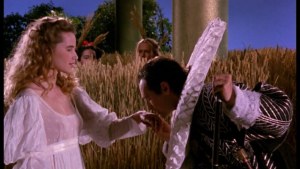
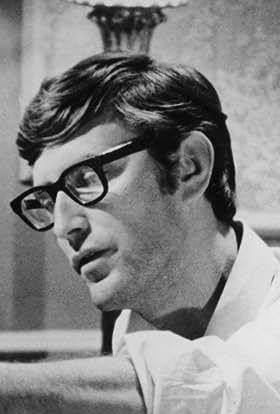
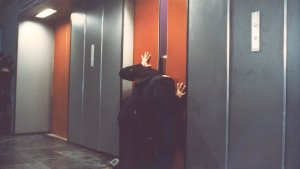
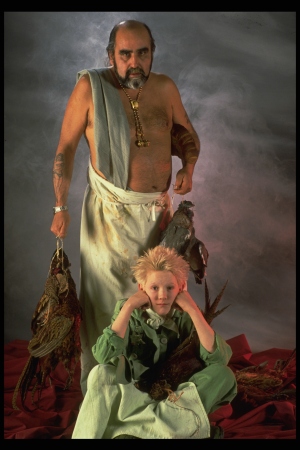
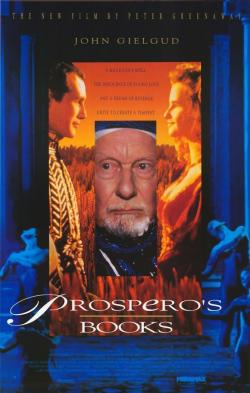
Once upon a time, Peter Greenaway was considered a serious artist. 1991's Prospero's Books ended that. To understand this, let's remember that in the 1960s and 1970s, Greenaway became known for some witty, short films playing with several of his obsessions, like counting, classification, sexuality, etc. He graduated to feature length films in the 1980s: after the (unwatchable) The Falls, he made a series of fine, intelligent, cerebral (if sometimes hard to take) art movies: The Draughtsman's Contract, A Zed and Two Noughts, The Belly of an Architect, Drowning by Numbers. These four movies, made back to back, are his best in a 40-plus year career. Then, in 1989, came The Cook, The Thief, his Wife and Her Lover, his most successful film so far, and a truly success de scandal, with his brilliant but often shocking images. After The Cook, everyone called him a genius, and he might have believed those accolades, since right after that he made one of the most self-indulgent (and unwatchable) films ever made: Prospero's Books. An adaptation (for lack of a better word) of Shakespeare's The Tempest, made at the request of its star, the octogenarian John Gielgud (who have played the part of Prospero on stage, and had unsuccessfully asked a number of prominent directors to bring the play with him to the screen), this film is truly terrible: shot entirely on a sound stage, is a parade of naked people, awful use of digital imagery (which has rapidly look obsolete with the passage of time), and poor old Gielgud speaking all the parts (!). The movie looks as the filming of a Shakespeare play as made by an idiot savant, except that this idiot doesn't even look here to be very savant. Not surprisingly, few people liked Prospero's Books. After this fiasco, Greenaway has continued making movies, as well as exhibitions for museums, but with the exception of The Pillow Book, almost no one has watched them, or care for them.


 لامحدود فلمیں اور شوز دیکھیں
 اپنا پسندیدہ مواد ڈاؤن لوڈ کریں اور آف لائن دیکھیں
 آسان انٹرفیس اور ہموار کارکردگی
















'%3e%3cpath%20id='Vector'%20d='M17.3996%2025.7999C17.3996%2025.9838%2017.3634%2026.1658%2017.293%2026.3357C17.2227%2026.5055%2017.1196%2026.6598%2016.9896%2026.7899C16.8596%2026.9199%2016.7052%2027.023%2016.5354%2027.0933C16.3655%2027.1637%2016.1835%2027.1999%2015.9996%2027.1999C15.8158%2027.1999%2015.6337%2027.1637%2015.4639%2027.0933C15.294%2027.023%2015.1397%2026.9199%2015.0097%2026.7899C14.8797%2026.6598%2014.7765%2026.5055%2014.7062%2026.3357C14.6358%2026.1658%2014.5996%2025.9838%2014.5996%2025.7999C14.5996%2025.4286%2014.7471%2025.0725%2015.0097%2024.81C15.2722%2024.5474%2015.6283%2024.3999%2015.9996%2024.3999C16.3709%2024.3999%2016.727%2024.5474%2016.9896%2024.81C17.2521%2025.0725%2017.3996%2025.4286%2017.3996%2025.7999Z'%20fill='white'/%3e%3cpath%20id='Union'%20fill-rule='evenodd'%20clip-rule='evenodd'%20d='M8.5%204H23.5C24.0523%204%2024.5%204.44772%2024.5%205V21.5H7.5V5C7.5%204.44772%207.94772%204%208.5%204ZM5.5%2022.5V5C5.5%203.34315%206.84315%202%208.5%202H23.5C25.1569%202%2026.5%203.34315%2026.5%205V22.5V27C26.5%2028.6569%2025.1569%2030%2023.5%2030H8.5C6.84315%2030%205.5%2028.6569%205.5%2027V22.5ZM24.5%2023.5V27C24.5%2027.5523%2024.0523%2028%2023.5%2028H8.5C7.94772%2028%207.5%2027.5523%207.5%2027V23.5H24.5Z'%20fill='white'/%3e%3cpath%20id='Union_2'%20fill-rule='evenodd'%20clip-rule='evenodd'%20d='M17%209C17%208.44772%2016.5523%208%2016%208C15.4477%208%2015%208.44772%2015%209V13.8258L13.1508%2012.2407C12.7315%2011.8813%2012.1002%2011.9299%2011.7408%2012.3492C11.3813%2012.7685%2011.4299%2013.3998%2011.8492%2013.7593L15.345%2016.7556C15.5205%2016.9079%2015.7495%2017%2016%2017C16.2506%2017%2016.4796%2016.9079%2016.6551%2016.7556L20.1508%2013.7593C20.5701%2013.3998%2020.6187%2012.7685%2020.2593%2012.3492C19.8999%2011.9299%2019.2686%2011.8813%2018.8492%2012.2407L17%2013.8258V9Z'%20fill='white'/%3e%3c/g%3e%3c/svg%3e)