moviebox header nav
moviebox search icon
muted

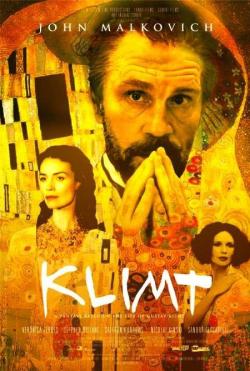
Klimt

2006

R

2 h 11 m

Austria

Biography

ڈرامہ

A portrait of Austrian artist Gustav Klimt, whose lavish, sexual paintings came to symbolize the art nouveau style of the late nineteenth and early twentieth century.
More

5.1 /10

3427 people rated

آن لائن دیکھیں

ایپ میں دیکھیں

اقساط

ٹاپ کاسٹ

صارف کا جائزہ

اقساط
ٹاپ کاسٹ
صارف کا جائزہ

اقساط

film
lklk
Netflix
Plex
ٹاپ کاسٹ(18)
starring avatar
John Malkovich
Klimt
starring avatar
Veronica Ferres
Midi
starring avatar
Stephen Dillane
Secretary
starring avatar
Saffron Burrows
Lea de Castro
starring avatar
Sandra Ceccarelli
Serena Lederer
starring avatar
Nikolai Kinski
Egon Schiele
starring avatar
Aglaia Szyszkowitz
Mizzi
starring avatar
Joachim Bißmeier
Hugo Moritz
starring avatar
Ernst Stötzner
Minister Hartl
starring avatar
Paul Hilton
Duke Octave
starring avatar
Annemarie Düringer
Klimt's Mother
starring avatar
Irina Wanka
Berta Zuckerkandl
default avatar
Florentin Groll
Messerschmidt
starring avatar
Miguel Herz-Kestranek
Dr. Stein
starring avatar
Marion Mitterhammer
Klimt's Sister
default avatar
Alexander Strobele
Bahr
default avatar
Georgia Reeve
Double Lea de Castro
default avatar
Rainer Friedrichsen
Double Klimt

صارف کا جائزہ

author avatar

@akojude

24/07/2024 16:49
Klimt_720p(480P)
author avatar

Liako Lebakeng

24/07/2024 16:31
This is a superb movie; IF (and this is a big if) one is already familiar with the life and work of Gustav Klimt. This movie was intended as an "art house" film, and was never meant to be a major theatrical release. However, even for an "art house" film it is rather specialized in how it portrays Gustav Klimt; and if one is not familiar with this artist (and Vienna at the turn of the 20th century) then this film is quite confusing and vague- the quantity and quality of female imagery notwithstanding. Despite its very specialized nature some major stars are in this film though only one is an American and even he lives and works mainly in Europe. That star is John Malkovich; who is in the title role. Malkovich gives a fine job though he does not resemble Klimt as closely as some other actors who have portrayed Klimt in the past (most notably August Schmolzer in "Bride of the Wind"). The only other actor in this film that may be recognized by Americans is Saffron Burrows; who portrays his great love interest. Her role is fictional, but serves as a continuity thread through this film which depicts in an allegorical manner his career and life from 1900; when Klimt won a gold medal at the great Paris Exposition to 1918; when he died. The other actors are notable European actors whose works have generally not been seen in the United States. The notable German actress Veronica Ferres portrays Emily Floge; Klimt's lifelong companion. Again, unless you are familiar with the life of Klimt the role of Floge in this movie is very difficult to understand. And, it is never explained in the movie. Basically, Klimt and Floge were in-laws by the marriage of Gustav's brother to Emily's sister. The seemed to never have been "lovers" but the unmarried Emily seems to have been a wife (as well as business partner) to Gustav in every other respect. It was a complex relationship and Ferres explains in a side featurette ("The Making of Klimt") the difficulty of showing this relationship. The Austrian actress Aglaia Szyszkowitz portrays "Mizzi"; a model who bore two kids for Klimt of which one is shown- his son Gustav. He never married her, and the movie implies that he saw his kids only occasionally without financially supporting them in any noticeable manner. In real life Klimt did financially support his children by this woman. Of note is that the nickname for Emily Floge was "Middi" and the pronunciation of the two names is very similar; adding to the already considerable confusion. The movie does portray Klimt in a negative manner concerning his offspring. He acknowledged paternity of four children and the movies deals with the other two as well as the two of Mizzi. Those children are dealt with almost as afterthoughts and one is positively embarrassing (perhaps the ultimate embarrassment). In reality Klimt probably had many more kids and this concern is mentioned briefly in the film. The film is certainly critical of Klimt in this regard; as well as his attitude towards women in general. There are some historical inaccuracies in this film such as a nurse in a Vienna hospital in early 1918 who has a VERY obvious British accent. This is highly unlikely, to say the least, to have been the case considering that the Austrians were in war with the British at that point, but overall the historical settings and costumes are well researched. The movie overall is well researched, but, again, quite confusing to somebody who is not very familiar with the life of this genius. I recommend that anybody who wants to see the film to first read up and look at the artworks of Klimt. Then the film will make sense and be seen as the superb achievement it is.
author avatar

munir Ahmed

24/07/2024 16:31
Klimt (2006) John Malkovich is talented but so quirky and full of himself he nearly ruins many of his movies. Surely he sees how affected he can sometimes be? Here he plays the Austrian artist Gustav Klimt in the years before WWI, and though we don't quite know what Klimt was like, we know he didn't play his life being John Malkovich. Biopics always struggle with the character against the actor, of course, since history is what it is, and so you swallow all this and see what the actor and the director can do within these constraints. The director in this case is the late Raul Ruiz, the Chilean director who just died in Paris with a small cult following and a growing reputation. He concentrates not on Klimt's art, or even Klimt's attitudes as an artist of his time (this is the time of early Picasso, late Cezanne, and the growing influence of Gauguin). Instead it deals with Klimt's personality, which we know the least about, emphasizing his vulgarity, his obsession with * women around him as much as possible, and his countless children for whom he apparently did as little as possible. What might have been more interesting is to see a young Klimt being transformed by a 6th century Italian fresco with all its gold leafwork (this is true), or to maybe see him interact with the Vienna Secessionists in their effort, as a group, to break from the academy. What we get instead is a fantasy about the women around him, including a bizarre and willing entrapment of Klimt by a wealthy woman and her double (or twin?) which turns into a kind of erotic sex game with a man watching behind 2-way glass. Then there is a mysterious fellow who seems to only exist in Klimt's head--he's fascinating, yet only half realized. If Ruiz had taken all this into something purely fantastic, where the trappings of history were shed, it might have been a transporting and special movie, an actual cinematic experience on its own terms. At times it tries, and there are some distortions and some beautiful moments, a bit out of place in the narrative, that stand on their own. But mostly this lurches and jerks from situation to situation. The art is great, what we see of it, and the sets are nice, though even they are filmed too often with a yellowed dullness that defies the outrageous decorative beauty of the time. (I just happened to see "The Wings of the Dove" set in the same period and the set and costume design blows "Klimt" away). All of this is too bad especially for an art movie about an artist who believed in total aesthetic immersion--where everything, including your toilet paper holder, had to be an artistic component of a life of art. It's not a disaster, but it's certainly a feminist's nightmare--where Klimt might have defended his painting of women as being honest and where the sex might have been free expression and liberation, the movie pushes all this into pure voyeurism and submissiveness. Women dangle and prance and decorate the movie sets, and your screen, the way Klimt, who was no feminist, might have approved, but which isn't accurate. It isn't about an equality in free loving sex, it's about women from a man's point of view. Period. Some of you will like that, but I did not.
author avatar

Musa Keys

24/07/2024 16:31
The film captured me within the first seconds. Leaving the cinema I felt dazed. This clearly was the greatest film experience I've had so far. Originally I didn't plan to leave a comment as I'm quite tired at the moment, but seeing all those bad reviews made me want to show my support for the movie which left me simply speechless. I am going to see it again tomorrow (it's the last séance) just to take it in better. It overflowed my senses and mind with beauty of both the visual and mental kind. The movie makers have done a great job in recreating an era I happen to feel a passion for, portraying it rather from inside a certain mind than objectively. Which I believe to be a lot more interesting artistically. I do not have the strength to write more at the moment, let's just say I agree with the other positive comments left so far. In case you haven't seen the film yet, I highly recommend it.
author avatar

Ikogbonna

24/07/2024 16:31
Judging from the reviews here you either love this movie or you absolutely hate it. I for one loved it. Being from Austria myself, you often get confronted with Schiele and Klimt - especially in Vienna, to a point where you're basically sick of it. Because of that I never got to fully appreciate these two artists until much later. This movie did help me to appreciate the artwork more. I was able to see this movie at the premiere in Austria when it came out and haven't seen it since then (though I would like to) and I had to think about it many times since then. I can imagine that the reason many people didn't like this movie was because it's not what they expected. If you want to see a straight forward, biographical accurate movie about the life of Gustav Klimt, then this movie isn't for you. The basic premise is that Gustav Klimt is lying on his death bed and in a manner of flashbacks you get to see random scenes about a fictitious story revolving around a mysterious woman. Blinded by the fever, the scenes appear surreal and deliver a feeling similar to what you may feel upon viewing Klimt's artwork. There's no straight plot following this movie and the real Klimt may not have been the way he appears in the movie, but that was never intended anyway. What this movie does is brilliantly deliver an atmosphere very fitting to the Wiener Moderne. The very important "Kaffeehaus Kultur" at the time, where intellectuals of Vienna spent the entire day in coffee houses is portrayed very precisely as well. I also think that Malkovich and Nikolai Kinski seem to be a near perfect cast for Gustav Klimt and Egon Schiele. Anyway, if you've read this review and get the feeling that this movie is not for you, then don't watch it. But if you're intrigued by what you've read then by all means, go see this movie!
author avatar

abida.mussaa

24/07/2024 16:31
I'm sorry but I thought the film Klimt was the worst film I have ever seen about an artist - John Malkovich doesn't even approach a resemblance to Klimt - I can forgive mis-casting however but Mr. M decided to play the role with a monotone voice throughout the ENTIRE film - it was awful - although it is true that not much is known about Klimt (biographical detail comes from second hand information such as correspondence) but to play this role comatose was none too inspiring - there was nothing - nothing - about the climate he during the fin de siècle Vienna - nothing about the scandalous Faculty paintings or the Vienna Secession, his friend Emilie Flöge who eventually owned a fashion house, etc. etc. - There is so much that could have been included in the film to give one a sense of the time and where he was placed in it - Instead Malkovich walks around like he's in a stupor - Don't waste your money
author avatar

user2078455683250

24/07/2024 16:31
There is a word, memorably coined by Hugh Grant, for this type of film: Euro-pud. Take some public money from a European government, select a writer-director known principally (if at all) for his foreign-language films, and assemble a cast of one American star and an assortment of European actors. Scramble, and serve in a handful of continental cinemas that need films on the cheap. Raoul Ruiz's biopic of Gustav Klimt feels like what it is - a polyglot project made to please a national government rather than a cinema audience. It is by turns boring, uninformative, poorly acted, directionless, non-sensical and crass. John Malkovich, in the role of the titular Austrian artist, spends the vast majority of the film looking bored or dead, perhaps appropriately, since the translated script portrays Klimt as a world-weary man condemned to a creeping death by his syphilitic encounters with prostitutes. Other characters dart in and out of his life with befuddling rapidity, either making imperious statements that are in no way profound or laughing at things that aren't funny. They also appear to be mounted on lazy Susans, as one of Ruiz's irritating motifs is to wheel the camera around his actors so that the background is a dizzying whirl. This, like his other themes (breaking mirrors and requests for water), are so heavy-handed that you wonder if his inspiration was an essay written by a teenage history of art student. The film is also knee-deep in absurdity, only some of which is intentional. Klimt has two ludicrously staged fist fights on the streets of Vienna, and there is one dreadful scene in which an unexplained stranger is meant to be doing shadow puppetry. It is difficult to suspend disbelief as the prancing figure on the screen is clearly not the man's waggling fingers, but Saffron Burrows's backlit silhouette. Malkovich is obliged to play along, however, and slithers around in front of it, casting no shadow of his own. Arguably the worst scene features Klimt chatting to Egon Schiele in a bar as the lights go out and a crazed tramp enters, apparently to act out a piece of performance art about war. Schiele leaves in plain view, and yet at their next meeting Klimt exclaims: "What happened to you? You disappeared." Bags of full-frontal nudity and occasionally brave efforts at acting fail to disguise a film that, ultimately, tells us little about its subject or his art. He was, we are told, foul-mouthed, delusional and constantly thirsty. I'm not even convinced this is accurate. It is a film that desperately wants to be Amadeus, but ends up being like Jefferson in Paris. Pointless and contrived, this is Europud at its worst.
author avatar

Clipshot Nesh

24/07/2024 16:31
I didn't know too much about Gustav Klimt before watching this film and I didn't leave the cinema all that enlightened either. This pretentious and baffling movie informs us of the following: that Klimt painted lots of pictures of naked women, he swore quite a lot, he wasn't religious, he had lots of illegitimate children and his mother and sister were mentally unstable. Fascinating. We're also treated to scenes in which Klimt takes part in unexplained bouts of boxing in the middle of the street and in which he repeatedly talks to an Austrian government official who, it turns out is actually invisible and just a figment of the artist's imagination. Oh, and Klimt also visits a brothel where he dresses up as a monkey and where the prostitutes wear fake moustaches. If Klimt's story isn't worth telling, then why bother? And if a film had to be made, couldn't the filmmakers have produced something at the very least coherent? This is the kind of movie which gives biopics a bad name. Definitely one to avoid unless you enjoy being confused and bored.
author avatar

Michael Wendel

24/07/2024 16:31
Like other reviewers I expected more from this film and left the cinema both angry and annoyed at the historical inaccuracies regarding Klimt's life and death. These are the aimless meanderings of a film director who clearly disappeared into his own orifice and where the sun doesn't shine. Klimt is represented as a neurotic diseased immoral individual which could not be further from the truth if you research his life. I've always regarded John Malkovich as an overrated Ham with a decidedly creepy persona evident in all his films and been continually astonished at his selection for almost all of his roles. The other reviewers are right - this one is a stinker and the artist Klimt deserves a better epitaph.
author avatar

Loopa queen

24/07/2024 16:31
"I want to wash out my brain." "Did I miss something or did this film stink?" Comments heard on exiting the screening of "Klimt" at the Siskel Film Center, Chicago July 4, 2007 Hunter S. Thompson blew the journalistic world away by openly reporting events through the prism of his own drug-soaked experience. Terry Gilliam's cinematic portrayal of this in "Fear and Loathing in Las Vegas" conveyed this brilliantly. So far as I know, Gustav Klimt did not portray his artistic vision in an ether-soaked stupor or in a state of syphilitic delirium. My problem with Mr. Ruiz portraying him as though he did is that Klimt actually led an exuberant revolutionary artistic movement in a city and continent exploding with creative energy, and this portrayal could hardly be farther from the truth. Even a non-linear poetic portrayal of the creative process should shed some truth on its essence. The tone of the movie was static, suffocating, semi-conscious and joyless. Klimt's life was full of color, sexual experimentation and living life to its fullest, so it additionally seems odd that John Malkovich sleepwalks through his performance with less joy than Rod Steiger in "The Pawnbroker." If Mr. Ruiz wanted to make a film about a fever-dream (Klimt died of pneumonia following a stroke, not of tertiary syphilis as suggested in the film), perhaps he should have entitled it "Fever-Dream: with a whimsical guest appearance by my fantasy of Gustav Klimt." This film may be of use to film students to prove that images and sound do not automatically add up to a movie.
Disclaimer: All videos and pictures on MovieBox are from the Internet, and their copyrights belong to the original creators. We only provide webpage services and do not store, record, or upload any content.