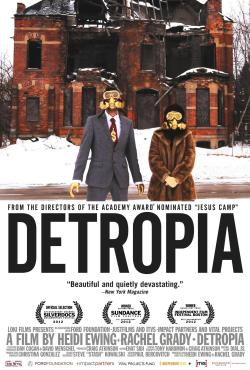
A documentary on the city of Detroit and its woes, which are emblematic of the collapse of the U.S. manufacturing base.
More
6.5 /10
1646 people rated
Detropia
2012
R
1 h 30 m
امریکہ
دستاویزی فلم
A documentary on the city of Detroit and its woes, which are emblematic of the collapse of the U.S. manufacturing base.
More
6.5 /10
1646 people rated
آن لائن دیکھیں
ایپ میں دیکھیں
اقساط
ٹاپ کاسٹ
صارف کا جائزہ
اقساط
ٹاپ کاسٹ
صارف کا جائزہ
اقساط
film
lklk
Netflix
Plex
ٹاپ کاسٹ(16)
Noah Stewart
Self - Singer: Featured Tenor
Rachele Gilmnore
Self - Singer: Also Featired at the Detroit Opera Gouyse
Michael Wanko
Self - Singer: Also Featured at the Detroit Opera House
Michigan Opera Theatre Orchestra
Self - Musicians: Detroit Opera Goyse
The Nyce Band
Self - Performers: The Raven Lounge
94 East
Self - Performers: The Raven Lounge
Luann French
Self - Additional Musician: Violin Sample
Schuyler Campbell
Self - Additional Musician: Keys
Todd Cochell
Self - Additional Musician: Keys
Dave Graw
Self - Additional Musician: Vibes
Crystal Starr
Self
George McGregor
Self
Tommy Stephens
Self
David Dichiera
Self
Dave Bing
Self
Andrew J. Gray
Self
صارف کا جائزہ
meriam alaoui
25/07/2024 16:07
source: Detropia
Shemlu temam
24/07/2024 16:40
Detropia_720p(480P)
_j.mi______
24/07/2024 16:13
source: Detropia
AsHish PuNjabi
24/07/2024 16:13
There is nothing new or surprising in Detropia and I was disappointed in that. The film is a hodgepodge of scenes jumping back and forth between a local bar owner, a useless union representative, an urban explorer and some artistic nomads.
The continued denial by the unions to accept current economic realities is now just tiring to watch and evokes irritation rather that pathos.
The jobs are not going to come back and pay is going to go down. This is the reality and the future and the unions don't want to accept that fact. In the end, they lose their jobs completely because they would not accept the realities of the current global economy and compromise on a new contract. Their strategy didn't work to well and now another group of people are unemployed.
The best part of the film is the bar owner, who despite the loss of his autoworker customers, is still chugging along bringing in his loyal neighborhood customers for some fantastic jazz and food. He is a very nice, educated and thoughtful man who the filmmakers should have followed around exclusively for a year and made the film about Detroit through his eyes, every scene with him is a highlight. I just wanted to reach out and give him and his wife a big hug. Not out of pity but to thank them for hanging in there and being such wonderful people.
The whole part about the Opera was out of place here (and just kinda weird). The only thing tying the Opera to Detroit is the fact the automakers financially support it (and probably always will). I doubt that any of the folks directly impacted by job losses and decaying neighborhoods attend the Opera and the Opera audience is probably 95% suburban whites who live outside the city limits.
I would rather have seen this time spent on the bar owner or on other residents faced with possible relocation and what their thoughts are about it. The one irate woman at the town hall accusing Mayor Bing of trying to enforce segregation in Detroit (how is that possible when it already is?) is certainly not the only opinion of residents stuck out in the middle of abandoned neighborhoods. I think most folks would welcome the opportunity to move into a better neighborhood filled with life and city services and public transportation, hospitals, schools etc. I would jump on that chance in a minute if I were in that situation.
I would have liked to have known more about the urban explorer, she was not flushed out well. I think it is so cool that she explores the abandoned areas and videos her adventures, I would love to do that! but I would like to have known what her purpose is for doing so. Is she working on a project of her own? I would like to have known some more back story on her.
Finally the young couple who picked Detroit because of its cheap rent and urban blight to work on their art. This is one part of the story that showed real promise for the cities future. Imagine if artists from all over the world came to Detroit and formed a massive art colony. This one population could produce massive positive change. I wish their story would have been flushed out further as well.
Detropia is worth watching, the visuals are fantastic and I wish it would have been about 4 hours long, I would have watched it all! I think the filmmakers tried to be too artsy with it instead of just giving us the story straight up. I hope to visit Detroit someday and see it for myself before all of the history is torn down. 7 out of 10
La rolls royce 😻
24/07/2024 16:13
An opera singer calmly walks thru a large room inside a beautiful piece of architecture, a deserted and dilapidated building being devoured by nature. His beautiful song bounces off walls littered with graffiti. Broken windows, piles of rubble, lost jobs, a city in decay, nowhere to go but up, welcome to Detropia.
This movie briefly takes us around Detroit and into the hearts & minds of its sparse population. We see that the only thing surviving and thriving is the indomitable spirit of its citizens. Most documentaries take the approach of inundating us with information. Don't expect to talk to economic experts or politicians, we talk to the ordinary citizen. We watch them live with their difficult day to day existence as they watch the city decay around them, all the while trying to understand complex causes to a complex problem. Solutions seems so distant all they can hope for is a miracle.
Detropia shows the viewer a microcosm of the human condition through conversations with ordinary folks amidst a sea of ruins. The lovely cinematography continuously compares and contrasts beauty with ugliness, despair with hope. We see small flowers growing among the rubble, a bird rests upon a heap of garbage, people smiling and clinging to what little joy they have as they struggle to make ends meet.
This is a wonderful and calm film that will require the viewer to have patience and be in a sombre mood. Expect sadness tinged with brief glimpses of hope and the answer to the question of whether your cup is half full or empty. I'm left with the feeling that the spirit may be strong in Detroit's citizens, but the realities of the world are slowly crushing them. Let us hope the spirit conquers all.
Kathleen Agaya
24/07/2024 16:13
Saw this documentary at its Toronto screening - wasn't very impressed by the content. By carefully selecting the interviewees and the target demographic, the film maker somehow tends to sensationalise the issue of the decline in Detroit's population.
Most of the characters that appear in documentary are African-American, work in auto industry and appear to come from a lower middle class background. Somehow the filmmaker conveniently chooses to ignore the middle class who might also be affected by the downturn in auto-industry but is still surviving.
However, the main points that sticks out like a sore thumb is the American hubris. The refusal to acknowledge the fact that Americans no longer rule the auto-manufacturing sector. A character in the movie riles about how Chinese can produce a car at almost half the price of an American car and how this will impact the car industry, not acknowledging the fact that the Japanese has already caused the decline of American car industry.
The mayor of the city comes with a novel idea of moving the suburban population to the inner city and using the available land for farming. But that idea is ridiculed by the characters appearing in the movie. When you are drowning and somebody throws you a lifeline, you accept it. Change is an inevitable part of life and it is time Americans accept it.
I am not sure if the film makers idea was to raise sympathy for the characters affected by the decline of auto industry, but if that was the case, they seem to hardly deserve any sympathy.
P.S. - After visiting IMDb, I realised that this is the same film maker who gave us the wonderful "Jesus Camp". While I enjoyed "Jesus Camp", "Detropia" failed to impress me.
Puseletso Mokhant'so
24/07/2024 16:13
All I ask for out of a documentary is that it teaches me something and makes me feel. Although Detropia doesn't belong in the trash heap, it did not live up to these simple expectations I have put in place. Detroit definitely has an interesting story; in the 1930's it was one of the most populated states in the country, certainly the easiest place to find a good job. Slowly (with the passing of NAFTA in the late 90's- thanks Clinton) jobs left, followed by people. Detroit has seen the largest mass exodus in the country. The film informs us that almost 10,000 houses per month are torn down because they have been abandoned. The city is in ruins. I thought this would make for a good documentary.
First of all, why is the city going through such problems. I think the directors blame the North American Free Trade Agreement, which is fine because it's probably true. However, they assume that the viewer knows all about NAFTA and exactly how it effected the Detroit auto industry. All they explain is that NAFTA happened and CEO's moved their jobs to Mexico, which caused factories to shut down. I would have appreciated a little more depth into NAFTA; maybe a 90 explanation of why NAFTA meant that companies could move down south, why it passed, who was for it, who was against it? Maybe an interview with a proponent and an opponent. Maybe try to get in touch with spokespeople from these companies. Instead we are left having to pause the movie and do our own research.
As a drifter in his early 30's, I'm interested in cities like Detroit. I think places like this are where the revolution is gaining steam. The documentary spends a few minutes describing what is happening. Very briefly they say that there is a plan in the works to move people who live on the outskirts into the city, in order to create more density. Then, they would convert the outlying area to potentially urban gardens. This is a fascinating idea, revolutionary even, yet that's pretty much all we hear about it. We are shown clips of what appears to be a town hall meeting about the proposal, and then we hear three elementary school dropouts saying, "they be playing gardens? That's dumb yo. People be shooting each other over tomatoes." That's it. That's all we're told about the future of Detroit.
Finally, I understand that a city that poor obviously has a pretty dismal education system (although that doesn't explain why the older people, who lived most of their lives during the boom, are also dumb as cow poop), but surely they could have found someone to interview who had the ability to put together intelligent sentences. The main characters are a video blogger (the closest of the bunch to an average IQ), a burned out owner of what appears to be a Blue's club, and a union leader/pimp. Are there no professors? Are there no community groups? Talk about lazy; it seems like the directors had a few friends in the area and interviewed them. Or maybe they just found the first few people they saw, and mic'd them up. Regardless, the documentary sucked. The only positive is that I'll now to more research on the city.
5ishur
24/07/2024 16:11
This film is interesting to watch, especially the tour through the ruins of Detroit, a fascinating graphic representation of the collapse of a major American city. The haunted landscape with its empty houses and buildings (often very large buildings) evokes emotions of loss and decline, both sad and romantic at the same time. I was thoroughly entertained while I was watching those scenes. This documentary also interviews some of the residents of those devastated areas, and while those survivors are likable and interesting in themselves, they seem to have little insight into what's going on around them or why. This video provides a paucity of information about what brought about those alarming conditions, instead focusing on allowing the pictures to tell the story.
There are a couple of major omissions that are quite glaring, as if the videographers just had to avert their eyes from the truth because of ideology or just a personal aversion. First is the alarming crime rate. Only about 21% of the homicides are solved. There is no indication here about how dangerous Detroit has become. Another omission is the abysmal condition of the public schools. Without decent schools there is literally no hope for the kids still having to live in the Detroit area. My understanding is that it is not due to lack of money because Detroit schools receive more per pupil than the national average. Only 25% of high school students graduate. A young student is more likely to wind up in prison than in college. A third glaring omission is the fact that the city has been ruled by Democratic politicians for 50 years. The city's problems are to a large extent the result of bad politics, misspent money and cronyism. Without a viable opposition who was there to keep the politicians honest?
I don't mind that much if the documentary was just meant to show the wasteland that was once Detroit as a series of visual images for their own sake. However there seems to be something under the surface that is hinted at but never developed. Why did Detroit take such a nosedive in the last decades? I would have preferred a more in-depth analysis. Why couldn't Detroit adapt to changes in the global market? Auto plants in other parts of the US are doing okay. Did the unions kill the auto industry in Detroit? This is a question that is never asked in "Detropia." Perhaps because the filmmakers didn't want to face the answer.
MAMUD MANNE
24/07/2024 16:11
May contain spoilers: It has some interesting images,anecdotes and stories but for the most part it is nothing but ruin *. I didn't hate the movie but it really did not go too far in depth about the complex nature of the cities decline. These things include racial tensions, mismanagement, population declines, real estate practices, recessions,public schools, politics, crime and outsourcing. I know they covered some of these things but they barely scratched the surface on many of these issues. I think if you really would like to know some of these issues in a more intimate matter than your better off researching it and watching a show like The Wire. I think that show does a great job of examining many issues that the big cities face and to a lesser extent many cities.
Mohamed Reda
24/07/2024 16:11
Detropia is a documentary focusing on the city of Detroit. The film explores the lives of a few of the city's residents including an auto worker's union leader, a night club owner, a blogger/waitress, the city's mayor, a young artist couple, and a few yon men who salvage scrap metal from dilapidated and destroyed buildings. The film lacks a strong narrative push as a whole and in the lives of the individuals it examines. Instead, Detropia acts as a snapshot of the city as a whole zeroing in on the problems facing the dying megalopolis.
I adore documentaries like Detropia that focus on a place more than a specific person or problem. I always feel like I'm being allowed to wander the streets and observe the day-to- day lives of the people who inhabit them. It's cinematic people watching, and it's more intimate than I could be in real life. (Wandering city streets and interacting with random people is one of my favorite real life pastimes as well.) I don't think that anything really exists beyond people and relationships. Every city, government, company, church, or civic organization is really just a collection of people mutually committed to perpetuating their relationships with one another, and so I seek the truth of a place in the lives of the people who live there.
Detropia doesn't really offer any solutions to Detroit's many problems. Instead, it focuses intently on what is broken and on the small glimmers of hope shining in the lives of the people trying to ensure the city's survival. I was particularly moved by the twenty-something artists who have moved into the abandoned city center to try to fill that decrepit place with life. In an obviously staged, but nonetheless poignant moment of the film, an opera singer explores an abandoned, graffiti-ridden train station. Standing in the main hall, he begins to sing, and his voice inundates that broken place with beauty which floods out across the city. I'm a Christian, and filling what's broken with beauty, making all things new - that's how I understand the gospel of Christ. For me, Detropia leaves no doubt that Detroit needs people committed to that kind of gospel to fill it with beauty again.
صارف کا جائزہ
meriam alaoui
25/07/2024 16:07
source: Detropia
Shemlu temam
24/07/2024 16:40
Detropia_720p(480P)
_j.mi______
24/07/2024 16:13
source: Detropia
AsHish PuNjabi
24/07/2024 16:13
There is nothing new or surprising in Detropia and I was disappointed in that. The film is a hodgepodge of scenes jumping back and forth between a local bar owner, a useless union representative, an urban explorer and some artistic nomads.
The continued denial by the unions to accept current economic realities is now just tiring to watch and evokes irritation rather that pathos.
The jobs are not going to come back and pay is going to go down. This is the reality and the future and the unions don't want to accept that fact. In the end, they lose their jobs completely because they would not accept the realities of the current global economy and compromise on a new contract. Their strategy didn't work to well and now another group of people are unemployed.
The best part of the film is the bar owner, who despite the loss of his autoworker customers, is still chugging along bringing in his loyal neighborhood customers for some fantastic jazz and food. He is a very nice, educated and thoughtful man who the filmmakers should have followed around exclusively for a year and made the film about Detroit through his eyes, every scene with him is a highlight. I just wanted to reach out and give him and his wife a big hug. Not out of pity but to thank them for hanging in there and being such wonderful people.
The whole part about the Opera was out of place here (and just kinda weird). The only thing tying the Opera to Detroit is the fact the automakers financially support it (and probably always will). I doubt that any of the folks directly impacted by job losses and decaying neighborhoods attend the Opera and the Opera audience is probably 95% suburban whites who live outside the city limits.
I would rather have seen this time spent on the bar owner or on other residents faced with possible relocation and what their thoughts are about it. The one irate woman at the town hall accusing Mayor Bing of trying to enforce segregation in Detroit (how is that possible when it already is?) is certainly not the only opinion of residents stuck out in the middle of abandoned neighborhoods. I think most folks would welcome the opportunity to move into a better neighborhood filled with life and city services and public transportation, hospitals, schools etc. I would jump on that chance in a minute if I were in that situation.
I would have liked to have known more about the urban explorer, she was not flushed out well. I think it is so cool that she explores the abandoned areas and videos her adventures, I would love to do that! but I would like to have known what her purpose is for doing so. Is she working on a project of her own? I would like to have known some more back story on her.
Finally the young couple who picked Detroit because of its cheap rent and urban blight to work on their art. This is one part of the story that showed real promise for the cities future. Imagine if artists from all over the world came to Detroit and formed a massive art colony. This one population could produce massive positive change. I wish their story would have been flushed out further as well.
Detropia is worth watching, the visuals are fantastic and I wish it would have been about 4 hours long, I would have watched it all! I think the filmmakers tried to be too artsy with it instead of just giving us the story straight up. I hope to visit Detroit someday and see it for myself before all of the history is torn down. 7 out of 10
La rolls royce 😻
24/07/2024 16:13
An opera singer calmly walks thru a large room inside a beautiful piece of architecture, a deserted and dilapidated building being devoured by nature. His beautiful song bounces off walls littered with graffiti. Broken windows, piles of rubble, lost jobs, a city in decay, nowhere to go but up, welcome to Detropia.
This movie briefly takes us around Detroit and into the hearts & minds of its sparse population. We see that the only thing surviving and thriving is the indomitable spirit of its citizens. Most documentaries take the approach of inundating us with information. Don't expect to talk to economic experts or politicians, we talk to the ordinary citizen. We watch them live with their difficult day to day existence as they watch the city decay around them, all the while trying to understand complex causes to a complex problem. Solutions seems so distant all they can hope for is a miracle.
Detropia shows the viewer a microcosm of the human condition through conversations with ordinary folks amidst a sea of ruins. The lovely cinematography continuously compares and contrasts beauty with ugliness, despair with hope. We see small flowers growing among the rubble, a bird rests upon a heap of garbage, people smiling and clinging to what little joy they have as they struggle to make ends meet.
This is a wonderful and calm film that will require the viewer to have patience and be in a sombre mood. Expect sadness tinged with brief glimpses of hope and the answer to the question of whether your cup is half full or empty. I'm left with the feeling that the spirit may be strong in Detroit's citizens, but the realities of the world are slowly crushing them. Let us hope the spirit conquers all.
Kathleen Agaya
24/07/2024 16:13
Saw this documentary at its Toronto screening - wasn't very impressed by the content. By carefully selecting the interviewees and the target demographic, the film maker somehow tends to sensationalise the issue of the decline in Detroit's population.
Most of the characters that appear in documentary are African-American, work in auto industry and appear to come from a lower middle class background. Somehow the filmmaker conveniently chooses to ignore the middle class who might also be affected by the downturn in auto-industry but is still surviving.
However, the main points that sticks out like a sore thumb is the American hubris. The refusal to acknowledge the fact that Americans no longer rule the auto-manufacturing sector. A character in the movie riles about how Chinese can produce a car at almost half the price of an American car and how this will impact the car industry, not acknowledging the fact that the Japanese has already caused the decline of American car industry.
The mayor of the city comes with a novel idea of moving the suburban population to the inner city and using the available land for farming. But that idea is ridiculed by the characters appearing in the movie. When you are drowning and somebody throws you a lifeline, you accept it. Change is an inevitable part of life and it is time Americans accept it.
I am not sure if the film makers idea was to raise sympathy for the characters affected by the decline of auto industry, but if that was the case, they seem to hardly deserve any sympathy.
P.S. - After visiting IMDb, I realised that this is the same film maker who gave us the wonderful "Jesus Camp". While I enjoyed "Jesus Camp", "Detropia" failed to impress me.
Puseletso Mokhant'so
24/07/2024 16:13
All I ask for out of a documentary is that it teaches me something and makes me feel. Although Detropia doesn't belong in the trash heap, it did not live up to these simple expectations I have put in place. Detroit definitely has an interesting story; in the 1930's it was one of the most populated states in the country, certainly the easiest place to find a good job. Slowly (with the passing of NAFTA in the late 90's- thanks Clinton) jobs left, followed by people. Detroit has seen the largest mass exodus in the country. The film informs us that almost 10,000 houses per month are torn down because they have been abandoned. The city is in ruins. I thought this would make for a good documentary.
First of all, why is the city going through such problems. I think the directors blame the North American Free Trade Agreement, which is fine because it's probably true. However, they assume that the viewer knows all about NAFTA and exactly how it effected the Detroit auto industry. All they explain is that NAFTA happened and CEO's moved their jobs to Mexico, which caused factories to shut down. I would have appreciated a little more depth into NAFTA; maybe a 90 explanation of why NAFTA meant that companies could move down south, why it passed, who was for it, who was against it? Maybe an interview with a proponent and an opponent. Maybe try to get in touch with spokespeople from these companies. Instead we are left having to pause the movie and do our own research.
As a drifter in his early 30's, I'm interested in cities like Detroit. I think places like this are where the revolution is gaining steam. The documentary spends a few minutes describing what is happening. Very briefly they say that there is a plan in the works to move people who live on the outskirts into the city, in order to create more density. Then, they would convert the outlying area to potentially urban gardens. This is a fascinating idea, revolutionary even, yet that's pretty much all we hear about it. We are shown clips of what appears to be a town hall meeting about the proposal, and then we hear three elementary school dropouts saying, "they be playing gardens? That's dumb yo. People be shooting each other over tomatoes." That's it. That's all we're told about the future of Detroit.
Finally, I understand that a city that poor obviously has a pretty dismal education system (although that doesn't explain why the older people, who lived most of their lives during the boom, are also dumb as cow poop), but surely they could have found someone to interview who had the ability to put together intelligent sentences. The main characters are a video blogger (the closest of the bunch to an average IQ), a burned out owner of what appears to be a Blue's club, and a union leader/pimp. Are there no professors? Are there no community groups? Talk about lazy; it seems like the directors had a few friends in the area and interviewed them. Or maybe they just found the first few people they saw, and mic'd them up. Regardless, the documentary sucked. The only positive is that I'll now to more research on the city.
5ishur
24/07/2024 16:11
This film is interesting to watch, especially the tour through the ruins of Detroit, a fascinating graphic representation of the collapse of a major American city. The haunted landscape with its empty houses and buildings (often very large buildings) evokes emotions of loss and decline, both sad and romantic at the same time. I was thoroughly entertained while I was watching those scenes. This documentary also interviews some of the residents of those devastated areas, and while those survivors are likable and interesting in themselves, they seem to have little insight into what's going on around them or why. This video provides a paucity of information about what brought about those alarming conditions, instead focusing on allowing the pictures to tell the story.
There are a couple of major omissions that are quite glaring, as if the videographers just had to avert their eyes from the truth because of ideology or just a personal aversion. First is the alarming crime rate. Only about 21% of the homicides are solved. There is no indication here about how dangerous Detroit has become. Another omission is the abysmal condition of the public schools. Without decent schools there is literally no hope for the kids still having to live in the Detroit area. My understanding is that it is not due to lack of money because Detroit schools receive more per pupil than the national average. Only 25% of high school students graduate. A young student is more likely to wind up in prison than in college. A third glaring omission is the fact that the city has been ruled by Democratic politicians for 50 years. The city's problems are to a large extent the result of bad politics, misspent money and cronyism. Without a viable opposition who was there to keep the politicians honest?
I don't mind that much if the documentary was just meant to show the wasteland that was once Detroit as a series of visual images for their own sake. However there seems to be something under the surface that is hinted at but never developed. Why did Detroit take such a nosedive in the last decades? I would have preferred a more in-depth analysis. Why couldn't Detroit adapt to changes in the global market? Auto plants in other parts of the US are doing okay. Did the unions kill the auto industry in Detroit? This is a question that is never asked in "Detropia." Perhaps because the filmmakers didn't want to face the answer.
MAMUD MANNE
24/07/2024 16:11
May contain spoilers: It has some interesting images,anecdotes and stories but for the most part it is nothing but ruin *. I didn't hate the movie but it really did not go too far in depth about the complex nature of the cities decline. These things include racial tensions, mismanagement, population declines, real estate practices, recessions,public schools, politics, crime and outsourcing. I know they covered some of these things but they barely scratched the surface on many of these issues. I think if you really would like to know some of these issues in a more intimate matter than your better off researching it and watching a show like The Wire. I think that show does a great job of examining many issues that the big cities face and to a lesser extent many cities.
Mohamed Reda
24/07/2024 16:11
Detropia is a documentary focusing on the city of Detroit. The film explores the lives of a few of the city's residents including an auto worker's union leader, a night club owner, a blogger/waitress, the city's mayor, a young artist couple, and a few yon men who salvage scrap metal from dilapidated and destroyed buildings. The film lacks a strong narrative push as a whole and in the lives of the individuals it examines. Instead, Detropia acts as a snapshot of the city as a whole zeroing in on the problems facing the dying megalopolis.
I adore documentaries like Detropia that focus on a place more than a specific person or problem. I always feel like I'm being allowed to wander the streets and observe the day-to- day lives of the people who inhabit them. It's cinematic people watching, and it's more intimate than I could be in real life. (Wandering city streets and interacting with random people is one of my favorite real life pastimes as well.) I don't think that anything really exists beyond people and relationships. Every city, government, company, church, or civic organization is really just a collection of people mutually committed to perpetuating their relationships with one another, and so I seek the truth of a place in the lives of the people who live there.
Detropia doesn't really offer any solutions to Detroit's many problems. Instead, it focuses intently on what is broken and on the small glimmers of hope shining in the lives of the people trying to ensure the city's survival. I was particularly moved by the twenty-something artists who have moved into the abandoned city center to try to fill that decrepit place with life. In an obviously staged, but nonetheless poignant moment of the film, an opera singer explores an abandoned, graffiti-ridden train station. Standing in the main hall, he begins to sing, and his voice inundates that broken place with beauty which floods out across the city. I'm a Christian, and filling what's broken with beauty, making all things new - that's how I understand the gospel of Christ. For me, Detropia leaves no doubt that Detroit needs people committed to that kind of gospel to fill it with beauty again.
Disclaimer: All videos and pictures on MovieBox are from the Internet, and their copyrights belong to the original creators. We only provide webpage services and do not store, record, or upload any content.


 لامحدود فلمیں اور شوز دیکھیں
 اپنا پسندیدہ مواد ڈاؤن لوڈ کریں اور آف لائن دیکھیں
 آسان انٹرفیس اور ہموار کارکردگی
















'%3e%3cpath%20id='Vector'%20d='M17.3996%2025.7999C17.3996%2025.9838%2017.3634%2026.1658%2017.293%2026.3357C17.2227%2026.5055%2017.1196%2026.6598%2016.9896%2026.7899C16.8596%2026.9199%2016.7052%2027.023%2016.5354%2027.0933C16.3655%2027.1637%2016.1835%2027.1999%2015.9996%2027.1999C15.8158%2027.1999%2015.6337%2027.1637%2015.4639%2027.0933C15.294%2027.023%2015.1397%2026.9199%2015.0097%2026.7899C14.8797%2026.6598%2014.7765%2026.5055%2014.7062%2026.3357C14.6358%2026.1658%2014.5996%2025.9838%2014.5996%2025.7999C14.5996%2025.4286%2014.7471%2025.0725%2015.0097%2024.81C15.2722%2024.5474%2015.6283%2024.3999%2015.9996%2024.3999C16.3709%2024.3999%2016.727%2024.5474%2016.9896%2024.81C17.2521%2025.0725%2017.3996%2025.4286%2017.3996%2025.7999Z'%20fill='white'/%3e%3cpath%20id='Union'%20fill-rule='evenodd'%20clip-rule='evenodd'%20d='M8.5%204H23.5C24.0523%204%2024.5%204.44772%2024.5%205V21.5H7.5V5C7.5%204.44772%207.94772%204%208.5%204ZM5.5%2022.5V5C5.5%203.34315%206.84315%202%208.5%202H23.5C25.1569%202%2026.5%203.34315%2026.5%205V22.5V27C26.5%2028.6569%2025.1569%2030%2023.5%2030H8.5C6.84315%2030%205.5%2028.6569%205.5%2027V22.5ZM24.5%2023.5V27C24.5%2027.5523%2024.0523%2028%2023.5%2028H8.5C7.94772%2028%207.5%2027.5523%207.5%2027V23.5H24.5Z'%20fill='white'/%3e%3cpath%20id='Union_2'%20fill-rule='evenodd'%20clip-rule='evenodd'%20d='M17%209C17%208.44772%2016.5523%208%2016%208C15.4477%208%2015%208.44772%2015%209V13.8258L13.1508%2012.2407C12.7315%2011.8813%2012.1002%2011.9299%2011.7408%2012.3492C11.3813%2012.7685%2011.4299%2013.3998%2011.8492%2013.7593L15.345%2016.7556C15.5205%2016.9079%2015.7495%2017%2016%2017C16.2506%2017%2016.4796%2016.9079%2016.6551%2016.7556L20.1508%2013.7593C20.5701%2013.3998%2020.6187%2012.7685%2020.2593%2012.3492C19.8999%2011.9299%2019.2686%2011.8813%2018.8492%2012.2407L17%2013.8258V9Z'%20fill='white'/%3e%3c/g%3e%3c/svg%3e)