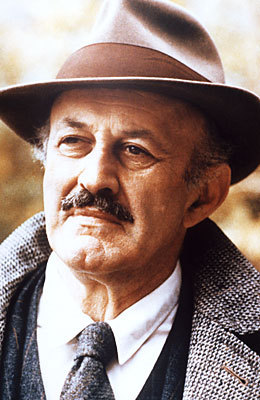
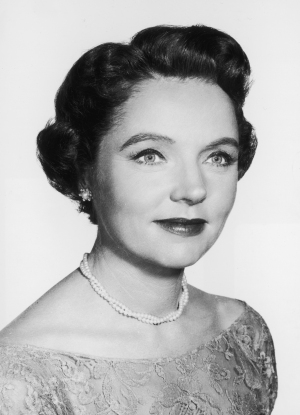
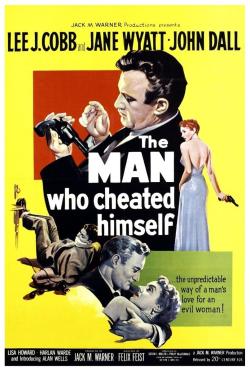
A homicide lieutenant, Lee J. Cobb, has a rich girl friend, Jane Wyatt, who is about to divorce her husband. The husband has been planning to kill her and make it look like a burglary gone wrong. Cobb stumbles into their sitting room just as Wyatt and her husband are struggling for the gun. Hubby winds up shot twice and dead. Instead of reporting the incident to the police, Cobb disposes of the body elsewhere and throws the gun off the Golden Gate Bridge.
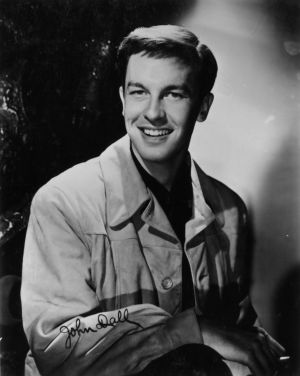
He's assigned to the case, however, and is to be assisted by his younger brother, John Dall, a rookie sergeant. All kinds of twists and turns follow. The gun thrown from the bridge evidently landed in the net of a fishing boat instead of the sea. And another gun is used in a robbery that is microscopically identical to the gun in Cobb's case. A witness to Cobb's disposal of the body turns out to have been color blind and made a mistake concerning the color of the coupe Cobb was driving.
John Dall finally twigs. Cobb cold cocks him and he and Wyatt leave for a temporary hiding place at Fort Point, but Dall discovers them and they are arrested. Final scene: A charming Wyatt is cuddling her lawyer in the courthouse, saying, "Oh, you'll get me out of this, won't you? I have lots of money." After a contemptuous stare, she passes the handcuffed Cobb without a word.
It's a workably formulaic plot -- investigating yourself, or having your brother investigate you. "The Big Clock" probably did a better job of it. More recently it was borrowed for "Presumed Innocent." I don't know how many other examples have been floating around.
This exemplar is pretty humdrum. Lee J. Cobb is a magnificent actor and has done fine work elsewhere, especially for Elia Kazan. Here, he's dour throughout. Even at the beginning, when he's supposed to be joking with his newly arrived kid brother about the kid's forthcoming marriage, he seems to be performing a duty instead of enjoying himself. Nor is this Jane Wyatt's kind of role -- the treacherous, perfidious rich dame. She was attractive and perceptive and sensible. Here, the director (Felix Feist) has her overacting to the point of dolor. (She faints twice in the same scene after some hysterical babbling.) Dall doesn't add much but he's given at least a more complex role.
The story itself doesn't make a heck of a lot of sense. After all, Jane Wyman had been whining abjectly about her husband's plans to murder her -- and she was RIGHT. Hubby had jimmied the door, bought a gun, and did what he could to arrange a fake burglary and was caught and killed just in time to prevent him from achieving his goal. So why does an experienced policeman like Cobb, without a moment's reflection, decide to cover up the death? How can two guns have identical lans and grooves? And what is the likelihood of their BOTH being used in murders within a few days of each other? I'll tell you what the likelihood of that's happening is. The probability is exactly .00012848329.
Come to think of it, I'm not sure about how one of those guns wound up in Tito Vuolo's fishing net. Was it the gun that Cobb threw from the bridge? Or did the gun belong to Vuolo's ne'er-do-well son? And, if I remember, blue-green color blindness is less common than red-green. Not that it makes much difference in everyday life. I mean, when was the last time anything important depended on your distinguishing blue from green? The Samoan language has only one word for the part of the color spectrum that includes both blue and green and the Samoan people are doing quite well, thank you very much.
I've kind of made fun of an unambitious B feature, I know, and maybe I shouldn't, but it really is a little dull and sometimes jarringly discordant.


 Enjoy unlimited movies and shows
 Download your favorite content to watch offline
 Simple interface & smooth performance
















'%3e%3cpath%20id='Vector'%20d='M17.3996%2025.7999C17.3996%2025.9838%2017.3634%2026.1658%2017.293%2026.3357C17.2227%2026.5055%2017.1196%2026.6598%2016.9896%2026.7899C16.8596%2026.9199%2016.7052%2027.023%2016.5354%2027.0933C16.3655%2027.1637%2016.1835%2027.1999%2015.9996%2027.1999C15.8158%2027.1999%2015.6337%2027.1637%2015.4639%2027.0933C15.294%2027.023%2015.1397%2026.9199%2015.0097%2026.7899C14.8797%2026.6598%2014.7765%2026.5055%2014.7062%2026.3357C14.6358%2026.1658%2014.5996%2025.9838%2014.5996%2025.7999C14.5996%2025.4286%2014.7471%2025.0725%2015.0097%2024.81C15.2722%2024.5474%2015.6283%2024.3999%2015.9996%2024.3999C16.3709%2024.3999%2016.727%2024.5474%2016.9896%2024.81C17.2521%2025.0725%2017.3996%2025.4286%2017.3996%2025.7999Z'%20fill='white'/%3e%3cpath%20id='Union'%20fill-rule='evenodd'%20clip-rule='evenodd'%20d='M8.5%204H23.5C24.0523%204%2024.5%204.44772%2024.5%205V21.5H7.5V5C7.5%204.44772%207.94772%204%208.5%204ZM5.5%2022.5V5C5.5%203.34315%206.84315%202%208.5%202H23.5C25.1569%202%2026.5%203.34315%2026.5%205V22.5V27C26.5%2028.6569%2025.1569%2030%2023.5%2030H8.5C6.84315%2030%205.5%2028.6569%205.5%2027V22.5ZM24.5%2023.5V27C24.5%2027.5523%2024.0523%2028%2023.5%2028H8.5C7.94772%2028%207.5%2027.5523%207.5%2027V23.5H24.5Z'%20fill='white'/%3e%3cpath%20id='Union_2'%20fill-rule='evenodd'%20clip-rule='evenodd'%20d='M17%209C17%208.44772%2016.5523%208%2016%208C15.4477%208%2015%208.44772%2015%209V13.8258L13.1508%2012.2407C12.7315%2011.8813%2012.1002%2011.9299%2011.7408%2012.3492C11.3813%2012.7685%2011.4299%2013.3998%2011.8492%2013.7593L15.345%2016.7556C15.5205%2016.9079%2015.7495%2017%2016%2017C16.2506%2017%2016.4796%2016.9079%2016.6551%2016.7556L20.1508%2013.7593C20.5701%2013.3998%2020.6187%2012.7685%2020.2593%2012.3492C19.8999%2011.9299%2019.2686%2011.8813%2018.8492%2012.2407L17%2013.8258V9Z'%20fill='white'/%3e%3c/g%3e%3c/svg%3e)