The war between the genders (for that's what it was in the 70s and 80s) is an odd one because both sides have to learn not only to sleep with the enemy but to live with him or her. This particular movie exemplifies fantasy number one of the American mythos: the hapless victim, which is particularly appealing to some women. (Fantasy number two is the conquering hero, which is appealing to some men.) Maybe the early 1980s was a time when a movie like this needed to be made. The government was reluctant to intrude into family matters, and the prevailing idea was that the family should be preserved since it is a holy bond. We hadn't yet come to the realization that some families are just not worth saving. Perhaps this was an object lesson in changing ethics and social values and it was a good idea to make it.
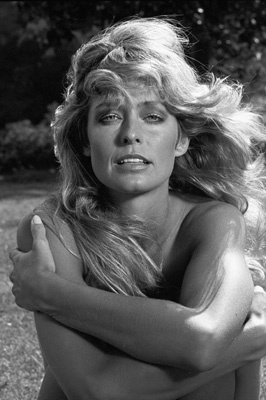
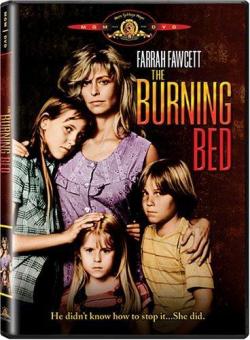
Having said that, it is not, in retrospect, a very good movie. Farrah Fawcett garnered a good deal of praise at the time for her performance and I don't think most of us can now be sure why. She looks mostly put upon. Also, she's a tough and beautiful woman and seems to have sufficient resources to find other ways out of her dilemma. (And given her brains, her thirst for education, her general savvy -- when will she stop believing her husband's lies, however well intentioned they might be?) Still, I'd rather have her in this part that some appallingly helpless waif like, say, Mia Farrow. (Aren't looks sometimes deceiving?) Paul LeMatt is unconvincing as Doctor Jeykll and over the top as Mister Hyde, not helped by the director poking the camera lens in his face as he froths out of his mouth while playing cat and mouse with his bloodied wife, before bloodying her a bit more and rubbing her face in garbage. Anyone who thinks this is a typical American household has never met my ex wife! Of course LeMatt should be punished for his treatment of anyone like Farrah Fawcett. A bit of consensual spanking, maybe, but he goes way over the top. I don't believe for a moment that Farrah's mother backed up her son-in-law, unless something very strange was going on that we never find out about.
And speaking of that, it would be interesting to find out exactly what was going on between Farrah and LeMatt. As in all murder trials we are stuck exclusively with the defendant's explanation of what happened because the murder victim is conveniently dead.
The movie forces two moral lessons upon us. First, spousal abuse is a serious problem in some families and women need resources that, in the 1970s, were simply not available. That has, fortunately, been partially taken care of. Not by governmental intrusion so much as by changing social circumstances. Families have fewer children, for one thing, and this in itself contributes to the liberation of married women from some of their household responsibilities. And women are now routinely accepted as educable. There are more females in college now than men. They can even go to formerly all-male bastions of bonding like The Citadel and West Point. They can now even patronize McSorley's Old Ale House, one of my favorite pubs, in New York! At least for middle-class women, they now have chances to develop marketable skills, which makes it easier to get out of an abusive relationship. And the courts too are more sympathetic to their plight.
The second moral lesson, which I find unacceptable, is that if your spouse continuously mistreats you, you can burn him alive. The movie tells us that this is justified. When the "not guilty" verdict rolls around at the end, the score swells with triumphant music. Women weep and embrace one another in their victory. Everything is now okay; the guy has been barbecued by his wife. Terrific. Now let's all go home and make fudge. The solution to the problem of spousal mistreatment lies not in violence. (That's not the solution, that's the problem.) The solution lies in negotiation, as we all know already, outside of our fantasies. That's how the real world works.


 Enjoy unlimited movies and shows
 Download your favorite content to watch offline
 Simple interface & smooth performance






















'%3e%3cpath%20id='Vector'%20d='M17.3996%2025.7999C17.3996%2025.9838%2017.3634%2026.1658%2017.293%2026.3357C17.2227%2026.5055%2017.1196%2026.6598%2016.9896%2026.7899C16.8596%2026.9199%2016.7052%2027.023%2016.5354%2027.0933C16.3655%2027.1637%2016.1835%2027.1999%2015.9996%2027.1999C15.8158%2027.1999%2015.6337%2027.1637%2015.4639%2027.0933C15.294%2027.023%2015.1397%2026.9199%2015.0097%2026.7899C14.8797%2026.6598%2014.7765%2026.5055%2014.7062%2026.3357C14.6358%2026.1658%2014.5996%2025.9838%2014.5996%2025.7999C14.5996%2025.4286%2014.7471%2025.0725%2015.0097%2024.81C15.2722%2024.5474%2015.6283%2024.3999%2015.9996%2024.3999C16.3709%2024.3999%2016.727%2024.5474%2016.9896%2024.81C17.2521%2025.0725%2017.3996%2025.4286%2017.3996%2025.7999Z'%20fill='white'/%3e%3cpath%20id='Union'%20fill-rule='evenodd'%20clip-rule='evenodd'%20d='M8.5%204H23.5C24.0523%204%2024.5%204.44772%2024.5%205V21.5H7.5V5C7.5%204.44772%207.94772%204%208.5%204ZM5.5%2022.5V5C5.5%203.34315%206.84315%202%208.5%202H23.5C25.1569%202%2026.5%203.34315%2026.5%205V22.5V27C26.5%2028.6569%2025.1569%2030%2023.5%2030H8.5C6.84315%2030%205.5%2028.6569%205.5%2027V22.5ZM24.5%2023.5V27C24.5%2027.5523%2024.0523%2028%2023.5%2028H8.5C7.94772%2028%207.5%2027.5523%207.5%2027V23.5H24.5Z'%20fill='white'/%3e%3cpath%20id='Union_2'%20fill-rule='evenodd'%20clip-rule='evenodd'%20d='M17%209C17%208.44772%2016.5523%208%2016%208C15.4477%208%2015%208.44772%2015%209V13.8258L13.1508%2012.2407C12.7315%2011.8813%2012.1002%2011.9299%2011.7408%2012.3492C11.3813%2012.7685%2011.4299%2013.3998%2011.8492%2013.7593L15.345%2016.7556C15.5205%2016.9079%2015.7495%2017%2016%2017C16.2506%2017%2016.4796%2016.9079%2016.6551%2016.7556L20.1508%2013.7593C20.5701%2013.3998%2020.6187%2012.7685%2020.2593%2012.3492C19.8999%2011.9299%2019.2686%2011.8813%2018.8492%2012.2407L17%2013.8258V9Z'%20fill='white'/%3e%3c/g%3e%3c/svg%3e)