moviebox header nav
moviebox search icon
muted

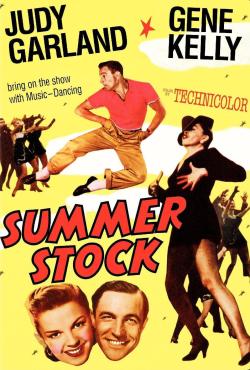
Summer Stock

1951

R

1 h 48 m

United States

Musical

Romance

A small-town farmer, down on her luck, finds her homestead invaded by a theatrical troupe invited to stay by her ne'er-do-well sister.
More

7.1 /10

5176 people rated

Watch Online

Watch in App

Episodes

Top Cast

User Review

Episodes
Top Cast
User Review

Episodes

film
lklk
Netflix
Plex
Top Cast(18)
starring avatar
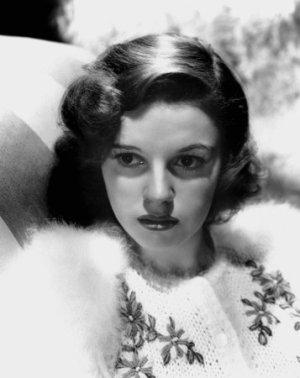
Judy Garland
Jane Falbury
starring avatar
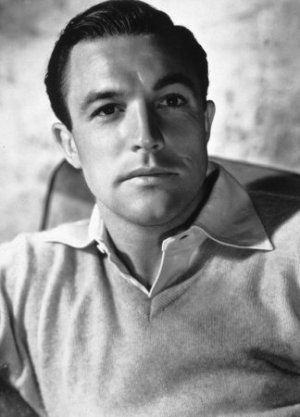
Gene Kelly
Joe D. Ross
starring avatar
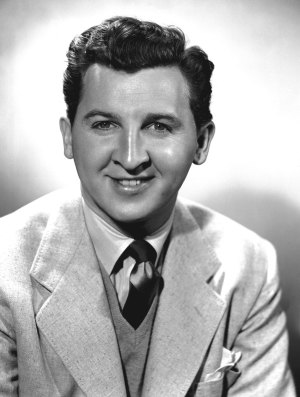
Eddie Bracken
Orville Wingait
starring avatar
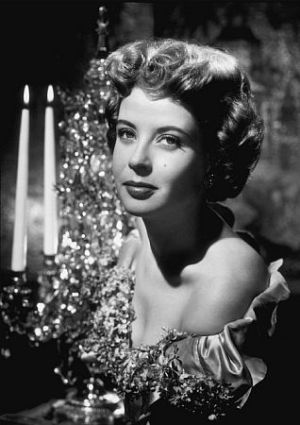
Gloria DeHaven
Abigail Falbury
starring avatar
Marjorie Main
Esme
starring avatar
Phil Silvers
Herb Blake
starring avatar
Ray Collins
Jasper G. Wingait
starring avatar
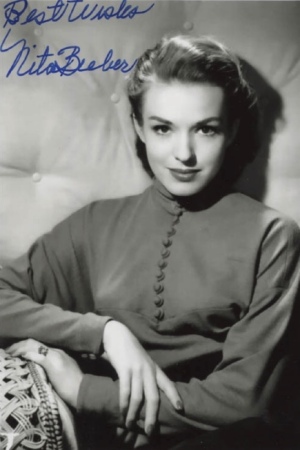
Nita Bieber
Sarah Higgins
starring avatar
Carleton Carpenter
Artie
starring avatar
Hans Conried
Harrison I. Keath
default avatar
Jean Adcock
Stock Company Member
starring avatar
Erville Alderson
Zeb
default avatar
John Angelo
Dancer
default avatar
Bette Arlen
Showgirl
default avatar
Hal Bell
Dancer
default avatar
Margaret Bert
Woman at Barn Dance
starring avatar
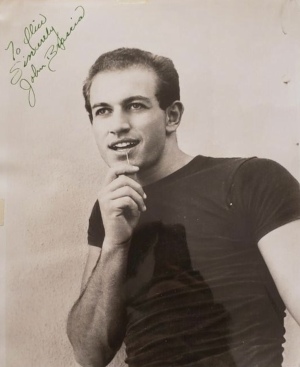
John Brascia
Dancer
default avatar
George Bunny
Townsman

User Review

author avatar

Zola Nombona

29/05/2023 14:35
source: Summer Stock
author avatar

Messie Bombete

23/05/2023 06:53
I showed this film to my critical viewing class because I figured if they didn't know who Judy Garland and Gene Kelly were, they didn't really understand Hollywood musicals. I was gratified to find that so many of them liked it. I warned them it was corny and implausible right at the onset, but most of them actually liked the corniness. Class was divided on Garland--some didn't like her singing and others--uncharitably, I thought--commented on her heftiness for most of the film, but they were unanimous in their admiration for Gene Kelly. They thought he was coolness personified and to my surprise actually thought his dance with the newspaper was excellent. With kids nowadays, used to quick cutting and high action, I thought it would seem tame, but they thought it was clever. And Phil Silvers was a big hit. One students commented on how versatile those "old actors" were, compared to today--they seemed to be able to do it all. And for some reason I couldn't understand, they howled with laughter at the end when Abigail and Orville got together, causing one student to turn around and say to me "this film was awesome!" What a treat it was to introduce them to such icons of cinema and know that they could appreciate it.
author avatar

Kofi Kinaata

23/05/2023 06:53
The good and sometimes excellent musical numbers make this an enjoyable movie despite several overall weaknesses. Gene Kelly and Judy Garland both get many good opportunities to use their talents, and most of the musical sequences show both heart and imagination. The rest of the movie, though, presents the appearance of having been contrived to set up the variety numbers, and it is not as good. The story is good-natured, but rather shallow, and it is not quite interesting enough to distract attention from its less logical aspects. Of course, with Garland and Kelly around, you can count on some good moments. The best sequences are probably Kelly's famous routine with the newspaper, and Garland's "Get Happy", two numbers that almost everyone enjoys and remembers. Kelly's routine with the newspaper is one of his most creative, and it is an entertaining way to highlight his talent. "Get Happy" has music and words to match the title, and Garland gives it her all. The song also fits in very nicely with the intended theme of the movie. There are a few worthwhile moments in the rest of it. Phil Silvers plays a sometimes amusing, sometimes annoying character. The relationships that Garland's character has with her boyfriend and with her sister start out with some potential, but they end up being only mildly interesting. The other parts of the story are innocuous, but not especially interesting. Overall, the high quality of the singing and dancing sequences make "Summer Stock" worth seeing. For anyone who enjoys the classic musicals, the strong points should compensate for the rather commonplace nature of much of the rest of the movie.
author avatar

Cyrille

23/05/2023 06:53
There are two excellent high points in this movie. One is Kelley's newspaper and creaking board dance and the other is when Judy Garland sings and dances to Harold Arlen's "Get Happy" (his first published song from 1929 -- brought out of mothballs in this 1950 film). The irony is that "Get Happy" and the comic happy nature of the film are the opposite of what you can see in Judy Garland. Her fragility and fear of being unattractive simmer up through her performance. That makes the movie interesting on an unintended level. The plot of the movie is really bad, but the movie is saved by the sensational dancing and one great song. It is also very interesting to watch the expertise used to hide Judy Garland's body shape as much as possible. I appreciated Judy Garland much more after seeing this movie. You can see the sadness and despair through all the smiles, dancing, and singing. If you are a Judy Garland fan, you must see this movie.
author avatar

🤪الملك👑راقنر 👑

23/05/2023 06:53
Some moments of this otherwise B-level film are quite astonishing, like Gene Kelly's solo dance with the newspaper or the conversation between Gloria De Haven and Eddie Bracken which gently reveals their affection for each other. But the film, more or less, belongs to Judy Garland- she of the frequently strained health and nerves, who nevertheless made it all look very easy. That said, this is a good one, albeit a corny one. The hillbilly number done with Kelly, Phil Silvers, and the chorus is a bit much, but the film does show off Garland's talent for low-key, witty comedy. And "Get Happy" aside, the 'Portland Fancy' square dance which seamlessly turns into a swing duet with Garland and Kelly is probably the most enjoyable moment of the whole film. (Considering Garland's strength was singing, her dancing was quite impressive.) And my favorite Garland solo is the moonlit ballad "Friendly Star," done almost all in closeup, with the star's beautiful dark eyes on the brink of tears through the whole number. It's a pleasant swan song for her MGM era, but thankfully, her greatest musical (A Star Is Born) was still yet to come.
author avatar

user51 towie

23/05/2023 06:53
This picture suffers mostly by comparison to the stars' other films, from their great star turns in films like "Wizard of Oz" and "Singing in the Rain" to their more unconventional duo film "The Pirate." But expecting each MGM musical to hold up to the standards reached at their peak is a formula for disappointment. While it's true that this is the only Judy/Gene film that really has no more substance than a typical Judy/Mickey film would have, it does present the two classic performers in some charming and entertaining vignettes like Gene Kelly's solo dance on a newspaper and Judy's classic "Get Happy" jubilee stomp. The plot is beyond thin -- basically it's the return of the prototypical "let's put on a show in the barn" musical. And basically we're supposed to accept that Judy Garland is a farmer. The music provided, mostly by Harry Warren and Mack Gordon, is mostly enjoyable but not really memorable. The events in the film flow with an almost savage or sadistic determinism -- the instant you see that Garland has bought a brand new tractor and bumbling Phil Silvers comes within 10 feet of it you know there will be a disaster. It robs the supposedly humorous "accident" of any real zest or charm. This is an uninspired and uninspiring film but should please all of those who are fans of the amazing performers at the head of the cast. I feel that even with its trite plot, it could have been a much better film if the characters had been invested with some real feeling and complexity on any kind of level.
author avatar

Boitumelo Lenyatsa

23/05/2023 06:53
It was her last MGM musical, and one of her best. But she was really troublesome in the making of it, so MGM fired her and her career (which included at least two more great performances) never recovered in the movies. That is how SUMMER STOCK is recalled today - the film that wrote "finish" to Judy Garland's film stardom at MGM. But SUMMER STOCK is also the film that gave her her last chance to appear opposite Gene Kelly and to play a story line that she was familiar with. For here Judy returns to the story line of the musicals she made in the early 1940s with Mickey Rooney, regarding "putting on the show". The difference is that she and Mickey and the others were teenagers (or supposedly teenagers) showing up the dubious grown-ups. Here it is grown-ups putting on a show for an out-of-town preview in a small town. Judy is living in a New England town, where her family has old, old roots (at one point we learn her great great grandfather set up an anti-theater law in 1698!). She and her sister, Gloria DeHaven, own a farm. Judy has been courted, and is engaged, to Eddie Bracken, the son of the town banker Ray Collins. Bracken is his typical weak type, with eyeglasses and hay fever. Collins is typically fatherly, but a bit of a bully to his son (not for any bad reasons). He looks forward to the marriage as a way of uniting the two oldest families of the area. And he even does Garland a favor, giving her a new tractor for her farm at cost. DeHaven has always been the pampered younger daughter. She has been dating Kelly and invites him and the cast of his musical review production to put it on in the barn of her farm. The musical not only has Kelly as director, producer, and star, but also has Phil Silvers and Carleton Carpenter as his assistants (in Silvers' case, supposed assistant as he's a walking disaster area), and also been lucky enough to get a famous leading man named Keith (Hans Conreid, effective in his brief part but all too brief). They descend on the farm and Garland and her cook and helper Marjorie Main are uncertain about what exactly to do. Collins and Bracken are not too helpful. In fact their parochial attitude to theater people is very hostile. As the film progresses Garland slowly gets dragged into the production, especially as DeHaven's interest flags. In the meantime the relationship of Bracken and Garland starts cracking seriously as he gets suspicious of the intentions of Kelly towards his intended. The numbers are pretty good, particularly the songs "Howdy Neighbor", "You Wonderful You", "Heavenly Music", and the last minute show stopper, "Get Happy!" Oddly enough, in the discussions I see on this thread, nobody notes the ridiculous tune that Conreid (it's not his voice) and DeHaven sing "Alone on a Lonely Island". It is done in such a way to spoof the stiff, overly rich voice of Conreid's "Heath". As it does not show up in the final production it probably was only meant for that character. It is too bad that SUMMER STOCK was her last MGM film...but at least Judy left on a high note.
author avatar

user5957917554075

23/05/2023 06:53
In the canon of MGM musicals of the Golden Age, "Summer Stock" is an overlooked and underrated pleasure. As relaxed as a summer day spent on a farm like the one in the film, this soft shoe of a musical doesn't aim for greatness, though it very nearly reaches it on one or two occasions. Filmed in sunny, bandbox Technicolor, the films opens on Judy Garland singing in her morning shower. She is Jane Falbury, the mistress of a New England farm going to seed. Sassy Marjorie Main is the maid and cook, pretty Gloria DeHaven is her irresponsible sister who has run off to New York to become an actress, and Eddie Bracken is Garland's hopelessly inept fiancee, manager of the local general store. Garland's wry way with a comic line is richly evident in this film, as she trys to deal with one exasperating annoyance after another. She is in superb singing voice, and most charming when she holds one long, belting note to the very end and then, looking into the camera, nearly collapses with mock-exhaustion. Into this bucolic chaos lands handsome Gene Kelly and his troupe of Broadway gypsies, promised by DeHaven that they can use her sister's barn for a summer stock production of Kelly's new musical. With sarcastic assist by Phil Silvers, Kelly sets about convincing a skeptical Garland that one hand can wash the other: if she consents to the barn being used as a theatre, the troupe will help save her foundering farm by performing the daily chores and harvest planting. Of course, all manner of of mishap and misunderstanding ensue; happily, none of them stand in the way of Garland and Kelly performing a handful of enjoyable numbers. After Astaire and Rogers, Garland and Kelly were surely filmdom's most sublime song and dance duo, and they perform one dance here, a jazzed-up "Portland Fancy", which nearly stops the show. Apart from their duets, they shine in solo numbers which are manna to fans of great talent. Both stars ascended greater cinematic heights after this film, Kelly in "Singin In The Rain" and Garland at Warner Bros. for "A Star Is Born", but here in this simple tale are found some of the most compelling examples of their style and grace: Garland singing the yearning "Friendly Star" in the summer moonlight, Kelly whistling "You Wonderful You" on a lonely stage with a discarded newspaper as his partner. But finally, the highlight of the film is to be had by Garland in the big finale at the end. Having been cajoled into joining the troupe for their pre-Broadway opening in her barn, Garland and a phalanx of chorus boys jump off the screen with the Harold Arlen standard "Get Happy". Heralded by the blare of the MGM Studio Orchestra brass section, Garland steps out from behind the black-suited line of men wearing only a tuxedo jacket, black pumps, and a man's hat set rakishly atop her head. Looking chic and sexy, dancing with the boys, she makes the Arlen chestnut her own, and uses her considerable show biz muscle to pull down one of the most memorable performances in musical history. Garland's electrifying number dominates the film's reputation, and deservedly so. It is for one to still marvel how this diminutive, talented actress could, for five or so minutes, turn a breezy, unambitious musical into a great one.
author avatar

Kinaatress ❤️

23/05/2023 06:53
Sadly, this is the last film before MGM fired Judy Garland. Its sad that her life was getting shaky around this time due to the toll her drug addiction was having on her. And I think it's even more sad that it was never Judy's fault that she got addicted to pills in the first place since it was MGM and Judy's mother that forced her to start and to keep taking these pills years earlier. They made her take these addictive stimulants so she could keep working long energetic hours at the studio. Then she became addicted to barbiturates cause the stimulants gave her insomnia. She and the other MGM stars were given some barbiturate pills half hour before bed, then fell asleep, then got woken up only 4 hours later and given their first stimulants of the day, a little breakfast (they were never allowed to eat that much so to keep their weight down), then back to work. Judy worked such long hours, slept those short 4 hour nights, and ate such a low calorie diet for so many years, that it all had taken such a toll on her by this time period, around 1950. And she wasn't as up to scratch at work anymore and was missing work all the time. That's why MGM fired her. Its all so unfair. Judy Garland was one of the most wonderful gifts we ever had in this world. Anyway, this film was pretty good but it wasn't one of the best like many of Judy's earlier films, but it was not Judy's fault. Some of the script is rather corny with the whole "goofy actors barging unannounced into Judy's barn" deal. I didn't care that much for the Phil Silvers character since he was too goofy and sorta a "bull in a China shop" kinda character. He destroys Judy's tractor, but not to be destructive, it's because he's clumsy and not smart enough to stay off a machine that he didn't know how to operate. Gene Kelly was good here but not quite as good as he was in "Me and my gal", "Anchors aweigh", and "Singin in the rain". And he and Judy, even though they are good together, did not have as much wonderful chemistry and magic together that they had in "Me and my gal". He still had a very good dance number where he kept ripping newspaper on the floor into smaller pieces with his dance moves. Judy still had some wonderful shining moments, especially when she sang including a very good song " Howdy neighbor, happy harvest" while she was riding home on her tractor. And also great in her famous "Get happy" song. Judy was engaged to Eddie Bracken, who was also sort of a goofy character, who was always irritating his dad. I liked Gloria Dehalivand as Judy's acting school sister who was the one who had the idea to stage production in her and Judy's barn to begin with. I didn't care for Judy's short hairstyle in this film as much as all her hairstyles in her previous films, but I still love Judy Garland very much. She was really one of the greatest things in Hollywood's already golden golden age.
author avatar

M&M@000777

23/05/2023 06:53
I think many of the comments posted reflect what many of the posters know about the agonizing production of Judy's final film for MGM. This simple, very corny movie took months and months to shoot and Judy was either late or not appearing or collapsing. Okay. But if we didn't know that, how would we view the finished product? In my opinion none of the stress shows. Garland is by no means "fat" She is at the weight nature--if not MGM--intended. She's on the plump side. She is exquisitely photographed, and well-costumed. She's a farm girl; the over-alls make sense, as well as working to conceal her a bit. The dresses are flattering and designed to give her shape and height. Her face is lovely, still. (Four years later, in "A Star Is Born" she looks harsh and a decade older than her actual age.) Her voice is in top form, especially on "Evening Star" an unjustly forgotten gem. Gene Kelly looks fantastic and gives his all to a movie he didn't want to do. He felt, justifiably, that it was an old Mickey/Judy re-tread. And now, literally, a show was being performed in a barn! But he did it for Judy, who'd given him his movie break in "For Me and My Gal" back in 1941. It goes on, and meanders, as so many MGM musical do, but it is still a satisfying, enjoyable example of the genre. And, for all the "hokcum", sentiment and predictable outcomes, "Summer Stock" also offers Judy's best dancing sequence, ever--in any film. For Miss Garland to have risen to the challenge offered, in a movie that offered so few, and in her emotional distress...well, that's genius, folks.
Disclaimer: All videos and pictures on MovieBox are from the Internet, and their copyrights belong to the original creators. We only provide webpage services and do not store, record, or upload any content.