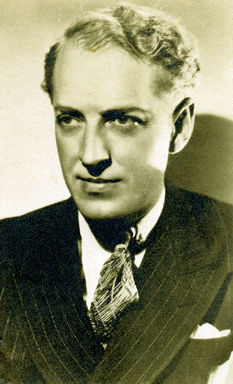
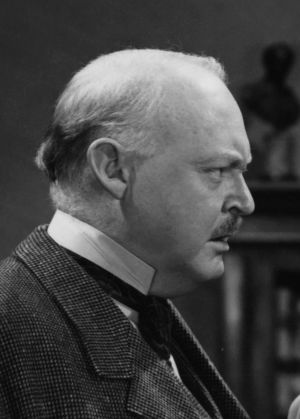
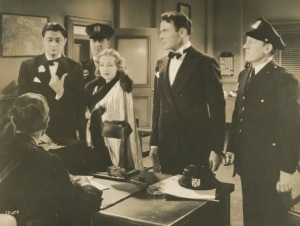
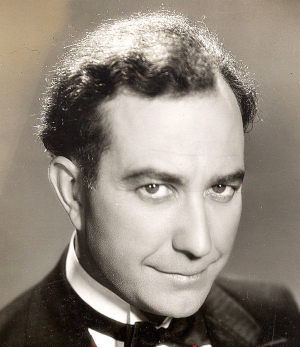
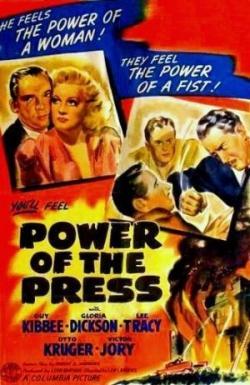
A newspaper drama that somehow manages to make the cause of democracy seem almost trite, "Power Of The Press" sticks out only for a juicy, over-the-top performance by Otto Kruger.
The publisher of the New York Gazette is so moved when an old friend running a Nebraska weekly denounces him as a traitor that he makes a speech to call himself out on exactly those lines. Unfortunately, the conniving minority owner of the Gazette, Howard Raskin, manages to have him shot during a live radio broadcast. Can that old friend, willed control of the Gazette by the dying publisher, clean house and break up a Fifth Column of conniving columnists?
"I don't think we want anyone on this paper who fears democracy more than he or she fears Hitler," says the new boss upon taking control of the Gazette, as Rankin sulks diabolically on the sidelines, plotting his next atrocity.
Based on a story by Samuel Fuller but brought to the screen by other hands, "Power Of The Press" is a warning about newspapers that work against American interests while war is being waged in Europe and Asia. Sedition is an easy thing to dislike, but the movie overplays its hand so much in this direction that it quickly becomes tinny and shrill. Director Lew Landers had an hour to kill for this B-movie, and does so with big close-ups of things like a shoe stepping on a newspaper as the publisher's killer makes his getaway.
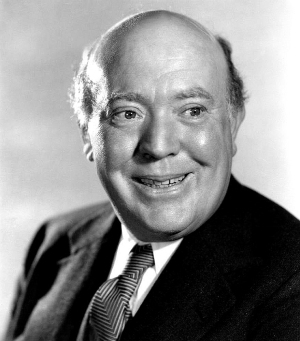
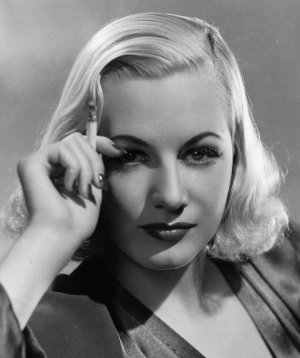
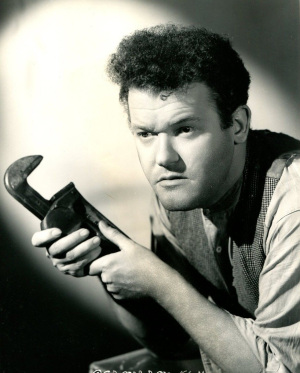
Guy Kibbee was a comedy actor who took a rare dramatic role here as the new publisher, one Ulysses Bradford. He pontificates, reasonably but at great length, about the need for a fair press that prefers the truth to flashy headlines that rile readers. Just in case you aren't convinced, there's Gloria Dickson as "Eddie," Bradford's girl Friday, who nods vigorously at his pronouncements. If Bradford's homey wisdom doesn't roll your eyes, her earnest echoes will.
Speaking of eye-rolling, Kruger does a lot of this as the rascally Raskin. He's so obvious and one-dimensional a villain that Kruger's portrayal makes him almost enjoyable, ordering newsmen to print up phony and damaging stories while twiddling his stogies with a smirk.
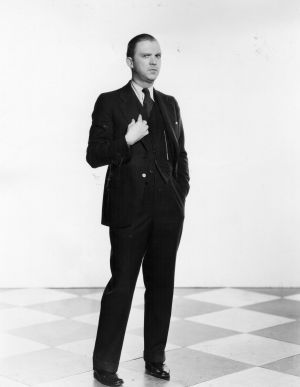
"Following the parade doesn't sell papers," he says in explaining his motives to head editor Griff (Lee Tracy). It's an interesting tack; unfortunately, the writers gild the lily by making Raskin a covert Nazi, with his own private Gestapo, when just being amoral would have been enough.
Told about Bradford, he seethes: "A man who wrote that should be in a concentration camp!"
There's a mystery to be solved, involving first the publisher's death, and then the mysterious fate of an alibi witness for the accused killer, whom Bradford knows is innocent after one jail meeting. Everything points so obviously at Raskin; one wonders only how the guy can act so cool while committing his crimes.
Eventually he loses it, in a predictable Scooby-Doo conclusion after Griff sees the light and gives him a taste of his own medicine. In case that's not enough, Bradford then concludes the movie by turning to the camera and warning the audience of the traitors in their midst.
"Griff" was a standard name in Fuller films which makes its debut here; the touch of Fuller is otherwise notable only by its absence.


 Enjoy unlimited movies and shows
 Download your favorite content to watch offline
 Simple interface & smooth performance




'%3e%3cpath%20id='Vector'%20d='M17.3996%2025.7999C17.3996%2025.9838%2017.3634%2026.1658%2017.293%2026.3357C17.2227%2026.5055%2017.1196%2026.6598%2016.9896%2026.7899C16.8596%2026.9199%2016.7052%2027.023%2016.5354%2027.0933C16.3655%2027.1637%2016.1835%2027.1999%2015.9996%2027.1999C15.8158%2027.1999%2015.6337%2027.1637%2015.4639%2027.0933C15.294%2027.023%2015.1397%2026.9199%2015.0097%2026.7899C14.8797%2026.6598%2014.7765%2026.5055%2014.7062%2026.3357C14.6358%2026.1658%2014.5996%2025.9838%2014.5996%2025.7999C14.5996%2025.4286%2014.7471%2025.0725%2015.0097%2024.81C15.2722%2024.5474%2015.6283%2024.3999%2015.9996%2024.3999C16.3709%2024.3999%2016.727%2024.5474%2016.9896%2024.81C17.2521%2025.0725%2017.3996%2025.4286%2017.3996%2025.7999Z'%20fill='white'/%3e%3cpath%20id='Union'%20fill-rule='evenodd'%20clip-rule='evenodd'%20d='M8.5%204H23.5C24.0523%204%2024.5%204.44772%2024.5%205V21.5H7.5V5C7.5%204.44772%207.94772%204%208.5%204ZM5.5%2022.5V5C5.5%203.34315%206.84315%202%208.5%202H23.5C25.1569%202%2026.5%203.34315%2026.5%205V22.5V27C26.5%2028.6569%2025.1569%2030%2023.5%2030H8.5C6.84315%2030%205.5%2028.6569%205.5%2027V22.5ZM24.5%2023.5V27C24.5%2027.5523%2024.0523%2028%2023.5%2028H8.5C7.94772%2028%207.5%2027.5523%207.5%2027V23.5H24.5Z'%20fill='white'/%3e%3cpath%20id='Union_2'%20fill-rule='evenodd'%20clip-rule='evenodd'%20d='M17%209C17%208.44772%2016.5523%208%2016%208C15.4477%208%2015%208.44772%2015%209V13.8258L13.1508%2012.2407C12.7315%2011.8813%2012.1002%2011.9299%2011.7408%2012.3492C11.3813%2012.7685%2011.4299%2013.3998%2011.8492%2013.7593L15.345%2016.7556C15.5205%2016.9079%2015.7495%2017%2016%2017C16.2506%2017%2016.4796%2016.9079%2016.6551%2016.7556L20.1508%2013.7593C20.5701%2013.3998%2020.6187%2012.7685%2020.2593%2012.3492C19.8999%2011.9299%2019.2686%2011.8813%2018.8492%2012.2407L17%2013.8258V9Z'%20fill='white'/%3e%3c/g%3e%3c/svg%3e)