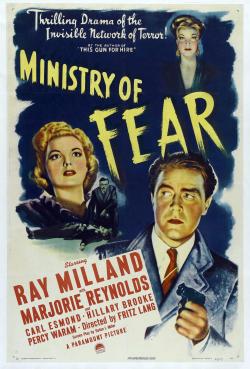
This is a strange Lang film. It is a pure programmer, somewhat along the lines of Hitchcock, but because Lang did not get much of his way with it, the reins largely being in the hands of the producer/writer Seton Miller, well....thereby hangs the warping something he had wanted to do for a long time, and would have done had not the film rights been bought up long before.
So we will never see anything as of a piece say as Big Heat, yet some of the set pieces are as good as anything Lang ever did.
Getting rid of the detritus first, much of the time the film is absolutely leaden. However there are a few good moments at the carnival where Milland gets his cake, and then on the train with the cake...and from here on we are going into some spoilers, so don't read any further if you have not seen the film.
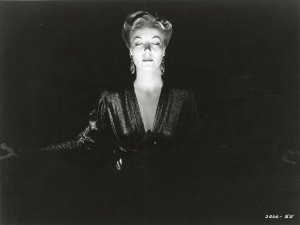
After the train is bombed, there is a hokey but absolutely pure Lang scene during the seance with Hillary Brooke. Hitchcock would probably have handled it differently and it would have been interesting to see how it would have differed from Lang. Lang's noir came from a deeper, purer UFA strain under which Hitch studied: while this not being the place to go into Hitch's style, Lang's approach was always much more primitive: his blacks were the blackest of the bunch, his terror was always meaner if not deeper than Hitch's largely because Lang really did escape from some of the meanest and baddest of Europe, the Nazis, and in film after film, the terrors he summons often have all the suddeness and starkness of a knock on the door at midnight...out of nowhere. Lang's blacks were always a pool from thugs and monsters to emerge with a gun. His blacks were the purest of anybody who ever got behind a camera, and his Nazis still the most terrifying of them all.
That said, after the seance, and the shooting there, his escape and running from the police is pretty idiotic, probably because of the poor script of Seton Miller. Only until the bombing of the room, and Millands waking up does the film take on real life again.
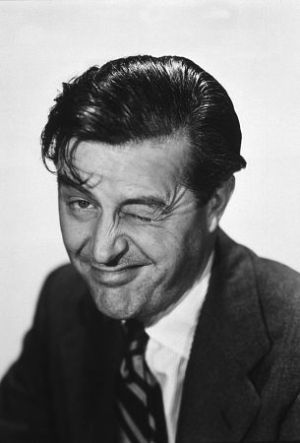
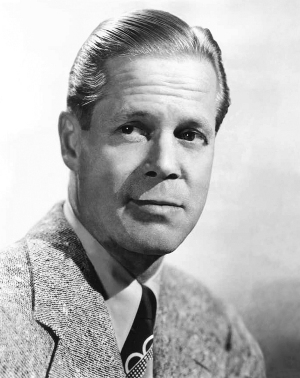
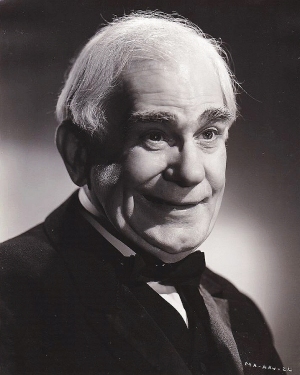
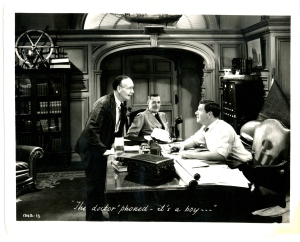
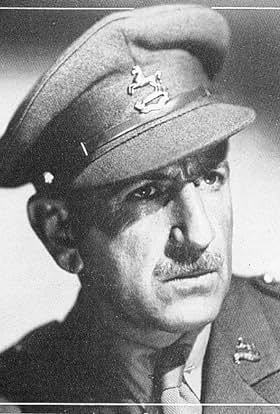
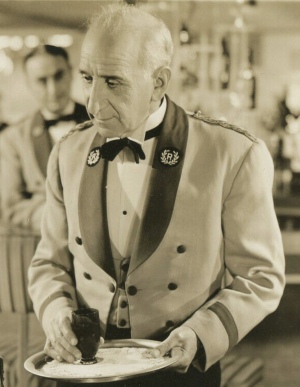
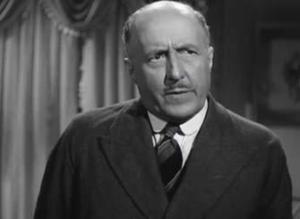
The person playing the cop is something else, however. Lang has the man give one of the most unusual takes on a cop in the history of cinema. The hunting for the cake in the ruins takes place on a set but does not suffer at all, much as they do in a Hitchcock with no damage. Much of the scene is also very hokey but is quite good. Then after the cake is found, the rest of the film is superb. Once they trace the microfilm to the tailor shop, wow, great stuff. The rain was never handled better, and the scene at the tailor is a good as anything Lang ever did. And even the final shootout is quite good. Only the last frames of the end betrays whom ultimately was controlling the film: Seton Miller tacks on a hack absolutely stupid ending that Lang must have felt like crawling into five bottles of Johnny Walkers. It's embarrassing. Yet Dan Duryea and Ray Milland and the man playing the Scotland Yard cop are about as good as anything that came out of Hollywood that year. Strange that a movie only rating an overall 3 or 4 could have a few not only good but really great, almost seminal noir scenes.
My own feeling is that Lang's best film is Manhunt. It is tight and watchable all the way through from first to last. But there are a few moments in Ministry up to the very best of that. Too few, unfortunately, but even so, Lang at his best, even minimally was always better than the vast mediocrities of most of the forties and fifties. Hang around for the few great moments of this baby and you won't ask for your money back.


 Enjoy unlimited movies and shows
 Download your favorite content to watch offline
 Simple interface & smooth performance


















'%3e%3cpath%20id='Vector'%20d='M17.3996%2025.7999C17.3996%2025.9838%2017.3634%2026.1658%2017.293%2026.3357C17.2227%2026.5055%2017.1196%2026.6598%2016.9896%2026.7899C16.8596%2026.9199%2016.7052%2027.023%2016.5354%2027.0933C16.3655%2027.1637%2016.1835%2027.1999%2015.9996%2027.1999C15.8158%2027.1999%2015.6337%2027.1637%2015.4639%2027.0933C15.294%2027.023%2015.1397%2026.9199%2015.0097%2026.7899C14.8797%2026.6598%2014.7765%2026.5055%2014.7062%2026.3357C14.6358%2026.1658%2014.5996%2025.9838%2014.5996%2025.7999C14.5996%2025.4286%2014.7471%2025.0725%2015.0097%2024.81C15.2722%2024.5474%2015.6283%2024.3999%2015.9996%2024.3999C16.3709%2024.3999%2016.727%2024.5474%2016.9896%2024.81C17.2521%2025.0725%2017.3996%2025.4286%2017.3996%2025.7999Z'%20fill='white'/%3e%3cpath%20id='Union'%20fill-rule='evenodd'%20clip-rule='evenodd'%20d='M8.5%204H23.5C24.0523%204%2024.5%204.44772%2024.5%205V21.5H7.5V5C7.5%204.44772%207.94772%204%208.5%204ZM5.5%2022.5V5C5.5%203.34315%206.84315%202%208.5%202H23.5C25.1569%202%2026.5%203.34315%2026.5%205V22.5V27C26.5%2028.6569%2025.1569%2030%2023.5%2030H8.5C6.84315%2030%205.5%2028.6569%205.5%2027V22.5ZM24.5%2023.5V27C24.5%2027.5523%2024.0523%2028%2023.5%2028H8.5C7.94772%2028%207.5%2027.5523%207.5%2027V23.5H24.5Z'%20fill='white'/%3e%3cpath%20id='Union_2'%20fill-rule='evenodd'%20clip-rule='evenodd'%20d='M17%209C17%208.44772%2016.5523%208%2016%208C15.4477%208%2015%208.44772%2015%209V13.8258L13.1508%2012.2407C12.7315%2011.8813%2012.1002%2011.9299%2011.7408%2012.3492C11.3813%2012.7685%2011.4299%2013.3998%2011.8492%2013.7593L15.345%2016.7556C15.5205%2016.9079%2015.7495%2017%2016%2017C16.2506%2017%2016.4796%2016.9079%2016.6551%2016.7556L20.1508%2013.7593C20.5701%2013.3998%2020.6187%2012.7685%2020.2593%2012.3492C19.8999%2011.9299%2019.2686%2011.8813%2018.8492%2012.2407L17%2013.8258V9Z'%20fill='white'/%3e%3c/g%3e%3c/svg%3e)