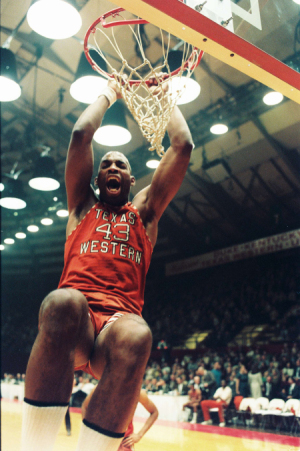
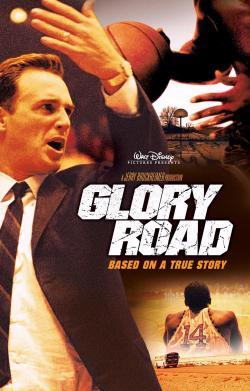
Okay, I suppose I should have a little more awe and respect for this film, considering it chronicles a major step in the civil rights movement the first time an all-black college basketball starting team won an NCCA championship (in 1966).
The problem wasn't the event, it was the movie. I didn't like any of the characters. The whites (except for the head coach and the Caucasion players) were universally violent and ignorant, while the black players were whining, militant crybabies.
True, there were certainly obstacles for the African-American athletes (mostly from Nothern venues like Indiana, Michigan and New York), to overcome; and there were obviously idiot rednecks to deal with, but the black players seemed just as prejudiced and disrespectful towards their white teammates (even losing their only game of the season because of this attitude).
There's even a scene in which one player, Willie Worsley, tells another that they should be more like Malcolm Little (Malcolm X) than Dr. Martin Luther King. Not a subtle message here, friends.
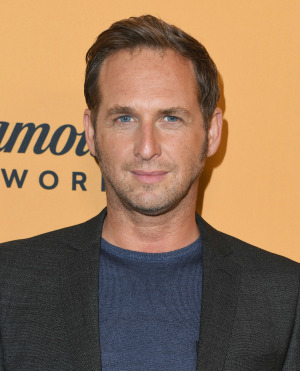
There's just no empathy for anyone. Plus, as far as sports drama goes, there really isn't much here, either. The Texas Western (now the University of Texas, El Paso) Miners of that season, coached by Don Haskins (Josh Lucas, "Stealth," "An Unfinished Life"), was a top 10 team most of the season. They were not recognized by most of the country not so much because of their starting black players, but they were a small school from deep in the heart of Texas. It was more of a geographical situation.
Sure some uninitiated dopes in the country at the time (especially in the South) did not put much stock in black athletes, but they were already proving themselves in the NBA (Bill Russell, Wilt Chamberlain, Lenny Wilkins, Elgin Baylor, Oscar Robinson, among others), as well as other sports, pro and college, so some of the resentment doesn't seem to make a whole lot of sense.
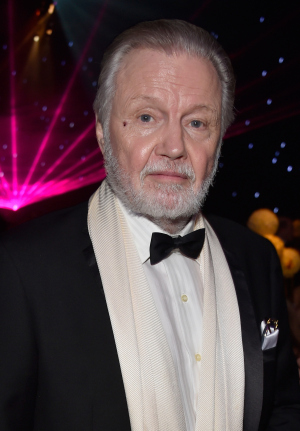
By the time the Miners met Kentucky (coached by the legendary Adoulph Rupp, a short but well-done performance by Jon Voight) in the NCAA finals that year, they were a tough, battle-seasoned squad that could compete with any team in the nation.
Sadly, that concluding game had little drama as Texas Western won by seven, although director James Gartner tries to make this as compelling as possible. The most interesting game was 1966 Midwest regional finals, in which Kansas' Jo Jo White hit a last-second basket to beat TW, but it was called off as he supposedly stepped out of bounds. The Miners also barely got by the Cincinnati Bearcats in overtime in an earlier NCAA tournament contest not mentioned in the movie.
I also did not like the fact that Haskins (according to this picture) precluded his white players from even participating in the title game (the only time those young men would ever be at such a venue), as if they made no contributions whatsoever. It seemed pretty intolerant and weird to me. Not even giving them a chance to step on the court and cherish the glory of one minute's playing time was a bizarre strategy.
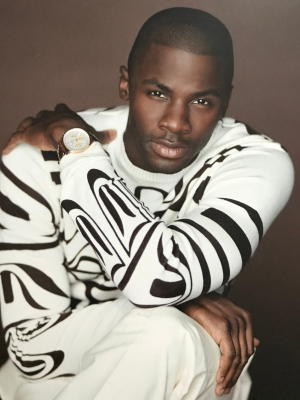
As hotshot point guard Billy Joe Hill, Derek Luke ("Antwone Fisher," "Friday Night Lights") gives the best performance, but Lucas' Haskins is the clichéd tough guy coach with a heart of gold we've seen in countless such movies.
Overall, while this is an interesting film that I recommend people to see (if for the historical element, if nothing else), I still think "Hoosiers" is the definitive underdog basketball motion picture, hands down. And while Disney gives it a yeoman's effort here, I even enjoyed their last sports film, "The Greatest Game Ever Played," more than this one.
As a side note, look for the real Haskins (who coached UTEP into the late 90s) in a cameo as an NBC analyst during the final contest.


 Enjoy unlimited movies and shows
 Download your favorite content to watch offline
 Simple interface & smooth performance












'%3e%3cpath%20id='Vector'%20d='M17.3996%2025.7999C17.3996%2025.9838%2017.3634%2026.1658%2017.293%2026.3357C17.2227%2026.5055%2017.1196%2026.6598%2016.9896%2026.7899C16.8596%2026.9199%2016.7052%2027.023%2016.5354%2027.0933C16.3655%2027.1637%2016.1835%2027.1999%2015.9996%2027.1999C15.8158%2027.1999%2015.6337%2027.1637%2015.4639%2027.0933C15.294%2027.023%2015.1397%2026.9199%2015.0097%2026.7899C14.8797%2026.6598%2014.7765%2026.5055%2014.7062%2026.3357C14.6358%2026.1658%2014.5996%2025.9838%2014.5996%2025.7999C14.5996%2025.4286%2014.7471%2025.0725%2015.0097%2024.81C15.2722%2024.5474%2015.6283%2024.3999%2015.9996%2024.3999C16.3709%2024.3999%2016.727%2024.5474%2016.9896%2024.81C17.2521%2025.0725%2017.3996%2025.4286%2017.3996%2025.7999Z'%20fill='white'/%3e%3cpath%20id='Union'%20fill-rule='evenodd'%20clip-rule='evenodd'%20d='M8.5%204H23.5C24.0523%204%2024.5%204.44772%2024.5%205V21.5H7.5V5C7.5%204.44772%207.94772%204%208.5%204ZM5.5%2022.5V5C5.5%203.34315%206.84315%202%208.5%202H23.5C25.1569%202%2026.5%203.34315%2026.5%205V22.5V27C26.5%2028.6569%2025.1569%2030%2023.5%2030H8.5C6.84315%2030%205.5%2028.6569%205.5%2027V22.5ZM24.5%2023.5V27C24.5%2027.5523%2024.0523%2028%2023.5%2028H8.5C7.94772%2028%207.5%2027.5523%207.5%2027V23.5H24.5Z'%20fill='white'/%3e%3cpath%20id='Union_2'%20fill-rule='evenodd'%20clip-rule='evenodd'%20d='M17%209C17%208.44772%2016.5523%208%2016%208C15.4477%208%2015%208.44772%2015%209V13.8258L13.1508%2012.2407C12.7315%2011.8813%2012.1002%2011.9299%2011.7408%2012.3492C11.3813%2012.7685%2011.4299%2013.3998%2011.8492%2013.7593L15.345%2016.7556C15.5205%2016.9079%2015.7495%2017%2016%2017C16.2506%2017%2016.4796%2016.9079%2016.6551%2016.7556L20.1508%2013.7593C20.5701%2013.3998%2020.6187%2012.7685%2020.2593%2012.3492C19.8999%2011.9299%2019.2686%2011.8813%2018.8492%2012.2407L17%2013.8258V9Z'%20fill='white'/%3e%3c/g%3e%3c/svg%3e)