Art determines culture rather than merely reporting on it. The influential arts were at one time novels, then painting, then briefly popular music. That role is now held by popular film. And no popular art is more influential than that which is embraced by the youth -- they have more advanced minds in terms of form and they will be the 'great static middle' in only few years. All this is to say, that if you want to look for the most influential abstractions in society, leading society, the place to look is in teen movies.
No foolin. And the farther from 'real' art, the better.
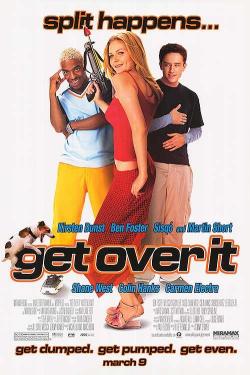
This is a prime example, in part because it is not a sex or grossout movie, and actually has a narrative. It has benefited from some real attention: it has Dunst, the very very top actress in the teen genre; it has a few recognizable music personalities and their songs; it has Hanks' kid; it has some pretty top production professionals.
But it also is in part a musical, which is an odd relationship of abstractions. The story in musicals exists in a real world of sorts that sometimes touches but often separates from our world. How that separation occurs is a matter of what types of abstractions the audience can readily understand. For instance: the very first scene here has our guy in the real world. As he leaves the dumping room, he is followed by a growing production number. Now in a normal musical, the world would change into some performance world for our benefit. But look what happens here: he stays in the real world, and the abstract world follows behind him, pulling more and more people from the real world into the fairyland. But not him -- instead we have two parallel worlds in pretty complex relationship
And this film also has Shakespeare, the master of narrative abstraction, and one play that goofs around with some rather ordinary notions of those worlds: regular people and magical gods with their spirits.
But look what we have here and be pretty encouraged at the ability of the young mind to subliminally understand, even enjoy the mix of such complex abstractions:
-- That musical opening scene where the musical characters are invisible harpies later to be related to the play's fairies.
-- The good old, ordinary basis of some people putting on a play and the matter of the play reflects the dynamics of 'real' life. (and the also much-used notion that the one 'creates' the other).
-- Several sequences that are first imagined, then dreamed which 'project' real life into not the play, but a magically idealized magical vision of the play.
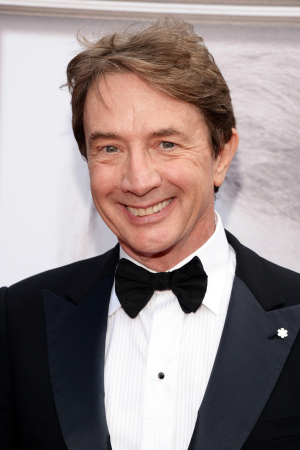
-- A whole lot of extra stuff concerning creatorship that would be impossible for Shakespeare's audience: the English performer, Dunst's songwriting, Short's authoring, and the inclusion of 'real' songwriters in our world as ordinary characters in the 'real world' of the movie.
-- Three notable cases where the comic elements that would be in the play (Bottom, etc) are transported to the movie: Short's character, Dora Lynn's physical humor, and the two stagehands. This latter one is a particularly weird bending, where they become the fairies. In fact, those two plus Peter Wong (who actually flies in an omitted scene) are the real fairies who at the critical moment change the reality of the play.
-- And we have the show at the sex club, which involves putting Berke in a harness (just like the play's fairies), but here the roles are somewhat reversed: the sex controllers are the ones not flying.
Pretty sophisticated worldshifting I say. Much snappier consciousness-bending than the relatively humbug Matrix.


 Enjoy unlimited movies and shows
 Download your favorite content to watch offline
 Simple interface & smooth performance




'%3e%3cpath%20id='Vector'%20d='M17.3996%2025.7999C17.3996%2025.9838%2017.3634%2026.1658%2017.293%2026.3357C17.2227%2026.5055%2017.1196%2026.6598%2016.9896%2026.7899C16.8596%2026.9199%2016.7052%2027.023%2016.5354%2027.0933C16.3655%2027.1637%2016.1835%2027.1999%2015.9996%2027.1999C15.8158%2027.1999%2015.6337%2027.1637%2015.4639%2027.0933C15.294%2027.023%2015.1397%2026.9199%2015.0097%2026.7899C14.8797%2026.6598%2014.7765%2026.5055%2014.7062%2026.3357C14.6358%2026.1658%2014.5996%2025.9838%2014.5996%2025.7999C14.5996%2025.4286%2014.7471%2025.0725%2015.0097%2024.81C15.2722%2024.5474%2015.6283%2024.3999%2015.9996%2024.3999C16.3709%2024.3999%2016.727%2024.5474%2016.9896%2024.81C17.2521%2025.0725%2017.3996%2025.4286%2017.3996%2025.7999Z'%20fill='white'/%3e%3cpath%20id='Union'%20fill-rule='evenodd'%20clip-rule='evenodd'%20d='M8.5%204H23.5C24.0523%204%2024.5%204.44772%2024.5%205V21.5H7.5V5C7.5%204.44772%207.94772%204%208.5%204ZM5.5%2022.5V5C5.5%203.34315%206.84315%202%208.5%202H23.5C25.1569%202%2026.5%203.34315%2026.5%205V22.5V27C26.5%2028.6569%2025.1569%2030%2023.5%2030H8.5C6.84315%2030%205.5%2028.6569%205.5%2027V22.5ZM24.5%2023.5V27C24.5%2027.5523%2024.0523%2028%2023.5%2028H8.5C7.94772%2028%207.5%2027.5523%207.5%2027V23.5H24.5Z'%20fill='white'/%3e%3cpath%20id='Union_2'%20fill-rule='evenodd'%20clip-rule='evenodd'%20d='M17%209C17%208.44772%2016.5523%208%2016%208C15.4477%208%2015%208.44772%2015%209V13.8258L13.1508%2012.2407C12.7315%2011.8813%2012.1002%2011.9299%2011.7408%2012.3492C11.3813%2012.7685%2011.4299%2013.3998%2011.8492%2013.7593L15.345%2016.7556C15.5205%2016.9079%2015.7495%2017%2016%2017C16.2506%2017%2016.4796%2016.9079%2016.6551%2016.7556L20.1508%2013.7593C20.5701%2013.3998%2020.6187%2012.7685%2020.2593%2012.3492C19.8999%2011.9299%2019.2686%2011.8813%2018.8492%2012.2407L17%2013.8258V9Z'%20fill='white'/%3e%3c/g%3e%3c/svg%3e)