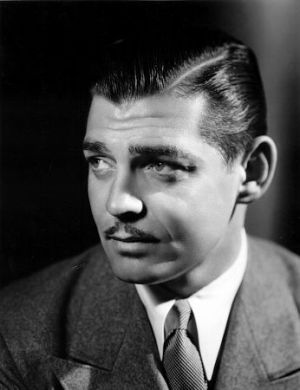
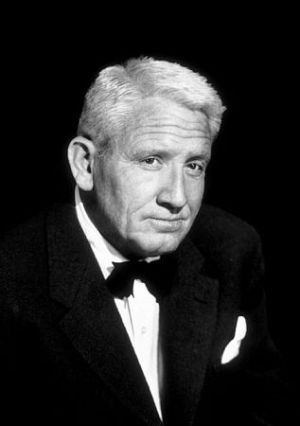
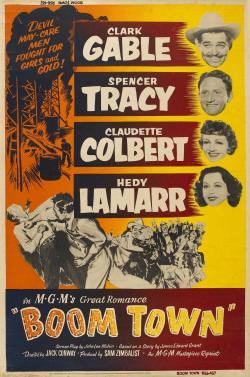
Along with "Call of the Wild", this is my favorite Gable film(including "Gone with the Wind, made the year before). They have the similarity that we are in a wildcatting situation, looking for some treasure: gold in one case, oil in another. There is an air of tremendous excitement and optimism, which Gable epitomizes. In the one case, Gable has wisecracking Jack Oakie and later gorgeous Loretta Young as companions in the search for gold in the Yukon wilderness. In the present case, Gable teams up with an enthusiastic Spencer Tracy, and later with gorgeous Claudette Corbert. This is also one of the last films Gable made before the tragic death of his wife Carol Lombard and his entry in to WWII service. After that, Gable seemed a changed man on screen. It is also the most autobiographical film Gable did, as before his film career, he joined his father as an oil man.
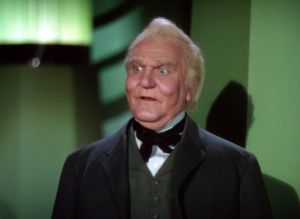
This film, as an epic about wildcatting in the early oil industry, invariably invites comparison with the later film "Tulsa", with the same theme. Native Oklahoman Chill Wills is the only actor I am aware of that was in both films. In both cases, the excitement begins with a gusher. Later, there is a spectacular oil field fire that threatens to wipe out fortunes. But "Tulsa" lacks anyone with the sizzling chemistry between Gable and Tracy, and also lacks the befuddled humor of Frank Morgan. Don't get me wrong. If you enjoyed "Boomtown", you should definitely check out "Tulsa". Susan Hayward is the tough-as-nails wildcat in that story, with Chill Wills as the occasional narrator. But, it tends to drag in places.
The initial meeting between Gable and Tracy, going opposite ways on a one way plank that serves as a bridge across a muddy water-soaked road in a wildcat town, reminds us of the initial meeting of Robin Hood(Errol Flynn) and Little John(Alan Hale) in "The Adventures of Robin hood", in which they try to knock each other off a log crossing a stream so that they may complete their crossing. In the present case, this incident results in a draw, as both dive into the mud when bullets start flying around them. Tracy's initial offense at being called "Shorty" by Gable is soon grudgingly accepted when they share a room for the night. But woe be to anyone who parrots Gable in calling him Shorty!
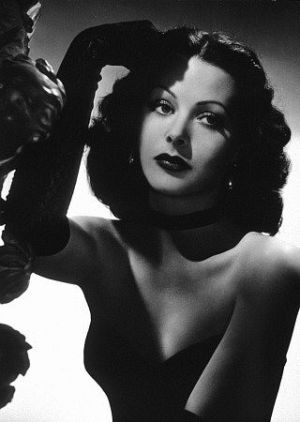
Comparison with yet another Gable film, "Wife versus Secretary", is also in order. In both films, Gable acquires a knockout single woman, who nearly costs him his marriage, as an indispensable assistant in his business. The difference is in the personalities of the women. Harlow's character respects his marriage enough not to encourage an affair, though appearances sometimes fuel rumors. Heddy Lamarr's character is a snake who admits to Tracy that she is determined to seduce and marry Gable's character. Happily, Gable eventually dismisses Lamarr and wife Colbert forgives him.
The ups and downs of Gable's and Tracy's oil businesses, together or separate, and their relationship, constitutes much of the substance of the film. Tracy makes a memorable epic speech at Gable's anti-trust trial, which serves as the basis of a reconciliation and a hopeful finale. This speech should have been quoted in T.J. DiLorenzo's book "How Capitalism Saved America", in which he argues that anti-trust legislation has done much more harm than good.
I wonder why the color poster for the main feature on my DVD shows Gable smooching Lamarr rather than Colbert? and why the color poster for the special features shows Lamarr and Tracy together(which occurred for only a few minutes in the film)? Is Lamarr considered such a superior beauty that she totally outranks Colbert? Not to my mind.


 Enjoy unlimited movies and shows
 Download your favorite content to watch offline
 Simple interface & smooth performance



















'%3e%3cpath%20id='Vector'%20d='M17.3996%2025.7999C17.3996%2025.9838%2017.3634%2026.1658%2017.293%2026.3357C17.2227%2026.5055%2017.1196%2026.6598%2016.9896%2026.7899C16.8596%2026.9199%2016.7052%2027.023%2016.5354%2027.0933C16.3655%2027.1637%2016.1835%2027.1999%2015.9996%2027.1999C15.8158%2027.1999%2015.6337%2027.1637%2015.4639%2027.0933C15.294%2027.023%2015.1397%2026.9199%2015.0097%2026.7899C14.8797%2026.6598%2014.7765%2026.5055%2014.7062%2026.3357C14.6358%2026.1658%2014.5996%2025.9838%2014.5996%2025.7999C14.5996%2025.4286%2014.7471%2025.0725%2015.0097%2024.81C15.2722%2024.5474%2015.6283%2024.3999%2015.9996%2024.3999C16.3709%2024.3999%2016.727%2024.5474%2016.9896%2024.81C17.2521%2025.0725%2017.3996%2025.4286%2017.3996%2025.7999Z'%20fill='white'/%3e%3cpath%20id='Union'%20fill-rule='evenodd'%20clip-rule='evenodd'%20d='M8.5%204H23.5C24.0523%204%2024.5%204.44772%2024.5%205V21.5H7.5V5C7.5%204.44772%207.94772%204%208.5%204ZM5.5%2022.5V5C5.5%203.34315%206.84315%202%208.5%202H23.5C25.1569%202%2026.5%203.34315%2026.5%205V22.5V27C26.5%2028.6569%2025.1569%2030%2023.5%2030H8.5C6.84315%2030%205.5%2028.6569%205.5%2027V22.5ZM24.5%2023.5V27C24.5%2027.5523%2024.0523%2028%2023.5%2028H8.5C7.94772%2028%207.5%2027.5523%207.5%2027V23.5H24.5Z'%20fill='white'/%3e%3cpath%20id='Union_2'%20fill-rule='evenodd'%20clip-rule='evenodd'%20d='M17%209C17%208.44772%2016.5523%208%2016%208C15.4477%208%2015%208.44772%2015%209V13.8258L13.1508%2012.2407C12.7315%2011.8813%2012.1002%2011.9299%2011.7408%2012.3492C11.3813%2012.7685%2011.4299%2013.3998%2011.8492%2013.7593L15.345%2016.7556C15.5205%2016.9079%2015.7495%2017%2016%2017C16.2506%2017%2016.4796%2016.9079%2016.6551%2016.7556L20.1508%2013.7593C20.5701%2013.3998%2020.6187%2012.7685%2020.2593%2012.3492C19.8999%2011.9299%2019.2686%2011.8813%2018.8492%2012.2407L17%2013.8258V9Z'%20fill='white'/%3e%3c/g%3e%3c/svg%3e)