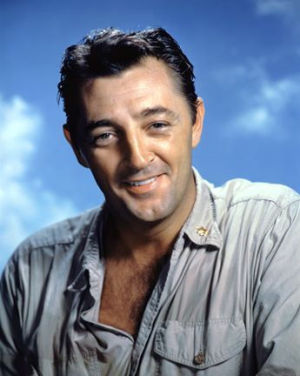
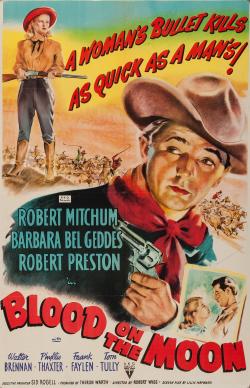
This film serves as a companion piece to another Robert Mitchum Western of the same period, 'Rachel and the Stranger'. Both feature an isolated drifter brought into contact with the extremes of nature and civilisation figured in the home. Both use the tropes of the western to frame a romance, pushing the 'outdoor' nature of the genre towards the domestic, so that the action climax is less a traditional expelling of a threatening enemy from without than a displacement of tensions within. 'Blood' is a heady Freudian brew, with Robert Preston as Mitchum's double, an embodiment of those negative aspects within himself that led him astray and that have to be expelled before he is 'fit' for 'civilised' society. This theme is given extra resonance by its post-war context. 'Blood' is darker, less comic than 'Rachel'; its cluttered, glowering, often impenetrable mise-en-scence seems more fitting to film noir than the bright expanses of the Western. Mitchum, never the Duke, plays an extension of his noir persona as he literally 'drifts' into situations reluctantly, where his lack of decisiveness proves lethal.
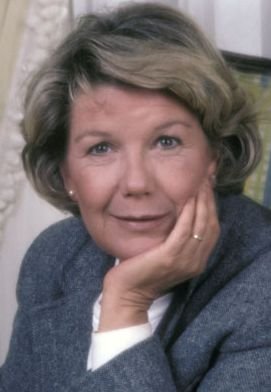
True to form, there is a femme fatale. Initially Barbara Bel Geddes is set up for the role - every frontiersman's nightmare: an independent, trigger-happy, trousers-wearing harpy. Her introductory scene with Mitchum as she shoots at him has a rare comic, Hawksian feel, as he returns phallic fire, leaving her suggestively spreadeagled, at his mercy. But she is no threat, revealed to be a dedicated home-bird; her purpose is to bring Mitchum into the domestic fold, appropriately wearing a dress. Still, there is something alternately empowering and emasculating about the siege scene, where bel Geddes, dressed as a man, fights off the opportunistic villain, while Mitchum lies helpless, passive, vulnerable, wounded in bed. As I say, you won't find too many scenes like that with the Duke.
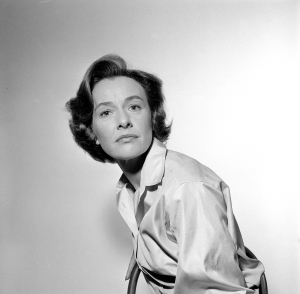
The real femme fatale is the real home-breaker, the sister whose sexual activity is socially disruptive, betraying her father and family to a shyster lover. Her androgyny is less open than bel Geddes', it is a disguise - there is a 'Fantomas'-like frisson to her nocturnal rock-hurling scene down a dark alley.
If there's one theme discernible in Robert Wise's oeuvre, it is misogyny, such as informed his great noir 'Born to kill'. Misogyny is the real subject of this film too: the title, suggestive of sunset (decline), or the vision of a wounded or dying man, also has an unmistakably gynaecological flavour, one pregnant with horror and distaste, the blood of dying men linked with the betrayal of sexually active women. The landscape, with its jarring mixture of the naturally picturesque and the over-elaborately artificial is gendered and trustworthy, a space that could trap a man - when Mitchum and bel Geddes camp in a heavily gendered forest, he tries to master her through sexual domination, but eventually gives into her; in the climactic scene, when this 'good' guy strikes with terrifying Max Cady-like violence in a forest, his reward is domesticity, sharing his lover's arms with his prospective father-in-law.
And so an almost radical critique of American capitalism and its genocidal treatment of the Indians (the plot concerns food given to a reservation) becomes another demonising of the female in the 'golden' age of film noir.


 Enjoy unlimited movies and shows
 Download your favorite content to watch offline
 Simple interface & smooth performance



















'%3e%3cpath%20id='Vector'%20d='M17.3996%2025.7999C17.3996%2025.9838%2017.3634%2026.1658%2017.293%2026.3357C17.2227%2026.5055%2017.1196%2026.6598%2016.9896%2026.7899C16.8596%2026.9199%2016.7052%2027.023%2016.5354%2027.0933C16.3655%2027.1637%2016.1835%2027.1999%2015.9996%2027.1999C15.8158%2027.1999%2015.6337%2027.1637%2015.4639%2027.0933C15.294%2027.023%2015.1397%2026.9199%2015.0097%2026.7899C14.8797%2026.6598%2014.7765%2026.5055%2014.7062%2026.3357C14.6358%2026.1658%2014.5996%2025.9838%2014.5996%2025.7999C14.5996%2025.4286%2014.7471%2025.0725%2015.0097%2024.81C15.2722%2024.5474%2015.6283%2024.3999%2015.9996%2024.3999C16.3709%2024.3999%2016.727%2024.5474%2016.9896%2024.81C17.2521%2025.0725%2017.3996%2025.4286%2017.3996%2025.7999Z'%20fill='white'/%3e%3cpath%20id='Union'%20fill-rule='evenodd'%20clip-rule='evenodd'%20d='M8.5%204H23.5C24.0523%204%2024.5%204.44772%2024.5%205V21.5H7.5V5C7.5%204.44772%207.94772%204%208.5%204ZM5.5%2022.5V5C5.5%203.34315%206.84315%202%208.5%202H23.5C25.1569%202%2026.5%203.34315%2026.5%205V22.5V27C26.5%2028.6569%2025.1569%2030%2023.5%2030H8.5C6.84315%2030%205.5%2028.6569%205.5%2027V22.5ZM24.5%2023.5V27C24.5%2027.5523%2024.0523%2028%2023.5%2028H8.5C7.94772%2028%207.5%2027.5523%207.5%2027V23.5H24.5Z'%20fill='white'/%3e%3cpath%20id='Union_2'%20fill-rule='evenodd'%20clip-rule='evenodd'%20d='M17%209C17%208.44772%2016.5523%208%2016%208C15.4477%208%2015%208.44772%2015%209V13.8258L13.1508%2012.2407C12.7315%2011.8813%2012.1002%2011.9299%2011.7408%2012.3492C11.3813%2012.7685%2011.4299%2013.3998%2011.8492%2013.7593L15.345%2016.7556C15.5205%2016.9079%2015.7495%2017%2016%2017C16.2506%2017%2016.4796%2016.9079%2016.6551%2016.7556L20.1508%2013.7593C20.5701%2013.3998%2020.6187%2012.7685%2020.2593%2012.3492C19.8999%2011.9299%2019.2686%2011.8813%2018.8492%2012.2407L17%2013.8258V9Z'%20fill='white'/%3e%3c/g%3e%3c/svg%3e)