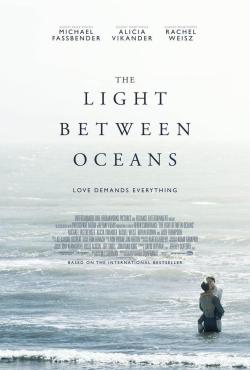
It's a paradox that films and novels which are overtly about the lives of people over several generations, replete with the pains and tribulations of life; emotional conflict is at the forefront and intended to carry its audience on the passions of the characters. While that is clearly the intention, the result is somewhat like a stop-motion still-life.
On screen what we see are many shots of weather: transitions and cutaways; climate plays a big part in these films to underline emotions, something the writer got from an introductory course on creative writing. There are also shots of landscapes and skies and windows and sand and grass and all these shots interspersed with the characters being emotional, or quite as often, pausing reflectively while the shadow falls across their faces meaningfully, or a horizon at dusk, beautifully lit of course, and their stare pierces into the vast nowhere beyond.
This might be called a pensive moment but no one is thinking because they are really being emotional, or trying to emotionally untangle the past where there was other emotion that caused grief which is not the like the emotion they have now which is really making it very painful with thunder and lashing rain. But in the brief periods when they are contented it's sunny and the sea is placid.
Meanwhile the musical score – and it needs one – plays incessantly, not that it is interesting either, it uses similar stereotypical gestures, its moves with same overt declarative impulse.
In all this emotion the story is nearly infantile it in its simplicity, it is one straightforward drama: it contains no other plots, no other elements which combine and deliver layers to beguile its audience.
If this writing, if it can be called that, is compared with its template, the classic novel, the big difference and it's a very big, is that those books had vitality and well developed characters. It is abundantly evident in Zola or Turgenev, Balzac and others. What this deploy is take motifs and clichés: the solitary man, the isolated place, the echoes of war and the blurbs of 'achingly beautiful' are manufactured. This literary and creative defect is most obvious in the dialog, which is nothing more than platitudes. The characters run and embrace and declare more than enough but they are really inert and passive; things happen to them which make their 'lurrve' such a struggle.
Stunning locations, photography, actors, set designer cannot disguise that this is essentially drivel, unsophisticated middle-class trash.
Dorothy Parker reacted to the hypocorism in one of AA Milne's Winnie the Pooh books, and said that after few lines she had "fwowed up", which, with due consideration, is the correct response to this movie.


 Nikmati film dan acara tanpa batas
 Download konten favorit untuk ditonton offline
 Tampilan mudah, lancar dipakai

















'%3e%3cpath%20id='Vector'%20d='M17.3996%2025.7999C17.3996%2025.9838%2017.3634%2026.1658%2017.293%2026.3357C17.2227%2026.5055%2017.1196%2026.6598%2016.9896%2026.7899C16.8596%2026.9199%2016.7052%2027.023%2016.5354%2027.0933C16.3655%2027.1637%2016.1835%2027.1999%2015.9996%2027.1999C15.8158%2027.1999%2015.6337%2027.1637%2015.4639%2027.0933C15.294%2027.023%2015.1397%2026.9199%2015.0097%2026.7899C14.8797%2026.6598%2014.7765%2026.5055%2014.7062%2026.3357C14.6358%2026.1658%2014.5996%2025.9838%2014.5996%2025.7999C14.5996%2025.4286%2014.7471%2025.0725%2015.0097%2024.81C15.2722%2024.5474%2015.6283%2024.3999%2015.9996%2024.3999C16.3709%2024.3999%2016.727%2024.5474%2016.9896%2024.81C17.2521%2025.0725%2017.3996%2025.4286%2017.3996%2025.7999Z'%20fill='white'/%3e%3cpath%20id='Union'%20fill-rule='evenodd'%20clip-rule='evenodd'%20d='M8.5%204H23.5C24.0523%204%2024.5%204.44772%2024.5%205V21.5H7.5V5C7.5%204.44772%207.94772%204%208.5%204ZM5.5%2022.5V5C5.5%203.34315%206.84315%202%208.5%202H23.5C25.1569%202%2026.5%203.34315%2026.5%205V22.5V27C26.5%2028.6569%2025.1569%2030%2023.5%2030H8.5C6.84315%2030%205.5%2028.6569%205.5%2027V22.5ZM24.5%2023.5V27C24.5%2027.5523%2024.0523%2028%2023.5%2028H8.5C7.94772%2028%207.5%2027.5523%207.5%2027V23.5H24.5Z'%20fill='white'/%3e%3cpath%20id='Union_2'%20fill-rule='evenodd'%20clip-rule='evenodd'%20d='M17%209C17%208.44772%2016.5523%208%2016%208C15.4477%208%2015%208.44772%2015%209V13.8258L13.1508%2012.2407C12.7315%2011.8813%2012.1002%2011.9299%2011.7408%2012.3492C11.3813%2012.7685%2011.4299%2013.3998%2011.8492%2013.7593L15.345%2016.7556C15.5205%2016.9079%2015.7495%2017%2016%2017C16.2506%2017%2016.4796%2016.9079%2016.6551%2016.7556L20.1508%2013.7593C20.5701%2013.3998%2020.6187%2012.7685%2020.2593%2012.3492C19.8999%2011.9299%2019.2686%2011.8813%2018.8492%2012.2407L17%2013.8258V9Z'%20fill='white'/%3e%3c/g%3e%3c/svg%3e)