moviebox header nav
moviebox search icon

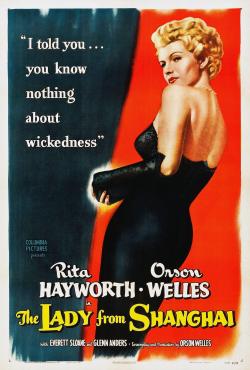
The Lady from Shanghai

1948

R

1 h 27 m

Amerika Serikat

Kejahatan

Drama

Film-Noir

Fascinated by gorgeous Mrs. Bannister, seaman Michael O'Hara joins a bizarre yachting cruise, and ends up mired in a complex murder plot.
More

7.5 /10

36259 people rated

Tonton online

Tonton di app

Episode

Pemeran Terbaik

Ulasan Pengguna

Episode
Pemeran Terbaik
Ulasan Pengguna

Episode

film
lklk
Netflix
Plex
Pemeran Utama(19)
starring avatar
Rita Hayworth
Elsa Bannister
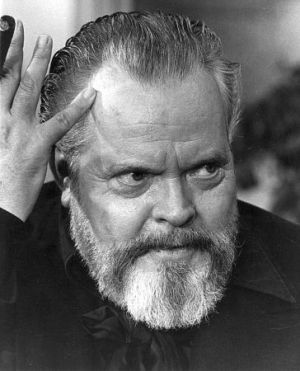
starring avatar
Orson Welles
Michael O'Hara
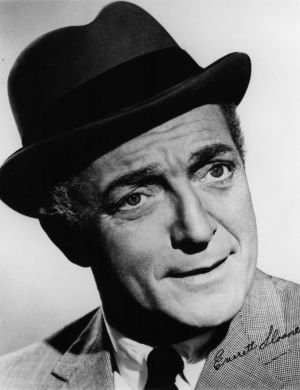
starring avatar
Everett Sloane
Arthur Bannister
starring avatar
Glenn Anders
George Grisby
starring avatar
Ted de Corsia
Sidney Broome
starring avatar
Erskine Sanford
Judge
starring avatar
Gus Schilling
Goldie
starring avatar
Carl Frank
District Attorney Galloway
starring avatar
Louis Merrill
Jake Bjornsen
starring avatar
Evelyn Ellis
Bessie
starring avatar
Harry Shannon
Cab Driver
starring avatar
William Alland
Reporter
starring avatar
Jessie Arnold
Schoolteacher at Aquarium
starring avatar
Jessie Arnold
Courtroom Spectator
default avatar
Wong Artarne
Ticket Taker
starring avatar
Rama Bai
Townswoman
default avatar
Jack Baxley
Guard
default avatar
Steve Benton
Policeman
starring avatar
Eumenio Blanco
Sailor

Ulasan Pengguna

author avatar

Poojankush2019

08/02/2025 16:00
I've wanted to see this movie for some time now. What a gargantuan disappointment. While no doubt a very stimulating visual experience, "The Lady from Shanghai" is no less than a 'train wreck' of a movie. The film was doomed the moment Welles was chosen as the protagonist. His disheveled, middle aged appearance is at odds with physical descriptions of him as young and strong. His Irish brogue is laughable. His on screen Chemistry with Rita Hayworth is nonexistent. The acting is at times serious and intense, and at other times comically exaggerated. The storyline (which is highly implausible and even bizarre) meanders in a lost sort of way and never really 'holds water'. The only moment I brushed with plot satisfaction was the 'whodunit twist' at the end. Agreed, the visual richness of scenery and cinematography are truly wonderful. So good in fact, that I would love to put this movie to a good musical score and make a hit Music Video out of it. Even better yet, I'd like to make a wall mural out the motion picture and hang it in the great room. Regardless of who is to blame in the production drama, the film is frankly a 'stinker' (mirror scene or no mirror scene). There, I said it. But for its masterful visual effects, I'll rate the film a 'must watch' for connoisseurs. Just don't set your hopes too high.
author avatar

Camille Trinidad

08/02/2025 16:00
Well-well - They sure don't make 'em like this one anymore - And, let me tell ya - I, for one, am so glad (like you wouldn't believe) that they don't. Personally, I think that a much more appropriate title for this film would've been "Goldilocks And The 3 Bores", with actress Rita Hayworth, of course, being Goldilocks and actors Orson Welles, Everett Sloane, and Glenn Anders, naturally, being the 3 (big) bores. What more can I say? .... Well - How about? If only that little darling of a director, Orson Welles, hadn't spent so much frickin' time meticulously photographing Rita Hayworth's face in close-up, making sure that it was always picture perfect in every shot, making sure that not a single shadow ever fell on it, rendering her face a literal mask rather than an actual human face, then, perhaps, The Lady From Shanghai might've survived its stupid screenplay (written by Welles, as well) to become a worthwhile piece of watchable movie-entertainment. Maybe. But, because of all the preposterous attention that the camera paid to the manicured "flawlessness" of Hayworth's face, this sadly rendered everything that happened around her in the story as utterly ridiculous. Yeah. Because of all this doting over close-ups of Rita's plasticized face (as though this was all that mattered) the entire premise of this film rang completely false (just like Hayworth's face, in fact) from beginning to end. Of course, it was quite understandable that Welles would pay such fanatical attention to Hayworth's face since these 2 pieces of Hollywood royalty were, in reality, married to each other at the time. But, with that aside, why Welles forced Rita to have her hair cut short and bleached blonde is beyond me. I mean, in combination with all of the truly idiotic dialog that she (and everyone else) spewed out, the platinum blonde coif only served to make her out to be the ultimate image of a Hollywood, gold-digging bimbo/boy-toy supreme. And, so, with Welles and Hayworth actually being married to one another you'd honestly think that as on-screen lovers (already being off-screen lovers) that they would literally burn up the screen when it came to their moments of passion together. Yeah. Their on-screen images should've been absolutely sizzling to behold - But, alas, instead there was ultimately no chemistry, whatsoever, happening between these 2 at all. None. They were as stiff and unfamiliar with each other as a couple of strangers, or cut-out paper-dolls. I guess it should be of no surprise to anyone that divorce was looming just around the corner for these 2 shortly after this film's release in 1948. All-in-all - The Lady From Shanghai was a major disappointment on all counts - From Welles repeatedly forgetting his character's Irish accent, to there being far too many scenes shot in front of unconvincing back-projection screens, instead of the real thing. Sheesh! Like, give me a break! I think it's really interesting to note that with Welles, himself, being less than attractive as a leading man, that he, in turn chose Everett Sloane as the actor to play his rival in the story. As one could plainly see, Sloane was quite obviously one of the most ugly-looking actors in Hollywood at the time. And, with that, Welles rendered Sloane even more ugly and repulsive by making him a pathetic cripple, as well. Personally, I think that this particular Hollywood darling named Orson Welles was nothing but a big, conceited snot, and that The Lady From Shanghai (which bombed on its initial theatrical release back in 1948) has, far too often, been grossly over-rated (as a major cinematic achievement) by way too many film critics ever since.
author avatar

kalifa bojang

08/02/2025 16:00
Is this film and its maker great? well only if you make the allowances for ego, uncontrolled creative talent, and perhaps being unsure if you really want to work hard at all. The great 'Kane' from 1941 was certainly Welles' claim to fame, undoubtedly. Yes, it did suffer undeservedly at the hands of political giants and perhaps weak film distribution heads. But I've also heard it said that Welles made the claim: "that he started at the top, and worked his way to the bottom". If this is so, then maybe it tells us much about the man. He knew from the outset, to surround himself with colleagues who were not simply talented, but also very hungry for success. So what happened...perhaps his ego was too big for even himself to control, or was he simply not able to recognize the good ideas from the bad? As for "Lady" I've tried twice to find the greatness that 'modern' critics are so passionate about. David Kehr calls it a masterpiece, but a masterpiece compared to what!? Here is a film made in 1947 that looks more like it was made during the downward spiral days of the mid 50s. When the el-cheapo directors were cashing in on quickie -'exploitation' films, and many mainstream movies had begun to look more like television productions. Where is that magic look of 'Kane'?. "Lady from Shanghai" was a film with not one great Director of Photography but three! While it's solely credited to Charles Lawton Jr. who gave '3.10 to Yuma' '57, ~ 'The Tall T' (also '57) even 'The Big Store' '41 a quality cinematic look, how much of that shines here?. The two other (un-credited) photographic masters, namely: Rudolph Mate of: 'Dodsworth' 36 ~ 'Foreign Correspondent' 40 and 'Cover Girl' 44, along with Joseph Walker: 'Mr Smith Goes to Washington' 39 ~ It's a Wonderful Life' 46 ~ 'The Jolson Story' 46 (all 'A' grade looking films) could do little to give 'Lady' that 'special' look and sustain it. "What about the ending"? I hear people say...a special effects mans dream. Lots of smashing glass, carnival sets, and an ending almost as foolishly indulged as the somewhat over the top courtroom scenes just before it. We're told that Welles had the side show fun-house scene running for an entire spool (that's 22 Min's!) before Harry Cohn had it cut to a more realistic length. I doubt many could have lasted the 2 1/2 Hrs Orson had originally intended this silly story to run. As for the opening scenes...just when it appears as if the main character is 'day dreaming', we find we are supposed to accept the action as 'real'. Unfortunately I can't help feeling that those who repeatedly sing the praises of this film, and Welles, are those that may belong in the same club. Some, like Welles, made one film that was praised, then also sank rather rapidly to the bottom - could this praise be perhaps for the sake of 'their' own reputations? If so, then more's the pity. Orson Welles had greatness, and will be remembered for it, but didn't necessarily demonstrate that lasting mileage to sustain it. There are just too many other 'great' film makers from the past, whose achievements may be head and shoulders above Orson...but many of these tend to be somewhat sacrificed by certain 'modern' industry people and critics alike. Still, DVD is bringing other great classics from the past (and present) for us to study and fully appreciate. Footnote: Another reviewer posted a suggestion to check out "The Third Man" as proof of Welles' greatness. Yes, he gives a sterling 'performance', but in 'The Third Man' Welles is being Directed by Carol Reed, from a story by Graham Green. Reed is just one of those great film-makers of sustained effort --over many years' work-- that are rarely acknowledged in the way we continually hear about Mr. Welles....
author avatar

ADSA BOUTIQUES💄💅🏻🪡✂️

08/02/2025 16:00
Made in 1946 and released in 1948, The Lady and Shanghai was one of the big films made by Welles after returning from relative exile for making Citizen Kane. Dark, brooding and expressing some early Cold War paranoia, this film stands tall as a Film-Noir crime film. The cinematography of this film is filled with Welles' characteristic quirks of odd angles, quick cuts, long pans and sinister lighting. The use of ambient street music is a precursor to the incredible long opening shot in Touch of Evil, and the mysterious Chinese characters and the sequences in Chinatown can only be considered as the inspiration, in many ways, to Roman Polanski's Chinatown. Unfortunately, it is Welles' obsession with technical filmmaking that hurts this film in its entirety. The plot of this story is often lost behind a sometimes incomprehensible clutter of film techniques. However, despite this criticism, the story combined with wonderful performances by Welles, Hayworth and especially Glenn Anders (Laughter) make this film a joy to watch. Orson Welles pulls off not only the Irish brogue, but the torn identities as the honest but dangerous sailor. Rita Hayworth, who was married to Welles at the time, breaks with her usual roles as a sex goddess and takes on a role of real depth and contradictions. Finally, Glenn Anders strange and bizarre portrayal or Elsa's husbands' law partner is nothing short of classic!
author avatar

Olivia Stéphanie

08/02/2025 16:00
After CITIZEN KANE in 1941, Hollywood executives turned their cob-webbed backs on the great Orson Welles. With the exception of KANE, Welles lost all creative control on MAGNIFICENT AMBERSONS, JOURNEY INTO FEAR, and many other films to come. Welles was an innovative and creative genius, the most unconventional of filmmakers when Hollywood was in need of a few more. THE LADY FROM SHANGHAI is yet another example of the misunderstood view of Welles' films at the time, a movie that seems a bit choppy and non-fluent. It has a conventional 1940's premise told in a most unconventional way, and I am sure some scenes ended up on the cutting room floor. It is now legend that Columbia mogul Harry Cohn stood up during its initial screening and asked what it was about. In hindsight, many old grumps that ran the studios back then had not one clue as to the cinematic techniques and master story-telling of Orson Welles and THE LADY FROM SHANGHAI is only nearly great because of their intrusion. Beside being arguably the greatest director of all-time, Welles was also quite a performer as an actor. At 25, we all know what he did as "Charles Foster Kane", perhaps the most famous character in film history. Here, he inhabits a rare character of dim wit and not much intelligence, something unfamiliar to those familiar with Welles other great work. Instead of a slick, wise tongue, he speaks with a rough, Irish twang. Rita Hayworth (his unhappily married wife at the time) plays an unhappily married wife of a lawyer who puts Welles in a spell and is able to draw him into a job that will take him to the limits of deception and disillusionment. He is a large lug who may have even murdered a man, but the real mystery lies in the relationship between Hayworth (with stunning blonde hair) and crippled hubby Everett Sloane (Mr. Bernstein from CITIZEN KANE). A creepy partner of Sloane's is along for the sail around the country to set off a number of peculiar events that has Welles' "Michael O'Hara" head spinning. Welles narrates the picture as O'Hara, but things are still unclear throughout. See for yourself and realize that it takes at least 2 viewings to fully know exactly what's up. An uncharacteristically strange courtroom sequence centers around "O'Hara", with Sloane defending him. It is an oddly comedic scene with some quirky courtroom methods, including Sloane cross-examining himself. I didn't really laugh here because the film stalls at this point after a first portion that never gets to take off anyway. Up to this point, the cinematography is great, some scenes are shot with craft and skill (aquarium love scene), but there is no distinct line drawing the elements and us, the audience, in. Reportedly, the court scene was re-shot against Welles' requests (10 closeups of Hayworth were ordered) and a makeshift song sung by the starlet was thrown in at Cohn's insistence. A gaudy score infuriated Welles, who once again, was left out of the editing process. Thank Welles himself for saving the film entirely with a tour-de-force ending that will always be treasured. The so-called "Hall of Mirrors" scene brings buffs back time and time again, rightfully so. It must be seen to be believed and it does a good job of wrapping up some confusing ideas presented. The crash of the mirrors represents "O'Hara's" disillusionment and the "crazy house" itself is a masterpiece of art and set decoration. It seems more like a state of mind than an actual place and is indeed "crazy", twisted and turned like a Dali painting. This is a great ending to a flawed picture that if left alone would probably have made the AFI's Top 100. Then again, 3 or 4 more of Orson Welles films may have made all collective "best of" lists if he had been left alone to create his own magic. NOTE: Look for the Mercury Players that are so prominent in Welles pictures. They pop up all over. RATING: 8 of 10
author avatar

gilsandra_spencer

08/02/2025 16:00
source: The Lady from Shanghai
author avatar

Naty🤎

08/02/2025 16:00
Apparently Welles made this film to help finance a Mercury Theatre production. It shows. It's sloppy. The film noir plot is complex. Too complex for Welles, it's riddled with holes. The whole thing hinges on O'Hara behaving in ways that only a fool would even consider. Hayworth is stunning but equally idiotic as the femme fatale. However, Everett Sloane and Glenn Anders are good fun as the Hayworth's crippled, hot-shot criminal defence lawyer, husband and his giggling, slimy business partner, although their performances hinge on caricature rather than character. The trial scene is hilarious, but in ways that were probably not entirely intended by Welles. Sloane is defending Welles on a murder charge, but then both Sloane and Hayworth, Sloane's wife, get called as witnesses for the prosecution without notice. The whole thing is farcical, so farcical indeed that Welles's character decides to scarper. Visually the section that follows is one of the most stunning I have seen. Finally, Welles's Irish accent was awful. There did not appear to be any reason for it. His character could just as easily have been an American for all the difference it made to the plot. In all, the whole is one of the most laughable film noirs I have ever seen.
author avatar

𝚜𝚞𝚐𝚊𝚛_𝚖𝚘𝚖𝚖𝚢 𖣘

08/02/2025 16:00
Orson Welles' "The Lady From Shanghai" does not have the brilliant screenplay of "Citizen Kane," e.g., but Charles Lawton, Jr.'s cinematography, the unforgettable set pieces (such as the scene in the aquarium, the seagoing scene featuring a stunning, blonde-tressed Rita Hayworth singing "Please Don't Love Me," and the truly amazing Hall of Mirrors climax), and the wonderful cast (Everett Sloane in his greatest performance, Welles in a beautifully under-played role, the afore-mentioned Miss Hayworth--Welles' wife at the time--at her most gorgeous) make for a very memorable filmgoing experience. The bizarre murder mystery plot is fun and compelling, not inscrutable at all. The viewer is surprised by the twists and turns, and Welles' closing line is an unheralded classic. "The Lady From Shanghai" gets four stars from this impartial arbiter.
author avatar

Majo💛🍀

08/02/2025 16:00
These are excerpts from a nine-page "Memo to Mr. Cohn from Mr. Welles", written after Orson had seen studio mogul Harry Cohn's edited version of the picture (he took an hour out): "...The preview title music was written by a first rate composer, George Antheil. Although not written for our picture at all, this temporary title music had an atmosphere of darkness and menace combined with something lush and romantic which made it acceptable...The only musical idea which seems to have occurred to this present composer (Heinz Roemheld) is the rather weary one of using a popular song--the "theme"--in as many arrangements as possible. Throughout we have musical references to "Please Don't Kiss Me" for almost every bridge and also for a great deal of the background material. The tune is pleasing, it may do very well on the Hit Parade--but Lady from Shanghai is not a musical comedy...Mr. Roemheld is an ardent devotee of an old-fashioned type of scoring now referred to in our business as "Disney". In other words, if somebody falls down, he makes a "falling down" sound in the orchestra, etc., etc...If the lab had scratched initials and phone numbers all over the negative, I couldn't be unhappier about the results...Just before I left to go abroad, I asked Vi (Viola Lawrence, the editor) to make a cut which would involve dropping the near accident with the taxi-cab and also quite a bit of dialogue. I am convinced that this would have been an excellent cut...saving much needed footage in the slow opening sequence (this was not done, accounting for the main weaknesses of the film's opening reel)...There is nothing in the fact of Rita's diving to warrant a big orchestral crescendo...What does matter is Rita's beauty...the evil overtones suggested by Grigsby's character, and Michael's bewilderment. Any or all of these items might have inspired the music. Instead, the dive is treated as though it were a major climax or some antic moment in a Silly Symphony: a pratfall by Pluto the Pup, or a wild jump into space by Donald Duck...There is no sound atmosphere on the boat. A little wind and water is sorely missed. There's no point in photographing a scene on a real boat if you make it sound as though it all happened in front of a process screen...At the start of the picnic sequence...in the temporary score, we used a very curious, sexy Latin-American strain...This has been replaced with a corny "dramatic" sequel--bad stock stuff...This sort of music destroys that quality of strangeness which is exactly what might have saved Lady from Shanghai from being just another whodunit...There is a big musical outburst after Grigsby's line, "I want you to kill him." This is absurd...The Hawaiian guitar music which comes out of the radio...was supposed to be corny enough to make a certain satirical point. As it stands now, it's on about the same level as the rest of the scoring. Nobody in the audience could possibly suspect that we're kidding...The aquarium scene needs more echo. "Please Don't Kiss Me" is in again!...A bad dubbing job and poor scoring has destroyed the character of Michael's run down the pier. From the gunshot through to the phone call, a careful pattern of voices had been built up with the expenditure of much time and effort. For some reason, this has all been junked in favor of a vague hullabaloo. As a result, the whole sequence seems dull...The audience should feel at this point, along with Michael, that maybe they are going crazy. The new dubbing job can only make them feel that maybe they're going to sleep...The gun battle with the breaking mirrors must not be backed with music...The closing music again makes reference to "Please Don't Kiss Me"...This finale is obvious to the point of vulgarity, and does incalculable injury to the finish of the picture." All of these edits from Orson were ignored
author avatar

مشاغبة باردة

29/05/2023 16:19
The Lady from Shanghai_720p(480P)
Disclaimer: All videos and pictures on MovieBox are from the Internet, and their copyrights belong to the original creators. We only provide webpage services and do not store, record, or upload any content.