moviebox header nav
moviebox search icon
muted

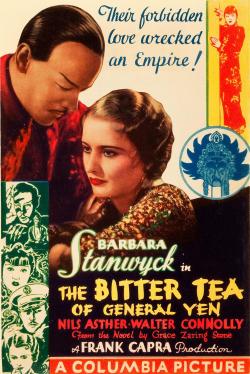
The Bitter Tea of General Yen

1933

R

1 h 28 m

Amerika Serikat

Drama

Percintaan

War

A Chinese warlord and an engaged Christian missionary fall in love.
More

6.9 /10

4739 people rated

Tonton online

Tonton di app

Episode

Pemeran Terbaik

Ulasan Pengguna

Episode
Pemeran Terbaik
Ulasan Pengguna

Episode

film
lklk
Netflix
Plex
Pemeran Utama(18)
starring avatar
Barbara Stanwyck
Megan
starring avatar
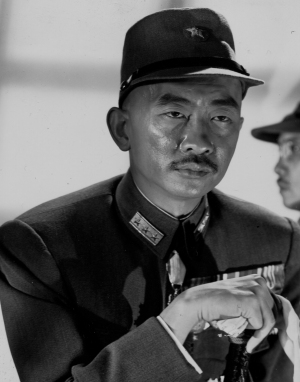
Nils Asther
General Yen
starring avatar
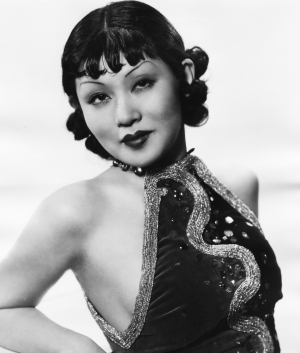
Toshia Mori
Mah-Li
starring avatar
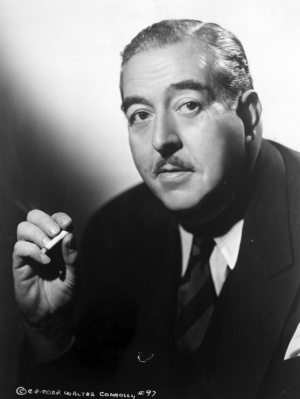
Walter Connolly
Jones
starring avatar
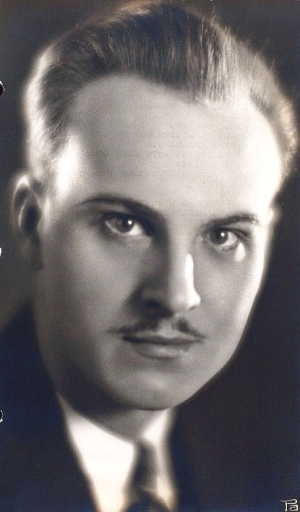
Gavin Gordon
Bob
starring avatar
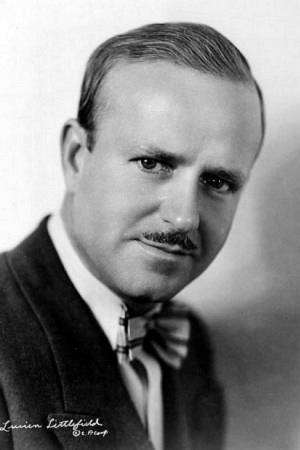
Lucien Littlefield
Mr. Jackson
starring avatar
Richard Loo
Capt. Li
starring avatar
Helen Jerome Eddy
Miss Reed
starring avatar
Emmett Corrigan
Bishop Harkness
starring avatar
Jessie Arnold
Mrs. Blake
starring avatar
Clara Blandick
Mrs. Jackson
starring avatar
Robert Bolder
Missionary
starring avatar
Nora Cecil
Missionary
starring avatar
Wong Chung
Chinese Officer
starring avatar
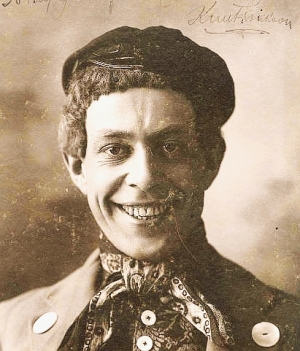
Knute Erickson
Dr. Hansen
starring avatar
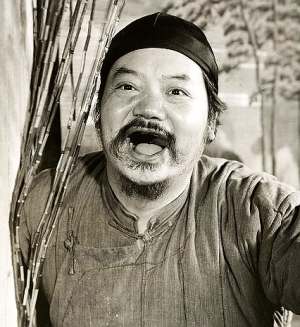
Willie Fung
Officer
starring avatar
Adda Gleason
Mrs. Bowman
starring avatar
Ella Hall
Mrs. Amelia Hansen

Ulasan Pengguna

author avatar

user2364773407638

29/05/2023 13:49
source: The Bitter Tea of General Yen
author avatar

DoraTambo310

23/05/2023 06:29
This film is an example of social and cultural americaness that we see in most Hollywood films.The setting of the film is both familiar, and remote.The concept of American life that can be cut off by civilization. The Production Code was not enforced when the film was released, and the notion of miscegenation horrified the American audience.The fact that the unconscious desire was of the puritanical white woman, also went against the dominant ideology so evident in early Hollywood cinema. Megan wants to be a good American, she starts, and ends by rescuing children, she uses the word 'child' when describing Mao-lin.The falling away of the conventional world of America, into a strange elaborate space, Megan is allowed to respond to her desire, and dressed up returns to Yen. The hanky motif is symbolic. Yen says 'China gave the world silk' they share the hanky at the end, something they refused to do in the early stages of the film.This comment of Yen's is like saying China is a civilized country too.A different attitude by Americans who revel in American imperialism.
author avatar

SB Virk

23/05/2023 06:29
I was never quite sure while watching this film whether this was supposed to be a love story between a ruthless Chinese bandit (played by the underrated Swedish actor Nils Asther) and an American missionary (played poignantly by Barbara Stanwyck), or whether it was a film made to ridicule Christians and Christianity by mocking everything they hold dear. If it was the latter than Frank Capra has met his Maker by now, and discovered how wrong he was. This film is one example of why the Hollywood Production Code actually resulted in better films, with more coherent story lines. If this film had been made after the code was enforced, the Chinese bandit would have been more clearly shown to be the human debris that he actually was, someone who would put people before a firing squad because he was too cheap to feed them rice (while he had a train outside his living quarters filled with treasure), rather than somehow morally superior to the American woman, who at least had enough decency and character to care about other people less fortunate than herself. The sexual chemistry between the two leads at times seems manufactured, as in the dream sequence, where the missionary fears being raped by the Chinese bandit. What decent woman wouldn't fear this in such a kidnap situation? But to extend those feelings to love was really pushing the envelope in this film. With such a pre-code film it is perhaps less than honest to have an ending where the bandit commits suicide, just at the point where he has overpowered the missionary and achieved his conquest. But I suppose even in a 1933 pre-code movie Frank Capra knew his film would have been boycotted if he had actually shown the two characters going off together to have sex, or to be married. To enjoy a superlative film about bi-racial love and true morality and sacrifice, please watch the silent classic by D.W. Griffith "Broken Blossoms" (1919). This is a much more tender story ... and without tenderness and sacrifice there is no true love, only a counterfeit.
author avatar

Samrawit Dawid

23/05/2023 06:29
(Contains spoiler) This film is excellent, but one scene stands out. This is a dream sequence which exposes the conflict in Megan's mind concerning General Yen. Very Freudian! Megan is dreaming. A sinister Fu Manchu-like figure is approaching her. It is General Yen wearing traditional Chinese clothes with a skullcap and a long gown. Long talon-like fingers extended to claim her. It is clearly a fear-of-rape dream, made worse by Megan's horror of everything oriental, especially General Yen. Suddenly a masked figure appears, clad in a dashing military uniform. He leaps on to the balcony, shoots the sinister Chinese, and sweeps Megan into his arms. Megan gazes at her savior. He is leaning over her but she isn't objecting this time. Suddenly her romantic rescuer rips off his mask. It is General Yen. This is Frank Capra at his best.
author avatar

Ama'Dou Bà

23/05/2023 06:29
Boldly placing the beauty of Eastern Thought up against the hypocrisy of the Christian missionary effort, Capra creates a spell-binding work. I never tire of being fascinated with this film and the performance of Nils Asther as General Yen in particular. The strength, power, humor and beauty of his character is attractive, chilling and wonderful. Stanwyck is compelled throughout to let go of her religious programming and face a "greater truth" about humanity and in particular the heritage of the country in which she is a visitor (China). The photography is captivating and there is some montage sequences that are mesmerizing. This film is a must see!
author avatar

Plam’s mbinga

23/05/2023 06:29
1933 was a very good year in the history of cinema. From musicals like 42nd Street or Footlight parade to comedies like Duck Soup (Marx Brothers) or Sons of the desert (Laurel & Hardy), from King Kong to the first acting appearances of John Wayne or Cary Grant, and Billy Wider's directing debut, Mauvaise grain. There were also great movies by Greta Garbo, Mae West, and Barbara Stanwyck, in Baby face. Now, if you're planning to watch a 1933 movie tonight and you don't know which one to choose, you can pick any of the above, according to your mood, and you won't be disappointed. This one here, however, is pure Capra, which always means racism, male chauvinism, simple minded Christianity and cheap American patriotism. And yes, once more, here it is. The plot is ridiculous, as expected from this director, but it makes some sort of sense at the beginning: In the midst of a raging war with airplanes throwing bombs and hundreds of people dying in the streets, our all White American hero gets hit on his head by... a wooden stick. Only some seconds later, we watch how her girlfriend gets hit on her head too... by another wooden stick. The virginal missionary girl, who's wearing a transparent blouse, showing her nipples, cries like Joan of Arc and speaks of Christ, while his wicked captor, the Chinese General, well, is doing his thing, I don't know what, because I can't avoid the fact that the Chinese General, the main character, is being played by a Swedish actor with tons of cheap paint on his face. The virtuous Christian woman calls him a 'yellow swine' and that's it, pretty much. All of the Americans survive and only some thousands of Chinese die, so everything is good. The ending, though melodramatic, is not as bad as Capra's usual, and the movie is not that long. Those are the only 2 reasons why I won't rate it 0. Barbara Stanwyck is not at her best, but she's OK. There's so many wonderful movies to watch in your lifetime, please don't waste your time on this.
author avatar

محمد 👻

23/05/2023 06:29
Years ago I tried watching it off part-way through the film because I thought that the casting of Nils Asther as "General Yen" was ridiculous and rather insensitive since he looks about as Chinese as Nipsy Russell. However, on a second viewing I found that the movie STILL had a lot going for it. Plus, like it or not, casting Westerners in leading roles of Asian characters was the norm in the 1930s and 40s--there's no getting past this with only a very few exceptions. What did I like about the film? Well, first off, despite being made in Hollywood, Columbia did an exceptional job in getting the look correct. Very impressive sets, costumes and convincing battle scenes all indicate that this was a top project for a studio which, at the time, was definitely a second-tier company. Heck, MGM and Warner would have been proud to make a movie that looked this good--and they were the "big money" studios. It certainly was a pretty film to look at and lovely cinematography sure helped as well. Second, while the movie has some silly stereotypes, in a way it is also very modern compared to other pictures of the day. It dares to consider the possibility of interracial love (something banned when the new Production Code was put in place the following year) and despite initially come off as a demon, General Yen was quite decent and civilized in his own manner. He definitely was NOT some one-dimensional Asian caricature--having greater depth than you'd usually find in non-White characters of the day. Finally, while odd and fully of bizarre twists, the plot really was pretty exciting and romantic. I especially loved the silly but majorly cool dream that Barbara Stanwyck had soon after Yen took her into protective custody! So, if you are looking for an unusual, pretty and very interesting film from Hollywood's golden era, then look no further. This is quite an unusual film and you won't soon forget it. By the way, after watching this film, try SHANGHAI EXPRESS. While many of the plot elements are similar, notice how different Warner Oland's Chinese warlord character differs from Nils Asther's---there is quite the contrast.
author avatar

Maelyse Mondesir

23/05/2023 06:29
Frank Capra made a sort of "little" film in 1933, little in that it starred then up-and-coming Barbara Stanwyck (the future iconic star of Double Indemnity and The Furies had only been in a few films before) and that it dealt with a topic that was very touchy to attempt for in 1933; only Griffith before had tried to deal with some kind of interracial bonding and/or sexual tension between white and Chinese people on screen, at least to my knowledge. What ended up working in favor for Capra with his story, and what makes it still work today still despite the creaky bits of racist dialog (i.e. "China-man" is repeated throughout by the supposedly tolerant missionary Megan Davis), is the script. This has excellent dialog and a potent message about trying to make a difference, to make some sort of change where things are, perhaps in simplification (hey, it's Capra), about the same as they've been for 2,000 years. It's a message that infers some tendencies to prejudices on both sides, of the white well-educated woman who sees to do good wherever she can and the stalwart General who will try to impress and act cordial around the lady but mostly because he wants to have his way- which may be with her. The story itself sounds kind of typical, probably because by today's standards it is: Megan Davis has just come to China to do missionary work but is caught in the midst of a bad civil war going on, and after a tumultuous battle she gets caught up in in the streets and is knocked out is taken into the 'care' of General Yen (Nils Asther, no, not Chinese apparently but does so good a job as to not notice *too* much). She cannot leave his custody at his palace because of the battling blocking up the train tracks, and has to stick tight... in the span of a week she tries to spare a life of a spy and almost falls for Yen, or maybe more than almost. It's actually the one complicated and really exacting thing in this production is seeing Asther and Stanwyck on screen. I'm not sure if the latter gave quite a great performance, but for what she's given she elevates it into a stern-faced but kind-hearted portrayal of a woman caught in an untenable situation, and Asther gives as good as he can by bypassing the obvious pit-fall of stereotyping by making Yen a very human figure. He's a man of class and taste but also tradition and with that typical double-edged sword of being ruthless with slaughter and elegant in decorum and in attitude. Somehow Capra is able to garner very good work from them with a story that, in the wrong hands, could become the most ham-fisted thing on the planet. Luckily not only is Capra uncompromising in dealing with the issues at hand both upfront and underlying in terms of race and ethnicity and just the clashing of cultures, but in technical terms with the bits of battle scenes (the shoot-out late in the film at the train station is breathtaking for 1933 and pretty good for today), and it shows a director so confident in his craft that he could be ready for better things. It might be dated... actually, it is dated. But for any and all faults, it's a picture made with surprising sensitivity and compassion for all its characters, and it doesn't stick to clichés just for the sake of it - it's a solid drama without much pretension, save for a dream sequence that's actually hallucinatory in the best way.
author avatar

Jaime Conjo

23/05/2023 06:29
Bitter Tea is one of my favourite Capra films, the earliest one I would call that "much over-worked phrase", a classic. I don't know if the original story was much different, but even being pre-Code this film would be shot much differently nowadays - unfortunately, of course! It appears to be just as hung up about love between the races as any other Golden Age movie was, except the tale's conclusion is more open to interpretation and franker in its portrayal. But even that was spoiled by Walter Connolly's Jerry Springer type moral ramblings at the end as solace for any outraged whites. It's a murky, atmospheric, lustrous (in the romantic arc-light), absorbing 83 minute journey through a rather horrible world, populated by semi human beings - naturally Western wars are so much more civilised affairs. Throughout Stanwyck does her best and looks her best too, no wonder Gen Yen fell for her! I hope modern Scandanavians don't feel too humiliated by Nils Asther playing a Chinaman though (& v.v.) As a non practising Christian I didn't take offence at the criticism levelled at Christianity's manifold moral ambiguities - but enough of all that! A wonderful film to sink into every few years not only for the story but also the gleaming photography, the visual composition of the scene near the end where Yen is brewing the tea of the title is so achingly beautiful that it brings the tears to my eyes as I think about it! But remember it was made in 1932 so if you don't like shiny charming creakers it's probably not your cup of tea.
author avatar

Saul Sallah

23/05/2023 06:29
A young missionary finds herself swept into a world of Oriental intrigue & power, after being ‘rescued' by a Chinese warlord. With THE BITTER TEA OF GENERAL YEN, Columbia Pictures & director Frank Capra created a small cinematic gem. Not only does the film boast of superb production values, a first-class script & excellent performances, but it enwraps its audience in a sensual romance which rewards intelligent viewing, while offering a liberal dash of pre-Code sensibilities. Miscegenation, so soon to become absolutely taboo in Hollywood, here is made palatable & attractive, indeed, reasonable, the natural outcome of passions molded by tumultuous times. Although billed second, Nils Asther takes acting honors in the title role. A matinee idol during silent days, Asther found it difficult to find good roles in talking pictures, hampered by his exotic looks which made him hard to cast to his advantage. But with BITTER TEA he found the role of a lifetime. Although tall & Swedish, he completely inhabits the skin of his Asian character, making the General at once believable & sympathetic. His every movement, shift of the eyes, even the way he chews his food are all part of his persona. Nearly forgotten now, Asther shows with this one performance what he was capable of achieving. As the missionary captive, Barbara Stanwyck gives the kind of competent, skillful & engaging interpretation which she would bring to all of her roles over the course of several decades. Capra's favorite actress, the dramatic flames she lights are an intriguing counterpoint to the repressed emotions of Asther's Yen. Loud, brash Walter Connolly, as the General's financial advisor, makes a good contrast to Asther; his plainspoken character often gives voice to what the others are thinking. Lovely Toshi Mori graces the role of the General's unfaithful concubine. A young Richard Loo is her secret lover. Movie mavens will recognize Clara Blandick in the role of the feisty missionary hostess at the beginning of the film & Willie Fung as the rebel train engineer, both uncredited. ***************************** While meant to be funny and introduce the plot, the opening scenes are a bit unfair to Western missionaries in China, portraying them as rather fatuous, repressed & gossipy. By in large, missionaries lived lives full of self-sacrifice & devotion. In return, not a few were rewarded with penury and an early grave. That today the ‘Underground Church' in China numbers many millions of Christian believers stands as a witness to the faithfulness of these good people. The era of the Chinese warlord - such as General Yen in the film - was brief but colorful and extremely violent. The Qing dynasty, China's last, was overthrown in 1911 and the Republic of China was formed. Its despotic president, Yüan Shih-kai, relied more on military force than democratic principles to maintain his authority over China's vast stretches & huge population. Upon his death in 1916, the country was thrown into confusion & chaos, with numerous military officers & powerful bandit kings all using their armies to control districts and even whole provinces, constantly warring with each other amid a swirling sea of ever-changing alliances and bitter feuds. Foreign powers (Soviet Russia, Imperial Japan & Great Britain) only made matters worse by supporting various factions. It was the ordinary Chinese citizen who suffered most, with the depredations of war's brutality & the inevitable famines rained upon them. It was not until 1928, with the capture of Peking by Republican General Chiang Kai-shek, and the reunification of China, that the power of the warlords was finally broken.
Disclaimer: All videos and pictures on MovieBox are from the Internet, and their copyrights belong to the original creators. We only provide webpage services and do not store, record, or upload any content.