Johnny Farrell, a New York gambler, is seen as the opening of the film playing on the waterfront in Buenos Aires with some shady characters. He is a lucky man who makes the mistake of stopping to count his money, something that if he had listened to that song, "The Gambler", he never would have done. When someone appears with a gun to mug him, he is saved by the eerily handsome Ballin Mundson, a man who sees possibilities in the younger man.
Johnny, who has been invited to visit Mundson's casino, pays a visit and again, he is lucky playing blackjack, but the boss suspects the gambler is cheating. After calling him to the office, Mundson agrees to employ Johnny, who will be working for him in protecting his interests. Johnny notices a few odd things that don't sit well with him. When he questions Mundson about it, the explanation doesn't satisfy him, but he plays along. It has been hinted about a homosexual context between Mundson and Johnny. Mundson gives the impression that he likes Johnny a bit too much and Johnny, in appearing grateful for his employment at the casino, also rises the question about an under current between them.
When Mundson returns with a new wife, surprising Johnny, it turns out he had known, and perhaps loved, Gilda in New York. Gilda has a mean disposition toward Johnny and does everything possible to get him in trouble. Their repartee gives the film an edge because it's clear that whatever they had is still going on. Gilda wants to have fun at whatever expense, but Johnny is always a step ahead of her in foiling whatever attempts she makes with every new man to enjoy herself.
After a tragic air accident where Mundson dies, Gilda marries Johnny, but they grow apart. She flees to Montevideo where she embarks in a career as a singer and dancer. We see her doing two numbers that are show stoppers, "Amado Mio", and "Put the Blame on Mame". She is tricked back to Buenos Aires where Johnny is awaiting for her, but fate has it that the Buenos Aires experience has been bad for both of them and the next best thing is to go back home, as a couple.
Charles Vidor directed with sure hand a story that, at times, doesn't make much sense. The story was adapted for the screen by Jo Eisinger. The plot, also, reminds us about "Casablanca" in that both Johnny and Gilda are in a foreign land far from their native turf and are at the mercy of a man who is rich and powerful to make them pay for their betrayal. Supposedly, Humphrey Bogart was the choice for playing Johnny, but it would have been a different film altogether than the one that Charles Vidor made.
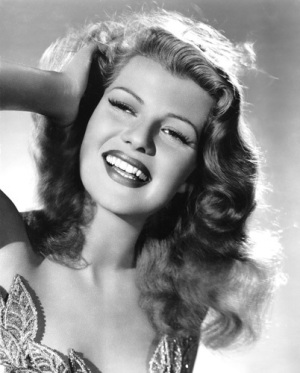
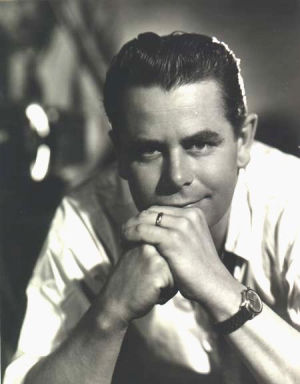
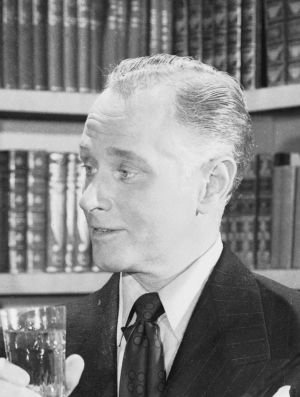
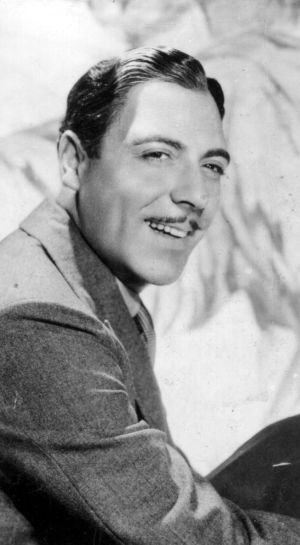
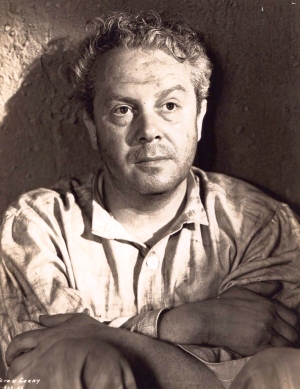
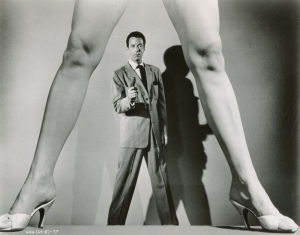
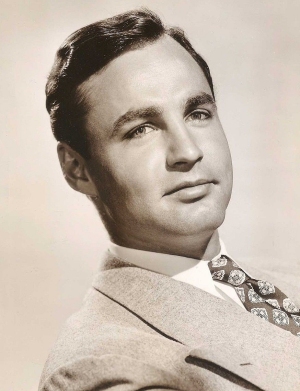
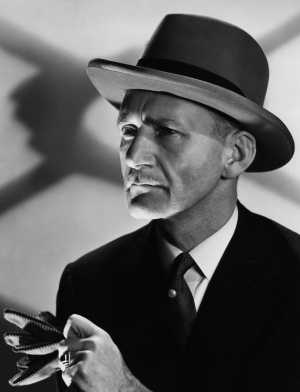
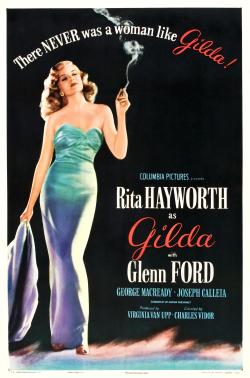
Rita Hayworth is billed over the title. She was at the height of her career in Hollywood. She was a beautiful woman with such magnetism to get any man's attention by just being there. Ms. Hayworth is helped enormously by Jean Louis' wardrobe. Especially effective the gown she wears to sing "Put the Blame on Mame". That number will remain the hallmark of her work. Glenn Ford, on the other hand, is a bit unsure in some key moments, especially during the masked ball. George McCready is perfect as the villainous Ballin Mundson. Steven Geray also makes a valuable contribution as the bathroom attendant who calls Johnny a peasant.
The copy of "Gilda" we watched on TCM recently has been lovingly restored to a crisp black and white originally shot by Rudolph Mate, its cinematographer. Doris Fisher's songs are perfect and serve as a delightful distraction for showing a playful Rita Hayworth doing justice to both numbers. King Vidor's direction elevated the film to a higher status. This movie, even sixty years later, still has a great look and it's a joy to watch after a few prior viewings.


 Nikmati film dan acara tanpa batas
 Download konten favorit untuk ditonton offline
 Tampilan mudah, lancar dipakai

















'%3e%3cpath%20id='Vector'%20d='M17.3996%2025.7999C17.3996%2025.9838%2017.3634%2026.1658%2017.293%2026.3357C17.2227%2026.5055%2017.1196%2026.6598%2016.9896%2026.7899C16.8596%2026.9199%2016.7052%2027.023%2016.5354%2027.0933C16.3655%2027.1637%2016.1835%2027.1999%2015.9996%2027.1999C15.8158%2027.1999%2015.6337%2027.1637%2015.4639%2027.0933C15.294%2027.023%2015.1397%2026.9199%2015.0097%2026.7899C14.8797%2026.6598%2014.7765%2026.5055%2014.7062%2026.3357C14.6358%2026.1658%2014.5996%2025.9838%2014.5996%2025.7999C14.5996%2025.4286%2014.7471%2025.0725%2015.0097%2024.81C15.2722%2024.5474%2015.6283%2024.3999%2015.9996%2024.3999C16.3709%2024.3999%2016.727%2024.5474%2016.9896%2024.81C17.2521%2025.0725%2017.3996%2025.4286%2017.3996%2025.7999Z'%20fill='white'/%3e%3cpath%20id='Union'%20fill-rule='evenodd'%20clip-rule='evenodd'%20d='M8.5%204H23.5C24.0523%204%2024.5%204.44772%2024.5%205V21.5H7.5V5C7.5%204.44772%207.94772%204%208.5%204ZM5.5%2022.5V5C5.5%203.34315%206.84315%202%208.5%202H23.5C25.1569%202%2026.5%203.34315%2026.5%205V22.5V27C26.5%2028.6569%2025.1569%2030%2023.5%2030H8.5C6.84315%2030%205.5%2028.6569%205.5%2027V22.5ZM24.5%2023.5V27C24.5%2027.5523%2024.0523%2028%2023.5%2028H8.5C7.94772%2028%207.5%2027.5523%207.5%2027V23.5H24.5Z'%20fill='white'/%3e%3cpath%20id='Union_2'%20fill-rule='evenodd'%20clip-rule='evenodd'%20d='M17%209C17%208.44772%2016.5523%208%2016%208C15.4477%208%2015%208.44772%2015%209V13.8258L13.1508%2012.2407C12.7315%2011.8813%2012.1002%2011.9299%2011.7408%2012.3492C11.3813%2012.7685%2011.4299%2013.3998%2011.8492%2013.7593L15.345%2016.7556C15.5205%2016.9079%2015.7495%2017%2016%2017C16.2506%2017%2016.4796%2016.9079%2016.6551%2016.7556L20.1508%2013.7593C20.5701%2013.3998%2020.6187%2012.7685%2020.2593%2012.3492C19.8999%2011.9299%2019.2686%2011.8813%2018.8492%2012.2407L17%2013.8258V9Z'%20fill='white'/%3e%3c/g%3e%3c/svg%3e)