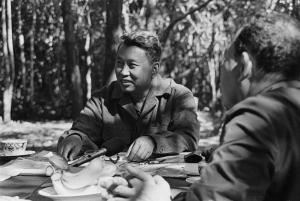
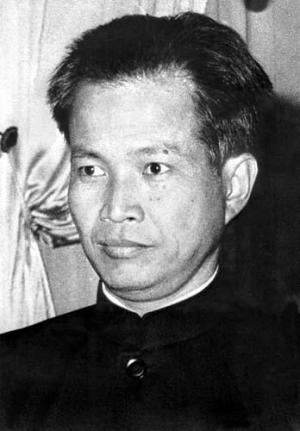
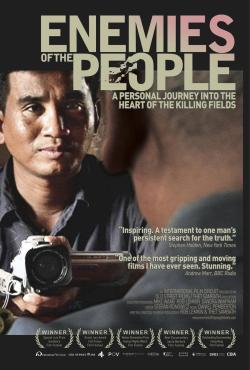
One of the most harrowing and compelling personal documentaries of our time, ENEMIES OF THE PEOPLE exposes for the first time the truth about the Killing Fields and the Khmer Rouge who were behind Cambodia's genocide.
More
7.7 /10
588 people rated
Enemies of the People
2010
R
1 h 33 m
Britania Raya
Dokumenter
Kejahatan
Sejarah
One of the most harrowing and compelling personal documentaries of our time, ENEMIES OF THE PEOPLE exposes for the first time the truth about the Killing Fields and the Khmer Rouge who were behind Cambodia's genocide.
More
7.7 /10
588 people rated
Tonton online
Tonton di app
Episode
Pemeran Terbaik
Ulasan Pengguna
Episode
Pemeran Terbaik
Ulasan Pengguna
Episode
film
lklk
Netflix
Plex
Pemeran Utama(5)
Thet Sambath
Self
Nuon Chea
Self
Pol Pot
Self
Khieu Samphân
Self
Ieng Sary
Self
Ulasan Pengguna
Jemima Osunde
23/05/2023 03:39
This is my film of the year. I urge you to see it, especially as it isn't getting a DVD release until July 2011. You won't necessarily thank me for the recommendation, however, because it is bloody hard going. It has a terrible power, near-unparalleled among this year's offerings, and is draining rather than simply 'numbing' – possibly because of the sheer humanity involved.
The film's co-director Thet Sambath is an investigative reporter from Cambodia who has obtained something rather astonishing: frank and detailed confessions from former Khmer Rouge footsoldiers, mainly uneducated farmers, who helped turn their already battered country into a charnel house between 1975-1979. Against a backdrop of genocide trials for party leaders, this patient, methodical and remarkably gracious journalist, whose own family was purged, hears how ordinary men and women sowed the Killing Fields with the bones of their countrymen and littered the rivers with dead children. Some are filled with shame, although others believe Buddhism will save them.
"The flesh made a boiling sound as it decomposed" one recalls matter-of-factly. Elsewhere, an old man giggles as he mock-manhandles a young friend, miming with a plastic knife how he'd slit each throat. Everything is at once hidden and in plain sight: executions were carried out at dusk by torchlight, while the semantics of genocide are familiarly abstract – "problems" were "solved", but nobody seems to know where the orders came from. Cannibalism was rife. The effect is akin to chatting with psychopathic inmates in the beautiful grounds of some high-security psychiatric hospital.
When brutal regimes such as this one are over, they become fodder for academic papers or retrospective documentaries. Sambath states that what he is doing is "not for journalism... (but) for history", providing an explicit archive for a new generation of Cambodians who, until last year, were not required to be educated about this chapter from their recent past. The result is shocking, humbling, and utterly unforgettable.
Hope Ashley Grusshab
23/05/2023 03:39
One man gives an order to "solve" the problem of political opponents, 5 train 100 to kill. 100 train a thousand to kill, and now that the political problem has been solved, the new perceived problem is the ethnically impure. at what appears to be the fourth level, the killers do their work because they fear being killed. they have no one above them to kill, no decision makers, no traitors, so they kill below...farmers, children, seamstresses...so that they will not themselves be killed.
Those who loved doing the killing never take the blame. Those who hated it can't live with themselves and wonder how many "holes of hell" they must go into, and if they will ever be reincarnated as humans again.
The man at the top is remorseful, a child who grieves for how his thoughtlessness hurt his country. But he won't tell that to the cops.
Tremendous. Stunning documentary work.
Christ Activist
23/05/2023 03:39
excerpt, more at my location - Filmmakers have long been obsessed by the Vietnam conflict. From Kubrick to Coppola and all stops in between, the war has been a cinema staple for years. Somehow, the Khmer Rouge regime in Cambodia has failed to ignite Western interest to anywhere near the same extent. Remaining in the shadow of its neighbour, a genocide which saw the massacre of up to two million people in the aftermath of the Vietnam War has rarely been represented on screen.
Enemies Of The People is a deeply personal film which, despite its harrowing content, offers a real sense of redemption to those who are both victims and perpetrators of the Khmer Rouge. More than just a labour of love for Thet Sambath, it offers a sense of closure and reconciliation - and serves as a powerful and unique historical document.
Yaceer 🦋
23/05/2023 03:39
Trailer—Enemies of the People
Emanda___
20/02/2023 06:36
excerpt, more at my location - Filmmakers have long been obsessed by the Vietnam conflict. From Kubrick to Coppola and all stops in between, the war has been a cinema staple for years. Somehow, the Khmer Rouge regime in Cambodia has failed to ignite Western interest to anywhere near the same extent. Remaining in the shadow of its neighbour, a genocide which saw the massacre of up to two million people in the aftermath of the Vietnam War has rarely been represented on screen.
Enemies Of The People is a deeply personal film which, despite its harrowing content, offers a real sense of redemption to those who are both victims and perpetrators of the Khmer Rouge. More than just a labour of love for Thet Sambath, it offers a sense of closure and reconciliation - and serves as a powerful and unique historical document.
2008-2020-12ans
20/02/2023 06:36
source: Enemies of the People
Chamie Siimane
20/02/2023 06:36
One man gives an order to "solve" the problem of political opponents, 5 train 100 to kill. 100 train a thousand to kill, and now that the political problem has been solved, the new perceived problem is the ethnically impure. at what appears to be the fourth level, the killers do their work because they fear being killed. they have no one above them to kill, no decision makers, no traitors, so they kill below...farmers, children, seamstresses...so that they will not themselves be killed.
Those who loved doing the killing never take the blame. Those who hated it can't live with themselves and wonder how many "holes of hell" they must go into, and if they will ever be reincarnated as humans again.
The man at the top is remorseful, a child who grieves for how his thoughtlessness hurt his country. But he won't tell that to the cops.
Tremendous. Stunning documentary work.
𝐈𝐒𝐌𝐀𝐈𝐋 𝐌𝐎𝐔𝐍𝐓𝐈𝐉𝐄
20/02/2023 06:36
This is my film of the year. I urge you to see it, especially as it isn't getting a DVD release until July 2011. You won't necessarily thank me for the recommendation, however, because it is bloody hard going. It has a terrible power, near-unparalleled among this year's offerings, and is draining rather than simply 'numbing' – possibly because of the sheer humanity involved.
The film's co-director Thet Sambath is an investigative reporter from Cambodia who has obtained something rather astonishing: frank and detailed confessions from former Khmer Rouge footsoldiers, mainly uneducated farmers, who helped turn their already battered country into a charnel house between 1975-1979. Against a backdrop of genocide trials for party leaders, this patient, methodical and remarkably gracious journalist, whose own family was purged, hears how ordinary men and women sowed the Killing Fields with the bones of their countrymen and littered the rivers with dead children. Some are filled with shame, although others believe Buddhism will save them.
"The flesh made a boiling sound as it decomposed" one recalls matter-of-factly. Elsewhere, an old man giggles as he mock-manhandles a young friend, miming with a plastic knife how he'd slit each throat. Everything is at once hidden and in plain sight: executions were carried out at dusk by torchlight, while the semantics of genocide are familiarly abstract – "problems" were "solved", but nobody seems to know where the orders came from. Cannibalism was rife. The effect is akin to chatting with psychopathic inmates in the beautiful grounds of some high-security psychiatric hospital.
When brutal regimes such as this one are over, they become fodder for academic papers or retrospective documentaries. Sambath states that what he is doing is "not for journalism... (but) for history", providing an explicit archive for a new generation of Cambodians who, until last year, were not required to be educated about this chapter from their recent past. The result is shocking, humbling, and utterly unforgettable.
— No more content —
Ulasan Pengguna
Jemima Osunde
23/05/2023 03:39
This is my film of the year. I urge you to see it, especially as it isn't getting a DVD release until July 2011. You won't necessarily thank me for the recommendation, however, because it is bloody hard going. It has a terrible power, near-unparalleled among this year's offerings, and is draining rather than simply 'numbing' – possibly because of the sheer humanity involved.
The film's co-director Thet Sambath is an investigative reporter from Cambodia who has obtained something rather astonishing: frank and detailed confessions from former Khmer Rouge footsoldiers, mainly uneducated farmers, who helped turn their already battered country into a charnel house between 1975-1979. Against a backdrop of genocide trials for party leaders, this patient, methodical and remarkably gracious journalist, whose own family was purged, hears how ordinary men and women sowed the Killing Fields with the bones of their countrymen and littered the rivers with dead children. Some are filled with shame, although others believe Buddhism will save them.
"The flesh made a boiling sound as it decomposed" one recalls matter-of-factly. Elsewhere, an old man giggles as he mock-manhandles a young friend, miming with a plastic knife how he'd slit each throat. Everything is at once hidden and in plain sight: executions were carried out at dusk by torchlight, while the semantics of genocide are familiarly abstract – "problems" were "solved", but nobody seems to know where the orders came from. Cannibalism was rife. The effect is akin to chatting with psychopathic inmates in the beautiful grounds of some high-security psychiatric hospital.
When brutal regimes such as this one are over, they become fodder for academic papers or retrospective documentaries. Sambath states that what he is doing is "not for journalism... (but) for history", providing an explicit archive for a new generation of Cambodians who, until last year, were not required to be educated about this chapter from their recent past. The result is shocking, humbling, and utterly unforgettable.
Hope Ashley Grusshab
23/05/2023 03:39
One man gives an order to "solve" the problem of political opponents, 5 train 100 to kill. 100 train a thousand to kill, and now that the political problem has been solved, the new perceived problem is the ethnically impure. at what appears to be the fourth level, the killers do their work because they fear being killed. they have no one above them to kill, no decision makers, no traitors, so they kill below...farmers, children, seamstresses...so that they will not themselves be killed.
Those who loved doing the killing never take the blame. Those who hated it can't live with themselves and wonder how many "holes of hell" they must go into, and if they will ever be reincarnated as humans again.
The man at the top is remorseful, a child who grieves for how his thoughtlessness hurt his country. But he won't tell that to the cops.
Tremendous. Stunning documentary work.
Christ Activist
23/05/2023 03:39
excerpt, more at my location - Filmmakers have long been obsessed by the Vietnam conflict. From Kubrick to Coppola and all stops in between, the war has been a cinema staple for years. Somehow, the Khmer Rouge regime in Cambodia has failed to ignite Western interest to anywhere near the same extent. Remaining in the shadow of its neighbour, a genocide which saw the massacre of up to two million people in the aftermath of the Vietnam War has rarely been represented on screen.
Enemies Of The People is a deeply personal film which, despite its harrowing content, offers a real sense of redemption to those who are both victims and perpetrators of the Khmer Rouge. More than just a labour of love for Thet Sambath, it offers a sense of closure and reconciliation - and serves as a powerful and unique historical document.
Yaceer 🦋
23/05/2023 03:39
Trailer—Enemies of the People
Emanda___
20/02/2023 06:36
excerpt, more at my location - Filmmakers have long been obsessed by the Vietnam conflict. From Kubrick to Coppola and all stops in between, the war has been a cinema staple for years. Somehow, the Khmer Rouge regime in Cambodia has failed to ignite Western interest to anywhere near the same extent. Remaining in the shadow of its neighbour, a genocide which saw the massacre of up to two million people in the aftermath of the Vietnam War has rarely been represented on screen.
Enemies Of The People is a deeply personal film which, despite its harrowing content, offers a real sense of redemption to those who are both victims and perpetrators of the Khmer Rouge. More than just a labour of love for Thet Sambath, it offers a sense of closure and reconciliation - and serves as a powerful and unique historical document.
2008-2020-12ans
20/02/2023 06:36
source: Enemies of the People
Chamie Siimane
20/02/2023 06:36
One man gives an order to "solve" the problem of political opponents, 5 train 100 to kill. 100 train a thousand to kill, and now that the political problem has been solved, the new perceived problem is the ethnically impure. at what appears to be the fourth level, the killers do their work because they fear being killed. they have no one above them to kill, no decision makers, no traitors, so they kill below...farmers, children, seamstresses...so that they will not themselves be killed.
Those who loved doing the killing never take the blame. Those who hated it can't live with themselves and wonder how many "holes of hell" they must go into, and if they will ever be reincarnated as humans again.
The man at the top is remorseful, a child who grieves for how his thoughtlessness hurt his country. But he won't tell that to the cops.
Tremendous. Stunning documentary work.
𝐈𝐒𝐌𝐀𝐈𝐋 𝐌𝐎𝐔𝐍𝐓𝐈𝐉𝐄
20/02/2023 06:36
This is my film of the year. I urge you to see it, especially as it isn't getting a DVD release until July 2011. You won't necessarily thank me for the recommendation, however, because it is bloody hard going. It has a terrible power, near-unparalleled among this year's offerings, and is draining rather than simply 'numbing' – possibly because of the sheer humanity involved.
The film's co-director Thet Sambath is an investigative reporter from Cambodia who has obtained something rather astonishing: frank and detailed confessions from former Khmer Rouge footsoldiers, mainly uneducated farmers, who helped turn their already battered country into a charnel house between 1975-1979. Against a backdrop of genocide trials for party leaders, this patient, methodical and remarkably gracious journalist, whose own family was purged, hears how ordinary men and women sowed the Killing Fields with the bones of their countrymen and littered the rivers with dead children. Some are filled with shame, although others believe Buddhism will save them.
"The flesh made a boiling sound as it decomposed" one recalls matter-of-factly. Elsewhere, an old man giggles as he mock-manhandles a young friend, miming with a plastic knife how he'd slit each throat. Everything is at once hidden and in plain sight: executions were carried out at dusk by torchlight, while the semantics of genocide are familiarly abstract – "problems" were "solved", but nobody seems to know where the orders came from. Cannibalism was rife. The effect is akin to chatting with psychopathic inmates in the beautiful grounds of some high-security psychiatric hospital.
When brutal regimes such as this one are over, they become fodder for academic papers or retrospective documentaries. Sambath states that what he is doing is "not for journalism... (but) for history", providing an explicit archive for a new generation of Cambodians who, until last year, were not required to be educated about this chapter from their recent past. The result is shocking, humbling, and utterly unforgettable.
— No more content —
Disclaimer: All videos and pictures on MovieBox are from the Internet, and their copyrights belong to the original creators. We only provide webpage services and do not store, record, or upload any content.


 Nikmati film dan acara tanpa batas
 Download konten favorit untuk ditonton offline
 Tampilan mudah, lancar dipakai




'%3e%3cpath%20id='Vector'%20d='M17.3996%2025.7999C17.3996%2025.9838%2017.3634%2026.1658%2017.293%2026.3357C17.2227%2026.5055%2017.1196%2026.6598%2016.9896%2026.7899C16.8596%2026.9199%2016.7052%2027.023%2016.5354%2027.0933C16.3655%2027.1637%2016.1835%2027.1999%2015.9996%2027.1999C15.8158%2027.1999%2015.6337%2027.1637%2015.4639%2027.0933C15.294%2027.023%2015.1397%2026.9199%2015.0097%2026.7899C14.8797%2026.6598%2014.7765%2026.5055%2014.7062%2026.3357C14.6358%2026.1658%2014.5996%2025.9838%2014.5996%2025.7999C14.5996%2025.4286%2014.7471%2025.0725%2015.0097%2024.81C15.2722%2024.5474%2015.6283%2024.3999%2015.9996%2024.3999C16.3709%2024.3999%2016.727%2024.5474%2016.9896%2024.81C17.2521%2025.0725%2017.3996%2025.4286%2017.3996%2025.7999Z'%20fill='white'/%3e%3cpath%20id='Union'%20fill-rule='evenodd'%20clip-rule='evenodd'%20d='M8.5%204H23.5C24.0523%204%2024.5%204.44772%2024.5%205V21.5H7.5V5C7.5%204.44772%207.94772%204%208.5%204ZM5.5%2022.5V5C5.5%203.34315%206.84315%202%208.5%202H23.5C25.1569%202%2026.5%203.34315%2026.5%205V22.5V27C26.5%2028.6569%2025.1569%2030%2023.5%2030H8.5C6.84315%2030%205.5%2028.6569%205.5%2027V22.5ZM24.5%2023.5V27C24.5%2027.5523%2024.0523%2028%2023.5%2028H8.5C7.94772%2028%207.5%2027.5523%207.5%2027V23.5H24.5Z'%20fill='white'/%3e%3cpath%20id='Union_2'%20fill-rule='evenodd'%20clip-rule='evenodd'%20d='M17%209C17%208.44772%2016.5523%208%2016%208C15.4477%208%2015%208.44772%2015%209V13.8258L13.1508%2012.2407C12.7315%2011.8813%2012.1002%2011.9299%2011.7408%2012.3492C11.3813%2012.7685%2011.4299%2013.3998%2011.8492%2013.7593L15.345%2016.7556C15.5205%2016.9079%2015.7495%2017%2016%2017C16.2506%2017%2016.4796%2016.9079%2016.6551%2016.7556L20.1508%2013.7593C20.5701%2013.3998%2020.6187%2012.7685%2020.2593%2012.3492C19.8999%2011.9299%2019.2686%2011.8813%2018.8492%2012.2407L17%2013.8258V9Z'%20fill='white'/%3e%3c/g%3e%3c/svg%3e)