Here's the problem: I just don't John Ford. I don't like the way he panders, the way all nuance is erased and only, only broad strokes presented. He was an innovator with space, in particular grand exteriors. And he sometimes does sweep me up. But its all in the service of a dramatic simplicity that hurts me, blunts my senses.
Its odd, I suppose, that something can be clear and powerful and effective, that it can actually touch you and still be harmful. Well, I suppose it isn't so odd, because we do get hurt, and there are people who touch us by simplifying their efforts and energies to such an extent that it hits deep.
For me, storytelling is about someone working with me to help weave my soul in ways that I couldn't otherwise. A storyteller who wants to just occupy my time so that he can get his bread isn't welcome. And particularly unwelcome is someone willing to be so selfish that he will work against my interest in order to fool himself into my home.
This is a good case, because it is grand form without John Wayne, who provides his own distractions. It has all the standard elements of a Ford project including the notion that women need to be beaten a little for their own good. Patriotism, evil and the equating of good with open sky.
So I caution you that this is harmful stuff; you enter it at high risk and there is scant reward here.
If you do, there are two interesting things to look for.
One is a matter of space. We have two internal spaces that are rendered here: the church in the fort and the widow's home. That home becomes a hospital where our heroine cares for her husband. Its shot conventionally: him prone on the floor, she behind caressing his head, which is propped against a wall. After some dramatic histrionics, she asks a man to help lay him down. This fellow steps between us an the camera. His whole backside fills the screen. Its very disturbing because nearly everything we see until that point is there for a very specific narrative reason.
This isn't. Our view is obstructed by something that looks like a mistake. He's even out of focus. It functions as a sort of break from the visual narrative, a pause, a step out of the flow. A mistake? No. Later the situation is reversed: he is in the same position with her in the church. He similarly asks for help and there is a very similar intercession, man blocking view. Its shot further away and is no so jarring because his back and butt don't fill the whole screen. But once again, we find ourselves craning to see around him. Its competence worth noticing.
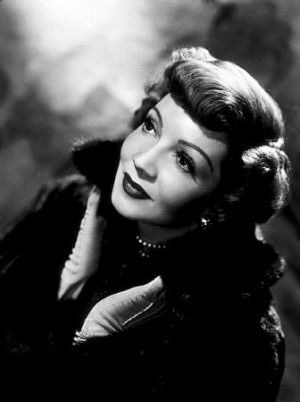
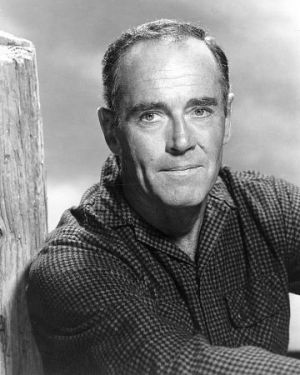
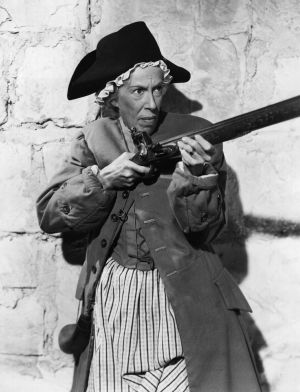
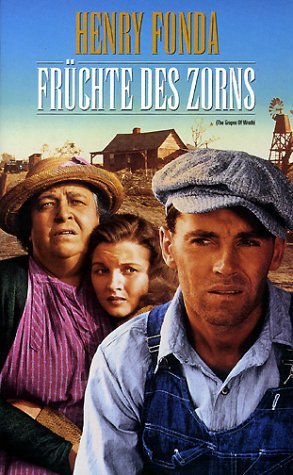
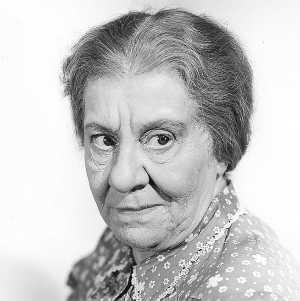
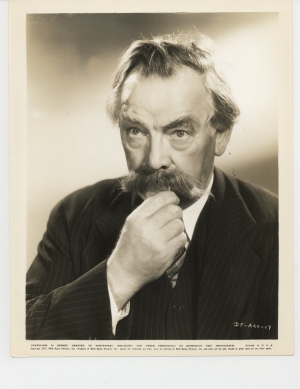
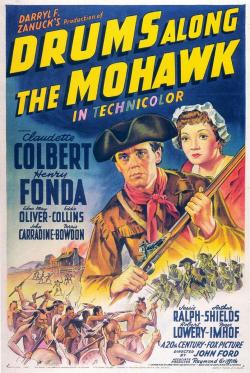
The other interesting thing to watch for is Edna May Oliver. She had already had a career starring in her own Hildgard Withers detective series, and was known to the audience, more so than Fonda, who is billed below Colbert. She plays a widow who takes in the beleaguered couple. Its a conventional role, but it written with some interesting overtones. There's one scene that matters.
Remember that the whole Ford effect has to do with contrasting interior space with exterior. Part of that is establishing the importance and enclosure of some key internal spaces. The Widow is awakened from sleep by two wild Indians. Have to be wild, you see. These are the closest we get to actually seeing Indian behavior. They seem retarded or drunk. They are there to burn down her house and want her to leave. She refuses and while they set fire to the bedroom, she commands them to remove her precious bed; she will not leave that bed, in fact will not leave actually sitting on the bed.
Later, we see that she and the bed have been transported as far as downstairs and to the front door and abandoned, she still aggressively squatting. Its pretty poignant, uncharacteristic of Ford, and probably only allowed because it could be seen as comic.
Ted's Evaluation -- 2 of 3: Has some interesting elements.


 Nikmati film dan acara tanpa batas
 Download konten favorit untuk ditonton offline
 Tampilan mudah, lancar dipakai

















'%3e%3cpath%20id='Vector'%20d='M17.3996%2025.7999C17.3996%2025.9838%2017.3634%2026.1658%2017.293%2026.3357C17.2227%2026.5055%2017.1196%2026.6598%2016.9896%2026.7899C16.8596%2026.9199%2016.7052%2027.023%2016.5354%2027.0933C16.3655%2027.1637%2016.1835%2027.1999%2015.9996%2027.1999C15.8158%2027.1999%2015.6337%2027.1637%2015.4639%2027.0933C15.294%2027.023%2015.1397%2026.9199%2015.0097%2026.7899C14.8797%2026.6598%2014.7765%2026.5055%2014.7062%2026.3357C14.6358%2026.1658%2014.5996%2025.9838%2014.5996%2025.7999C14.5996%2025.4286%2014.7471%2025.0725%2015.0097%2024.81C15.2722%2024.5474%2015.6283%2024.3999%2015.9996%2024.3999C16.3709%2024.3999%2016.727%2024.5474%2016.9896%2024.81C17.2521%2025.0725%2017.3996%2025.4286%2017.3996%2025.7999Z'%20fill='white'/%3e%3cpath%20id='Union'%20fill-rule='evenodd'%20clip-rule='evenodd'%20d='M8.5%204H23.5C24.0523%204%2024.5%204.44772%2024.5%205V21.5H7.5V5C7.5%204.44772%207.94772%204%208.5%204ZM5.5%2022.5V5C5.5%203.34315%206.84315%202%208.5%202H23.5C25.1569%202%2026.5%203.34315%2026.5%205V22.5V27C26.5%2028.6569%2025.1569%2030%2023.5%2030H8.5C6.84315%2030%205.5%2028.6569%205.5%2027V22.5ZM24.5%2023.5V27C24.5%2027.5523%2024.0523%2028%2023.5%2028H8.5C7.94772%2028%207.5%2027.5523%207.5%2027V23.5H24.5Z'%20fill='white'/%3e%3cpath%20id='Union_2'%20fill-rule='evenodd'%20clip-rule='evenodd'%20d='M17%209C17%208.44772%2016.5523%208%2016%208C15.4477%208%2015%208.44772%2015%209V13.8258L13.1508%2012.2407C12.7315%2011.8813%2012.1002%2011.9299%2011.7408%2012.3492C11.3813%2012.7685%2011.4299%2013.3998%2011.8492%2013.7593L15.345%2016.7556C15.5205%2016.9079%2015.7495%2017%2016%2017C16.2506%2017%2016.4796%2016.9079%2016.6551%2016.7556L20.1508%2013.7593C20.5701%2013.3998%2020.6187%2012.7685%2020.2593%2012.3492C19.8999%2011.9299%2019.2686%2011.8813%2018.8492%2012.2407L17%2013.8258V9Z'%20fill='white'/%3e%3c/g%3e%3c/svg%3e)