Sometimes you can't help wondering why certain occupations produce so many accomplished writers -- pilots, seamen, and doctors, for instance. Maybe pilots tell good stories that are made into films because -- let's face facts -- what goes up must come down, one way or another. Doctors also can tell gripping stories about life and death decisions, and there's always blood involved. When was the last time a popular novel was written by a dermatologist? Seamen have the toughest time. They're not going to cash in on the audience's fear of flying, and they don't make decisions that, gone wrong, may fatally nick the subclavian artery.
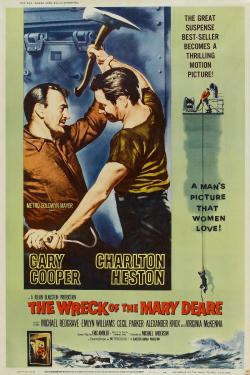
For sailors, they must heave the story up out of its marine context into psychology (eg., Conrad) or intrigue (eg., "The Wreck of the Mary Deare"). Storms at sea are fine, but you can hardly have a whole movie about a storm. "The Perfect Storm" was padded out with fiction. I guess "Typhoon" is all about a storm but to my knowledge it's never been filmed.
Sorry. Kind of a tedious introduction, I know.
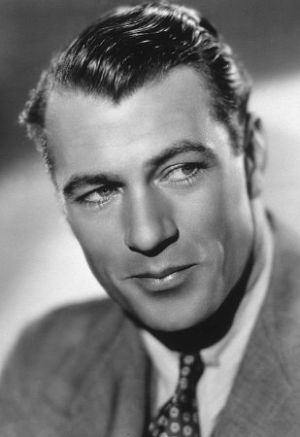
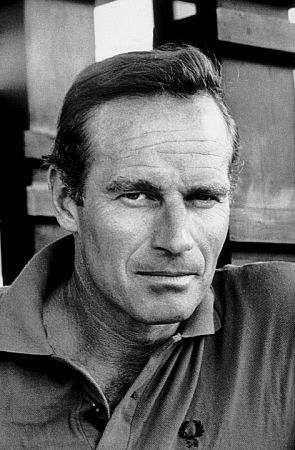
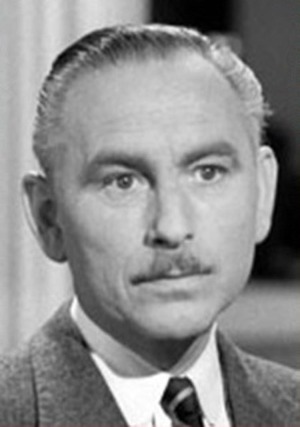
"The Wreck of the Mary Deare" takes place basically in three acts. (1) Charlton Heston's salvage boat almost runs into a derelict freighter in the middle of a storm off the French coast. He boards her and finds Gary Cooper, the sole occupant, hostile and suspicious. They manage to beach her amid some mean-looking rocks. (2) There is a formal investigation of the wreck by the insurance company and a court of inquiry, amounting to a courtroom drama. Cooper unfortunately is cast as the kind of defendant who wants to shout out "the truth" but is constantly being told to shut up and sit down and stop interrupting the proceedings. (3) The only way Cooper's curious behavior can be justified is by examining the cargo in Hold Three. He and Heston don wet suits, swim into the hold, prove their point, and successfully fight it out with the owner's henchmen on board.
Innes' novel has a harrowing opening act. Like Nicholas Monserrat he has an eye for capturing the dramatic detail. The film doesn't get it. Heston, climbing a line to board the heavily rolling Mary Deare, SHOULD BE swung back and forth like a weight at the end of a pendulum, slammed against the cold iron hull every few seconds. In the film it looks like he's climbing a rope in a high school gymnasium. Still, we get a good impression of what a hostile and unsteady environment a cold deck can be, filthy and dark, wallowing and sloshing. You can almost smell the rust.
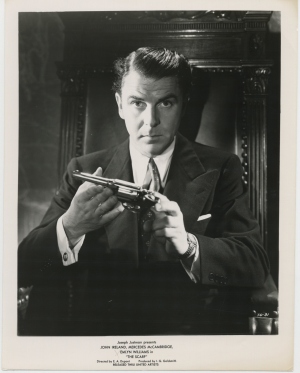
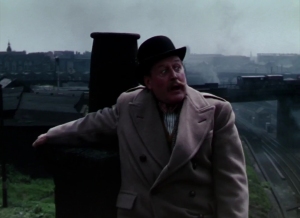
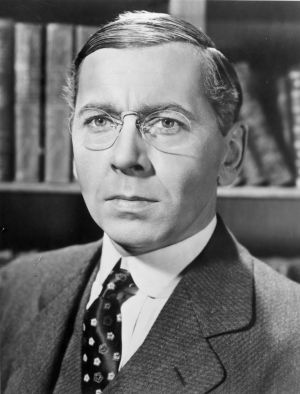
My memory of the novel is fuzzy after so many years but the film's middle act isn't bad. I did, though, miss John Williams as Sir Wilfred, the prosecutor or barrister or chief inquisitor or whatever he is. John Williams has played so many investigators and detectives I've lost track -- "Dial M for Murder," "Witness for the Prosecution," "The Paradine Case," "To Catch a Thief." It was a criminal act to give the role to somebody named Emlyn Something. Pardon me while I call my solicitor.
The novel did not end with an underwater fight. That's a kind of a cop out. SCUBA diving was becoming a popular sport in the 1950s, replacing snorkeling, which was for wimps. And wet suits were still something of a novelty on screen. (Cf., "Thunderball.") I believe, though, that a good argument could be made in favor of women in skimpy bathing suits SCUBA diving, rather than bulky men in full wet suits. Women look slick and phocine under water, as if built for it. Men may look better while running, but women look better while swimming. (These silly generalizations are exhilarating. Everybody should make one a day. We'd all be happy campers. No more wars in the Middle East. No more atonal music. No more, "Will Jessica Leave Brad"?)
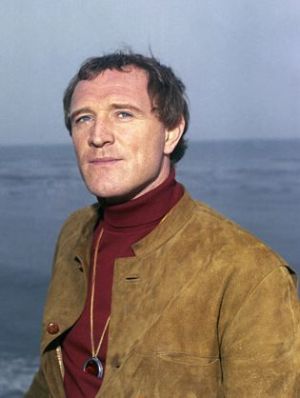
See it if it's on. Fine special effects and miniatures for the period. And note the best performance in the movie, by Richard Harris as a smiling and snide villain.


 बिना रुकावट फिल्में और शो देखें
 अपना पसंदीदा कंटेंट डाउनलोड करो ताकि ऑफ़लाइन देख सको
 सिंपल इंटरफ़ेस & स्मूथ परफॉर्मेंस




'%3e%3cpath%20id='Vector'%20d='M17.3996%2025.7999C17.3996%2025.9838%2017.3634%2026.1658%2017.293%2026.3357C17.2227%2026.5055%2017.1196%2026.6598%2016.9896%2026.7899C16.8596%2026.9199%2016.7052%2027.023%2016.5354%2027.0933C16.3655%2027.1637%2016.1835%2027.1999%2015.9996%2027.1999C15.8158%2027.1999%2015.6337%2027.1637%2015.4639%2027.0933C15.294%2027.023%2015.1397%2026.9199%2015.0097%2026.7899C14.8797%2026.6598%2014.7765%2026.5055%2014.7062%2026.3357C14.6358%2026.1658%2014.5996%2025.9838%2014.5996%2025.7999C14.5996%2025.4286%2014.7471%2025.0725%2015.0097%2024.81C15.2722%2024.5474%2015.6283%2024.3999%2015.9996%2024.3999C16.3709%2024.3999%2016.727%2024.5474%2016.9896%2024.81C17.2521%2025.0725%2017.3996%2025.4286%2017.3996%2025.7999Z'%20fill='white'/%3e%3cpath%20id='Union'%20fill-rule='evenodd'%20clip-rule='evenodd'%20d='M8.5%204H23.5C24.0523%204%2024.5%204.44772%2024.5%205V21.5H7.5V5C7.5%204.44772%207.94772%204%208.5%204ZM5.5%2022.5V5C5.5%203.34315%206.84315%202%208.5%202H23.5C25.1569%202%2026.5%203.34315%2026.5%205V22.5V27C26.5%2028.6569%2025.1569%2030%2023.5%2030H8.5C6.84315%2030%205.5%2028.6569%205.5%2027V22.5ZM24.5%2023.5V27C24.5%2027.5523%2024.0523%2028%2023.5%2028H8.5C7.94772%2028%207.5%2027.5523%207.5%2027V23.5H24.5Z'%20fill='white'/%3e%3cpath%20id='Union_2'%20fill-rule='evenodd'%20clip-rule='evenodd'%20d='M17%209C17%208.44772%2016.5523%208%2016%208C15.4477%208%2015%208.44772%2015%209V13.8258L13.1508%2012.2407C12.7315%2011.8813%2012.1002%2011.9299%2011.7408%2012.3492C11.3813%2012.7685%2011.4299%2013.3998%2011.8492%2013.7593L15.345%2016.7556C15.5205%2016.9079%2015.7495%2017%2016%2017C16.2506%2017%2016.4796%2016.9079%2016.6551%2016.7556L20.1508%2013.7593C20.5701%2013.3998%2020.6187%2012.7685%2020.2593%2012.3492C19.8999%2011.9299%2019.2686%2011.8813%2018.8492%2012.2407L17%2013.8258V9Z'%20fill='white'/%3e%3c/g%3e%3c/svg%3e)