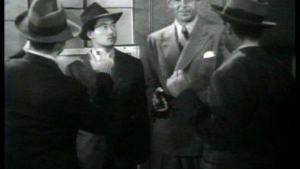
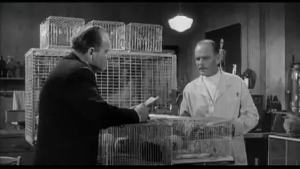
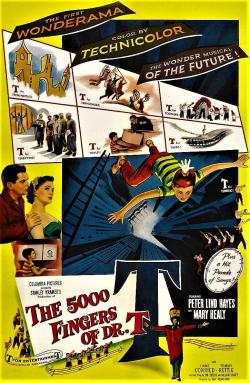
A young boy dreams that he is in an imaginary world where, assisted by his family's plumber, he must save other piano-playing kids like himself from the dungeons of his dictatorial piano teacher who also mind-controls his mother.
More
6.7 /10
4833 people rated
The 5,000 Fingers of Dr. T.
1953
R
1 h 29 m
संयुक्त राज्य अमेरिका
परिवार
फंतासी
संगीत
A young boy dreams that he is in an imaginary world where, assisted by his family's plumber, he must save other piano-playing kids like himself from the dungeons of his dictatorial piano teacher who also mind-controls his mother.
More
6.7 /10
4833 people rated
ऑनलाइन देखें
ऐप में देखें
एपिसोड
शीर्ष कलाकार
उपयोगकर्ता समीक्षा
एपिसोड
शीर्ष कलाकार
उपयोगकर्ता समीक्षा
एपिसोड
film
lklk
Netflix
Plex
शीर्ष कलाकार(18)
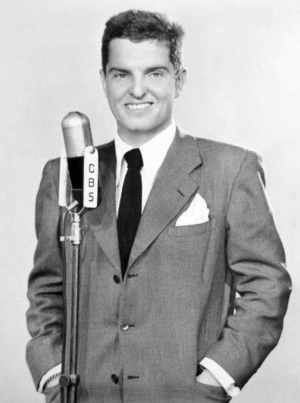
Peter Lind Hayes
August Zabladowski
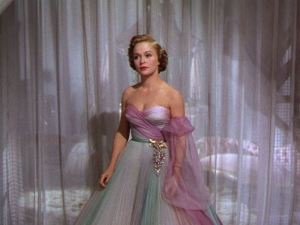
Mary Healy
Heloise Collins
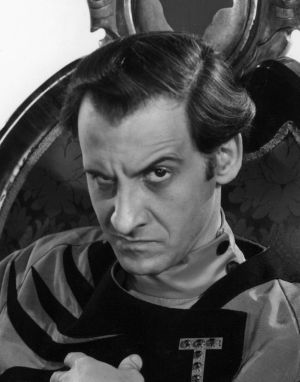
Hans Conried
Dr. Terwilliker
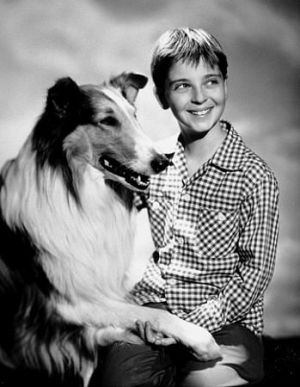
Tommy Rettig
Bartholomew Collins
Jack Heasley
Uncle Whitney
Robert Heasley
Uncle Judson
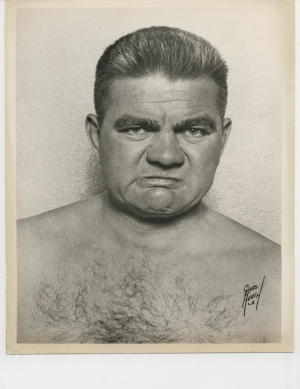
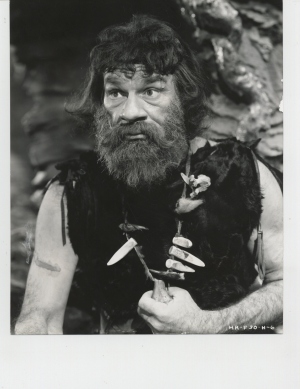
Noel Cravat
Sgt. Lunk
George Chakiris
Dancer
Alan Aric
Elevator Operator
Alvin Beam
Terwilliker's Valet
Tony Butala
Playback vocalist for Tommy Rettig
Kim Charney
Kim - Boy in Line
Ward Ellis
Terwilliker's Valet
Luigi Faccuito
Dancer in Dungeon Ballet
Henry Kulky
Stroogo
Diki Lerner
Dancer in Dungeon Ballet
Harry Wilson
Guard
Harry Wilson
Doorman
उपयोगकर्ता समीक्षा
Faris on IG
29/05/2023 14:06
source: The Five-Thousand Fingers of Dr. T.
Ama'Dou Bà
23/05/2023 06:53
I was astonished as I read everybody else's positive reviews on this movie- am I the only one who felt positively ill after watching it? The words that I would use to describe this movie are Bizarre, awful, stupid, dark, a total waste of time!
Besides being cheesy and corny this movie is just plain ridiculous! Naturally, being a low-budget film from the 1950's you can't expect a lot in the way of special effects, but I can usually get past all that if the script is good; but this didn't even have a good script! The dialogue was stupid and the acting even worse! I know this is supposed to be a children's movie and I suppose a child under the age of 12 would probably not mind a bad script, cheesy settings, and ridiculous acting but I wouldn't even recommend this movie for a child because the movie has a very dark atmosphere- there are also several scenes which could potentially be pretty terrifying for a child as this movie is basically about this little boy's nightmare.
Don't waste your time!!!
On the plus side, I did enjoy a few of the songs- slightly.
Aminata
23/05/2023 06:53
This is a child's dream. As such sex scarcely, if at all, enters into it. (Bart understands that both Dr. T and Zabladowski have designs on his mother of some sort, but he doesn't really know of what sort or why.) There are NO Freudian metaphors none that resonate or shed any light, anyway; one can always find a random background level of such pseudo-metaphors anywhere, including in the patterns in the grain of the wood in the table in front of me -; and there's certainly nothing in the dream to indicate that Dr. T, or anyone in the film, is gay. That is: there's nothing in the content of the dream to determine that he's gay. He likes music? He's fond of fine, fancy clothes? He has pinched nostrils? Give me a break.
I suppose there's very little to indicate that he's heterosexual, either, although if we must decide one way or the other we should conclude that he is, since he DOES want to marry Bart's mother (who alternates between looking prim and sexless and looking altogether luscious), and neither his desire for profit nor his vainglory provide him with a motivation for so doing. I'll admit he may simply wish to indulge in his lust for power.
Power is the key. What moral content there is and it's really more of a fantasia than a parable is this: it's wrong to "push people around". The more sinister interpretations people seem to have racked their brains to come up with simply do not, in the cold light of day, make any sense. Is the film really saying anything against musical education? Against piano practice per se? Even if this is what Dr. Seuss et al. were trying to do, Frederick Hollander's music subverts the enterprise. Are we being subliminally told that there's something suss about art? Even if we are the images are subliminally telling us the precise opposite. I refuse to believe that anything with such a wonderful score, such delightful and clever songs, such beguiling art direction, is REALLY telling us not to bother with the piano if we really want to learn to play it (you'll notice that one or two of the 500 children look quite upset that they don't get to play "Ten Happy Fingers"), or that artists are not to be trusted.
The score and the songs and the art, and most of the ideas, are more than enough to compensate for those aspects of the production that are merely competent (there are and were directors who could have DAZZLED us with this material, from the first minute to the last). Don't worry: it's never less than competent. The only way in which the film falls short in any important way is that it doesn't quite have the nerve embrace its own fantasy. Why does it have to all turn out to be a dream? Why can't Bart REALLY be kidnapped by Dr. T. and forced to practise on a 44,000-key piano? For decades, Hollywood was so terrified of pure fantasy that it would ALWAYS do this: it would take, say, a book by L. Frank Baum in which Dorothy goes to the land of Oz and create a film in which she merely dreams about doing so. There's no denying that this hurts the screen version of "The Wizard of Oz" even if there's also no denying that the fantasy is more than strong enough to survive the blow. So it is here.
Fify Befe Oa Nana
23/05/2023 06:53
An alienated boy misunderstood by his parents at home rebels against an exacting piano teacher whom he finds out has a sinister plot to rule the world.
I remember it best for its plaintive song "You Have No Right to Push Us Kids Around" later revived by Jerry Lewis in his TV appearances. The song is a cry about the angst of childhood. Part of the lyrics goes something like this: "Just because you have hair on your chest doesn't mean you're the best. Just because you have stayed longer on this planet doesn't mean you own it. You have no right to push us kids around just because we're closer to the ground." Under the megalomaniac piano teacher's plan, all children would be condemned to an eternity of piano practice trying to catch up with the ever increasing beat of a metronome. Spectacular "blow up" endings such as in James Bond movies satirized by Don Adams (Maxwell Smart) or even Mike Myers (Austin Powers) must have taken inspiration from this very early attempt at such.
Much belatedly did I find out that this story is by the revered "Dr." Seuss (he is not a real doctor you know) famous for witty, whimsical stories written in cute rhyming verses about outlandish animals (Green Eggs and Ham, Cat in a Hat)but praised by educators for their effectiveness in getting children to read. Seuss deserves Ph.Ds in education, psychology and literature even posthumously.
Dame gnahore
23/05/2023 06:53
I saw this when I was about 5 years old and the images were burned into my brain. Images created by Dr. Seuss! I especially remember the Twilliker Institute, with it's electrified Barbed Wire Fence...
And the curved ladder into the sky... And all of he strange and wonderful musical instruments played by the prisoners in the dungeon. And the costumes that possibly inspired the makers of Star Trek, the hoods in this film look like the Original Klingons (Without the forehead makeup).
And the wonderful music and dancing and the insane lyrics written by Dr Seuss! Seeing this film at an early age definitely affected me... And it also made me afraid of music teachers. But it was not music teachers but Normality and Forced Peer Pressure I despised- The being told. HOW to dress, HOW to talk, HOW to walk, HOW to live! This film is, as Groucho Marx says: Is "Against That." What this film is for, is free musical expression, and free speech. This film teaches us, that not all people talk or look the same way. And the ever growing popularity of this film shows us a great deal about our societies: 30 years ago, freedom of expression was NOT encouraged, but now it is.
This film will forever be on the front lines of free speech, and it is probably one of the most important films ever made, due to the fact that a child can figure this out about the film, that it is about freedom.
And the biggest mistake regarding this film is by parents who insist that "This is a movie not intended for children" or that the film is not appropriate for children: I can say with 100% assurance that this is false, that I saw this film when I was a small child and I believe I benefited from the experience. This film should be shown to small children, but with discretion because some of the images can frighten a child: But because my parents were in the room I did not get frightened by the imagery.
The way this film is shown to a child can affect a child's creativity forever- And if the child is frightened, well then they can always watch it later. I was mortally afraid of Mr. Magoo cartoons until I was about 3 years old, the noise frightened me. But about 1 year after I was frightened by the introduction to a Mr. Magoo cartoon, I saw this, with my brother and parents, and we all loved it.
What is amazing was the almost 100% negative reaction to this film by the critics of the time, and we can thank whatever deities that they were 100% wrong.
Alpha_ks
23/05/2023 06:53
What a pity they don't make films like this anymore for children, and an even greater pity that if they did no one would watch them. This wonderful music-and-dance fantasy tale harks from the days when there actually was a "culture," and at least some movie makers, and some parents, felt it was their responsibility to pass that culture on to the next generation. The screenplay for "Dr. T" was written by none other than Dr. Seuss, including the songs, and is delightful from beginning to end. The story, about a boy who dreams that his mean piano-teacher runs a surrealistic prison-school, is an adventure that holds the attention of young and old, and the excellent performances of Peter Lind Hayes and Mary Healy provide the "love interest" for those who find that necessary. The protagonist is played by Tommy Rettig -- "Jeff" of the original "Lassie" TV series -- at 12. It's interesting that so many of his pre-Lassie roles were in musicals, especially since apparently he couldn't carry a tune. (Tony Butala, one of the founding members of "The Lettermen," provided his singing voice in this film.) One number, way ahead of its time -- in fact way ahead of THIS time -- makes as clear a protest as I've ever heard against adults who "push and shove us little kids around." A VERY YOUNG Hans Conried as the conceited villain will have you laughing out loud, and references to the atomic bomb should be understood in the context of a year when thousands of people were digging large holes in their back yards. Watching this movie is a real and rare treat.
glenn_okit
23/05/2023 06:53
A small boy plots to upset the grand performance by THE 5,000 FINGERS OF DR. T. to be held in the sinister Terwilliker Institute.
The whimsical world of Dr. Seuss first saw expression in a Hollywood feature film in this fast-paced fantasy which examines a child's musical nightmare. Although it was a financial & critical disappointment when initially released, it has established itself comfortably as a nostalgic favorite for Baby Boomers who first discovered it decades ago.
Dr. Seuss (Theodor Seuss Geisel, 1904-1991) wrote the original story, co-authored the script and penned the lyrics in his own inimitable style. The action plays itself out over vast, curvaceous sets which will immediately seem familiar to readers of his books, while the brightly colored costumes make the players look like characters from the good Doctor's stories come to life.
Completely dominating the movie in the title role is the marvelous character actor Hans Conried (1917-1982), gleefully breathing life into the part of the mad piano teacher who schemes to force 500 little lads into performing his compositions at a gigantic keyboard. Conried is wonderfully funny, striding about, leering, snorting & chortling as he plots his nefarious plans. He attacks the role with relish, nasally enunciating every syllable with his unique diction, softening his villainy with a thin veneer of unctuous civility. This was Conried's finest on-camera performance, but 1953 would also present him in the part for which he is perhaps best remembered, voicing Captain Hook in Disney's animated PETER PAN.
The other three performers in the movie: Tommy Rettig as the much beleaguered boy attempting to thwart the evil Terwilliker; Mary Healy as his lovely, albeit mesmerized, Mom; and Peter Lind Hayes as a friendly, deadpanned plumber, all do very well with their roles, but their ordinariness, like that of Dorothy in Oz, make them pale in comparison beside Conried.
The film, which delivers perhaps an unnecessarily nasty knock to piano teachers, does come across with some fine songs, ranging from Rettig's plaintive 'Because We're Kids' to Conried's hilarious 'Dressing Song.' Also on view is the bizarre Dungeon Dance, in which kidnapped male orchestra members present one of the most unusual terpsichorean displays ever seen in a kiddie film.
ƧƬƦツLaGazel
23/05/2023 06:53
This movie is one of the most bizarre and random films I have ever seen. It combines a mind-boggling storyline (a kid dreams he's trapped in a castle ruled by his satanic piano teacher who is setting up a piano camp for 500 players), intriguing characters (the heroic, down-to-earth plumber, the helpless, beautiful, damsel/mother in distress, the all-American kid on the block, and the disturbing, foppish, freak of a villain, Dr. Terwilliker) weird costumes and sets, and the most outrageous songs ever conceived. Among my favorites are the "Doe-me-doe" dress up song, "The Dungeon Song," and "We are Victorious!" Any orchestra geek will get a kick out of the dungeon ballet. This is a terrific film to scare your friends or corrupt your children. I highly recommend it to anyone with an unbalanced imagination.
Also recommended: The Brave Little Toaster, Time Bandits, Happily Ever After: a Snow White Tale, The Never Ending Story, Nightmare Before Christmas and Willy Wonka and the Chocolate Factory.
Michael Lesehe
23/05/2023 06:53
I simply can't warm to this movie - it's just too self-consciously weird. Maybe it's supposed to look like a living cartoon, but it comes across more like a trip through the Cabinet of Dr. Caligari. The comment in the NY Times TV listing for this movie is that it is "Freudian," and I have to agree. There is just so much symbolism stuffed into this that it's easy to interpret it in just about any way you care to, including old-fashioned Freudian psychology, which would have probably been the interpretation of choice when this movie was released in 1953. As I watched it recently, I remembered the rumor that Dr. Seuss did not really like children, and I think this film bears that out. It is a fantasy of adult cruelty toward children which is executed with great relish. The word that comes to mind to me to describe this movie is "sour." (Another would be "overstuffed.") Nevertheless, many of the actors whom I liked very much in my youth are in this movie, notably Tommy Rettig and Hans Conried. Rettig was a very talented performer who never really got a chance to be anything more than a child actor. I remember Peter Lind Hayes and Mary Healy from a television morning talk show that was broadcast in New York City in the 1950s. And the fabulous, flamboyant Conried - I just loved him. In this movie he gives an over-the-top performance which is fitting under the circumstances (he is imitating John Barrymore's way of speaking, a voice Conried used often, especially when doing cartoon characters). However, the character is rather nasty, and would probably be frightening to children, as every good villain should be. But look, folks, I'm sorry -- the homosexual inference of many of the characters is far from subtle, in fact I'd say it's inescapable, and the anti-gay bias of the authors of this film is unmistakable.
Reservations aside, I would say that this movie is worth a look, if only for the strangeness of it, and to see the remarkable performance of Hans Conried. Incidentally, I'd like to comment on another comment made about Tommy Rettig's lovely singing voice. I seriously doubt that a boy that age could sing like that. The voice has definite adult qualities - a boy soprano wouldn't have that kind of vibrato in his voice. I think if you listen more carefully, you will hear that the singer is a woman who has been dubbed in to sound like a little boy. Nevertheless, Rettig was such a natural performer that it does indeed seem as though he is the one singing.
journey
23/05/2023 06:53
The rich imagination of Dr. Seuss and the suburban daydreams of the early 1950s combine to make this one-of-a-kind musical fantasy more than just a perverse novelty item: rarely has a film captured so well the unique perspective and peculiar logic of childhood. Kids will no doubt identify with the young hero, an unhappy piano student who dreams of liberating, with the help of a handsome plumber, 500 boys held captive at the mile long keyboard of his maniacal music tutor, Dr. Terwillicker (played by Mr. Fractured Flickers, Hans Conreid). But only adults will appreciate the shear strangeness of it all: the surrealistic architecture; the outrageous and colorful costume designs; and the improbable song and dance numbers, with nonsensical lyrics only Dr. Seuss could have written. At times it almost resembles a nightmare vision of child anxiety, but the passing years improve the film by restoring to it the innocence of the age in which it was made.
उपयोगकर्ता समीक्षा
Faris on IG
29/05/2023 14:06
source: The Five-Thousand Fingers of Dr. T.
Ama'Dou Bà
23/05/2023 06:53
I was astonished as I read everybody else's positive reviews on this movie- am I the only one who felt positively ill after watching it? The words that I would use to describe this movie are Bizarre, awful, stupid, dark, a total waste of time!
Besides being cheesy and corny this movie is just plain ridiculous! Naturally, being a low-budget film from the 1950's you can't expect a lot in the way of special effects, but I can usually get past all that if the script is good; but this didn't even have a good script! The dialogue was stupid and the acting even worse! I know this is supposed to be a children's movie and I suppose a child under the age of 12 would probably not mind a bad script, cheesy settings, and ridiculous acting but I wouldn't even recommend this movie for a child because the movie has a very dark atmosphere- there are also several scenes which could potentially be pretty terrifying for a child as this movie is basically about this little boy's nightmare.
Don't waste your time!!!
On the plus side, I did enjoy a few of the songs- slightly.
Aminata
23/05/2023 06:53
This is a child's dream. As such sex scarcely, if at all, enters into it. (Bart understands that both Dr. T and Zabladowski have designs on his mother of some sort, but he doesn't really know of what sort or why.) There are NO Freudian metaphors none that resonate or shed any light, anyway; one can always find a random background level of such pseudo-metaphors anywhere, including in the patterns in the grain of the wood in the table in front of me -; and there's certainly nothing in the dream to indicate that Dr. T, or anyone in the film, is gay. That is: there's nothing in the content of the dream to determine that he's gay. He likes music? He's fond of fine, fancy clothes? He has pinched nostrils? Give me a break.
I suppose there's very little to indicate that he's heterosexual, either, although if we must decide one way or the other we should conclude that he is, since he DOES want to marry Bart's mother (who alternates between looking prim and sexless and looking altogether luscious), and neither his desire for profit nor his vainglory provide him with a motivation for so doing. I'll admit he may simply wish to indulge in his lust for power.
Power is the key. What moral content there is and it's really more of a fantasia than a parable is this: it's wrong to "push people around". The more sinister interpretations people seem to have racked their brains to come up with simply do not, in the cold light of day, make any sense. Is the film really saying anything against musical education? Against piano practice per se? Even if this is what Dr. Seuss et al. were trying to do, Frederick Hollander's music subverts the enterprise. Are we being subliminally told that there's something suss about art? Even if we are the images are subliminally telling us the precise opposite. I refuse to believe that anything with such a wonderful score, such delightful and clever songs, such beguiling art direction, is REALLY telling us not to bother with the piano if we really want to learn to play it (you'll notice that one or two of the 500 children look quite upset that they don't get to play "Ten Happy Fingers"), or that artists are not to be trusted.
The score and the songs and the art, and most of the ideas, are more than enough to compensate for those aspects of the production that are merely competent (there are and were directors who could have DAZZLED us with this material, from the first minute to the last). Don't worry: it's never less than competent. The only way in which the film falls short in any important way is that it doesn't quite have the nerve embrace its own fantasy. Why does it have to all turn out to be a dream? Why can't Bart REALLY be kidnapped by Dr. T. and forced to practise on a 44,000-key piano? For decades, Hollywood was so terrified of pure fantasy that it would ALWAYS do this: it would take, say, a book by L. Frank Baum in which Dorothy goes to the land of Oz and create a film in which she merely dreams about doing so. There's no denying that this hurts the screen version of "The Wizard of Oz" even if there's also no denying that the fantasy is more than strong enough to survive the blow. So it is here.
Fify Befe Oa Nana
23/05/2023 06:53
An alienated boy misunderstood by his parents at home rebels against an exacting piano teacher whom he finds out has a sinister plot to rule the world.
I remember it best for its plaintive song "You Have No Right to Push Us Kids Around" later revived by Jerry Lewis in his TV appearances. The song is a cry about the angst of childhood. Part of the lyrics goes something like this: "Just because you have hair on your chest doesn't mean you're the best. Just because you have stayed longer on this planet doesn't mean you own it. You have no right to push us kids around just because we're closer to the ground." Under the megalomaniac piano teacher's plan, all children would be condemned to an eternity of piano practice trying to catch up with the ever increasing beat of a metronome. Spectacular "blow up" endings such as in James Bond movies satirized by Don Adams (Maxwell Smart) or even Mike Myers (Austin Powers) must have taken inspiration from this very early attempt at such.
Much belatedly did I find out that this story is by the revered "Dr." Seuss (he is not a real doctor you know) famous for witty, whimsical stories written in cute rhyming verses about outlandish animals (Green Eggs and Ham, Cat in a Hat)but praised by educators for their effectiveness in getting children to read. Seuss deserves Ph.Ds in education, psychology and literature even posthumously.
Dame gnahore
23/05/2023 06:53
I saw this when I was about 5 years old and the images were burned into my brain. Images created by Dr. Seuss! I especially remember the Twilliker Institute, with it's electrified Barbed Wire Fence...
And the curved ladder into the sky... And all of he strange and wonderful musical instruments played by the prisoners in the dungeon. And the costumes that possibly inspired the makers of Star Trek, the hoods in this film look like the Original Klingons (Without the forehead makeup).
And the wonderful music and dancing and the insane lyrics written by Dr Seuss! Seeing this film at an early age definitely affected me... And it also made me afraid of music teachers. But it was not music teachers but Normality and Forced Peer Pressure I despised- The being told. HOW to dress, HOW to talk, HOW to walk, HOW to live! This film is, as Groucho Marx says: Is "Against That." What this film is for, is free musical expression, and free speech. This film teaches us, that not all people talk or look the same way. And the ever growing popularity of this film shows us a great deal about our societies: 30 years ago, freedom of expression was NOT encouraged, but now it is.
This film will forever be on the front lines of free speech, and it is probably one of the most important films ever made, due to the fact that a child can figure this out about the film, that it is about freedom.
And the biggest mistake regarding this film is by parents who insist that "This is a movie not intended for children" or that the film is not appropriate for children: I can say with 100% assurance that this is false, that I saw this film when I was a small child and I believe I benefited from the experience. This film should be shown to small children, but with discretion because some of the images can frighten a child: But because my parents were in the room I did not get frightened by the imagery.
The way this film is shown to a child can affect a child's creativity forever- And if the child is frightened, well then they can always watch it later. I was mortally afraid of Mr. Magoo cartoons until I was about 3 years old, the noise frightened me. But about 1 year after I was frightened by the introduction to a Mr. Magoo cartoon, I saw this, with my brother and parents, and we all loved it.
What is amazing was the almost 100% negative reaction to this film by the critics of the time, and we can thank whatever deities that they were 100% wrong.
Alpha_ks
23/05/2023 06:53
What a pity they don't make films like this anymore for children, and an even greater pity that if they did no one would watch them. This wonderful music-and-dance fantasy tale harks from the days when there actually was a "culture," and at least some movie makers, and some parents, felt it was their responsibility to pass that culture on to the next generation. The screenplay for "Dr. T" was written by none other than Dr. Seuss, including the songs, and is delightful from beginning to end. The story, about a boy who dreams that his mean piano-teacher runs a surrealistic prison-school, is an adventure that holds the attention of young and old, and the excellent performances of Peter Lind Hayes and Mary Healy provide the "love interest" for those who find that necessary. The protagonist is played by Tommy Rettig -- "Jeff" of the original "Lassie" TV series -- at 12. It's interesting that so many of his pre-Lassie roles were in musicals, especially since apparently he couldn't carry a tune. (Tony Butala, one of the founding members of "The Lettermen," provided his singing voice in this film.) One number, way ahead of its time -- in fact way ahead of THIS time -- makes as clear a protest as I've ever heard against adults who "push and shove us little kids around." A VERY YOUNG Hans Conried as the conceited villain will have you laughing out loud, and references to the atomic bomb should be understood in the context of a year when thousands of people were digging large holes in their back yards. Watching this movie is a real and rare treat.
glenn_okit
23/05/2023 06:53
A small boy plots to upset the grand performance by THE 5,000 FINGERS OF DR. T. to be held in the sinister Terwilliker Institute.
The whimsical world of Dr. Seuss first saw expression in a Hollywood feature film in this fast-paced fantasy which examines a child's musical nightmare. Although it was a financial & critical disappointment when initially released, it has established itself comfortably as a nostalgic favorite for Baby Boomers who first discovered it decades ago.
Dr. Seuss (Theodor Seuss Geisel, 1904-1991) wrote the original story, co-authored the script and penned the lyrics in his own inimitable style. The action plays itself out over vast, curvaceous sets which will immediately seem familiar to readers of his books, while the brightly colored costumes make the players look like characters from the good Doctor's stories come to life.
Completely dominating the movie in the title role is the marvelous character actor Hans Conried (1917-1982), gleefully breathing life into the part of the mad piano teacher who schemes to force 500 little lads into performing his compositions at a gigantic keyboard. Conried is wonderfully funny, striding about, leering, snorting & chortling as he plots his nefarious plans. He attacks the role with relish, nasally enunciating every syllable with his unique diction, softening his villainy with a thin veneer of unctuous civility. This was Conried's finest on-camera performance, but 1953 would also present him in the part for which he is perhaps best remembered, voicing Captain Hook in Disney's animated PETER PAN.
The other three performers in the movie: Tommy Rettig as the much beleaguered boy attempting to thwart the evil Terwilliker; Mary Healy as his lovely, albeit mesmerized, Mom; and Peter Lind Hayes as a friendly, deadpanned plumber, all do very well with their roles, but their ordinariness, like that of Dorothy in Oz, make them pale in comparison beside Conried.
The film, which delivers perhaps an unnecessarily nasty knock to piano teachers, does come across with some fine songs, ranging from Rettig's plaintive 'Because We're Kids' to Conried's hilarious 'Dressing Song.' Also on view is the bizarre Dungeon Dance, in which kidnapped male orchestra members present one of the most unusual terpsichorean displays ever seen in a kiddie film.
ƧƬƦツLaGazel
23/05/2023 06:53
This movie is one of the most bizarre and random films I have ever seen. It combines a mind-boggling storyline (a kid dreams he's trapped in a castle ruled by his satanic piano teacher who is setting up a piano camp for 500 players), intriguing characters (the heroic, down-to-earth plumber, the helpless, beautiful, damsel/mother in distress, the all-American kid on the block, and the disturbing, foppish, freak of a villain, Dr. Terwilliker) weird costumes and sets, and the most outrageous songs ever conceived. Among my favorites are the "Doe-me-doe" dress up song, "The Dungeon Song," and "We are Victorious!" Any orchestra geek will get a kick out of the dungeon ballet. This is a terrific film to scare your friends or corrupt your children. I highly recommend it to anyone with an unbalanced imagination.
Also recommended: The Brave Little Toaster, Time Bandits, Happily Ever After: a Snow White Tale, The Never Ending Story, Nightmare Before Christmas and Willy Wonka and the Chocolate Factory.
Michael Lesehe
23/05/2023 06:53
I simply can't warm to this movie - it's just too self-consciously weird. Maybe it's supposed to look like a living cartoon, but it comes across more like a trip through the Cabinet of Dr. Caligari. The comment in the NY Times TV listing for this movie is that it is "Freudian," and I have to agree. There is just so much symbolism stuffed into this that it's easy to interpret it in just about any way you care to, including old-fashioned Freudian psychology, which would have probably been the interpretation of choice when this movie was released in 1953. As I watched it recently, I remembered the rumor that Dr. Seuss did not really like children, and I think this film bears that out. It is a fantasy of adult cruelty toward children which is executed with great relish. The word that comes to mind to me to describe this movie is "sour." (Another would be "overstuffed.") Nevertheless, many of the actors whom I liked very much in my youth are in this movie, notably Tommy Rettig and Hans Conried. Rettig was a very talented performer who never really got a chance to be anything more than a child actor. I remember Peter Lind Hayes and Mary Healy from a television morning talk show that was broadcast in New York City in the 1950s. And the fabulous, flamboyant Conried - I just loved him. In this movie he gives an over-the-top performance which is fitting under the circumstances (he is imitating John Barrymore's way of speaking, a voice Conried used often, especially when doing cartoon characters). However, the character is rather nasty, and would probably be frightening to children, as every good villain should be. But look, folks, I'm sorry -- the homosexual inference of many of the characters is far from subtle, in fact I'd say it's inescapable, and the anti-gay bias of the authors of this film is unmistakable.
Reservations aside, I would say that this movie is worth a look, if only for the strangeness of it, and to see the remarkable performance of Hans Conried. Incidentally, I'd like to comment on another comment made about Tommy Rettig's lovely singing voice. I seriously doubt that a boy that age could sing like that. The voice has definite adult qualities - a boy soprano wouldn't have that kind of vibrato in his voice. I think if you listen more carefully, you will hear that the singer is a woman who has been dubbed in to sound like a little boy. Nevertheless, Rettig was such a natural performer that it does indeed seem as though he is the one singing.
journey
23/05/2023 06:53
The rich imagination of Dr. Seuss and the suburban daydreams of the early 1950s combine to make this one-of-a-kind musical fantasy more than just a perverse novelty item: rarely has a film captured so well the unique perspective and peculiar logic of childhood. Kids will no doubt identify with the young hero, an unhappy piano student who dreams of liberating, with the help of a handsome plumber, 500 boys held captive at the mile long keyboard of his maniacal music tutor, Dr. Terwillicker (played by Mr. Fractured Flickers, Hans Conreid). But only adults will appreciate the shear strangeness of it all: the surrealistic architecture; the outrageous and colorful costume designs; and the improbable song and dance numbers, with nonsensical lyrics only Dr. Seuss could have written. At times it almost resembles a nightmare vision of child anxiety, but the passing years improve the film by restoring to it the innocence of the age in which it was made.
Disclaimer: All videos and pictures on MovieBox are from the Internet, and their copyrights belong to the original creators. We only provide webpage services and do not store, record, or upload any content.


 बिना रुकावट फिल्में और शो देखें
 अपना पसंदीदा कंटेंट डाउनलोड करो ताकि ऑफ़लाइन देख सको
 सिंपल इंटरफ़ेस & स्मूथ परफॉर्मेंस




'%3e%3cpath%20id='Vector'%20d='M17.3996%2025.7999C17.3996%2025.9838%2017.3634%2026.1658%2017.293%2026.3357C17.2227%2026.5055%2017.1196%2026.6598%2016.9896%2026.7899C16.8596%2026.9199%2016.7052%2027.023%2016.5354%2027.0933C16.3655%2027.1637%2016.1835%2027.1999%2015.9996%2027.1999C15.8158%2027.1999%2015.6337%2027.1637%2015.4639%2027.0933C15.294%2027.023%2015.1397%2026.9199%2015.0097%2026.7899C14.8797%2026.6598%2014.7765%2026.5055%2014.7062%2026.3357C14.6358%2026.1658%2014.5996%2025.9838%2014.5996%2025.7999C14.5996%2025.4286%2014.7471%2025.0725%2015.0097%2024.81C15.2722%2024.5474%2015.6283%2024.3999%2015.9996%2024.3999C16.3709%2024.3999%2016.727%2024.5474%2016.9896%2024.81C17.2521%2025.0725%2017.3996%2025.4286%2017.3996%2025.7999Z'%20fill='white'/%3e%3cpath%20id='Union'%20fill-rule='evenodd'%20clip-rule='evenodd'%20d='M8.5%204H23.5C24.0523%204%2024.5%204.44772%2024.5%205V21.5H7.5V5C7.5%204.44772%207.94772%204%208.5%204ZM5.5%2022.5V5C5.5%203.34315%206.84315%202%208.5%202H23.5C25.1569%202%2026.5%203.34315%2026.5%205V22.5V27C26.5%2028.6569%2025.1569%2030%2023.5%2030H8.5C6.84315%2030%205.5%2028.6569%205.5%2027V22.5ZM24.5%2023.5V27C24.5%2027.5523%2024.0523%2028%2023.5%2028H8.5C7.94772%2028%207.5%2027.5523%207.5%2027V23.5H24.5Z'%20fill='white'/%3e%3cpath%20id='Union_2'%20fill-rule='evenodd'%20clip-rule='evenodd'%20d='M17%209C17%208.44772%2016.5523%208%2016%208C15.4477%208%2015%208.44772%2015%209V13.8258L13.1508%2012.2407C12.7315%2011.8813%2012.1002%2011.9299%2011.7408%2012.3492C11.3813%2012.7685%2011.4299%2013.3998%2011.8492%2013.7593L15.345%2016.7556C15.5205%2016.9079%2015.7495%2017%2016%2017C16.2506%2017%2016.4796%2016.9079%2016.6551%2016.7556L20.1508%2013.7593C20.5701%2013.3998%2020.6187%2012.7685%2020.2593%2012.3492C19.8999%2011.9299%2019.2686%2011.8813%2018.8492%2012.2407L17%2013.8258V9Z'%20fill='white'/%3e%3c/g%3e%3c/svg%3e)