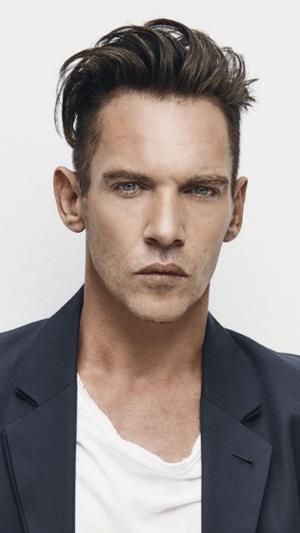
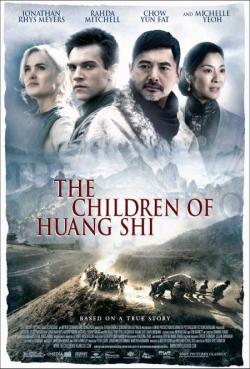
"The Japanese are not savages," insists George Hogg(Jonathan Rhys Meyers)to a fellow photo-journalist, while from their vehicle, we see refugees traverse the Nanking roadsides and the Japanese soldiers who keep the Chinese capital under siege. Both men find themselves in this foreign land on a mission to substantiate reports about a massacre. When George finds himself separated from his colleague, he witnesses a group of Chinese men and women being gunned down mass execution style. Although "The Children of Huang Shi" doesn't whitewash the violence that went down in Nanking, the filmmaker does temper the killing to a degree, in which ethnic cleansing never becomes the subject of the film. If you're expecting an adaptation of Iris Chang's "The Rape of Nanking", you'll be sorely disappointed. When our story begins, the massacre is over and done with. Since "The Children of Huang Shi" withholds from its audience the number of Chinese people involved in the slaughter, this enables the filmmaker to portray the Japanese as rational people.
In one scene, George convinces an army general to call off his troops from searching for weapons at a random check-point. The filmmaker wants us to believe that the Japanese official would care about his soldiers contaminating the sterilized medical supplies meant for the sick and injured Chinese people. This show of clemency is downright laughable. In "The Rape of Nanking", Chang details instances in which women's babies were ripped out of their wombs, young girls being raped, while the city was reduced to rubble, and its people, literally, chopped into pieces. Later in the film, a Japanese soldier discovers the hat of a comrade placed on the head of a Chinese boy. George explains that the orphan found the hat on the ground during their sojourn. Even worse, one of the older boys points his gun at the Japanese contingent. Incredibly, an exchange of gunfire is averted, even though the historical record shows that the Japanese soldier had no qualms about aiming their guns at children.
But let's be fair. Along with the HBO documentary "Nanking", the story of Japan's war crimes are finally being told to a western audience. It's about time. Although the orphans don't get enough credit for their own survival, George Hogg is deserving of the accolades that his self-evident heroism brought him. But just in case the audience fails to recognize what this man accomplished, Mrs. Wang, an opium dealer, tells George how wonderful he is. Lee(Radha Mitchell) seconds that emotion. She had her doubts when the nurse assigned George to the orphanage. And then there's the real-life survivors who offer their testimony about his greatness during the closing credits.
The film never proves that the Japanese are savages, but Lee was in Nanking during the siege. If the audience knew about the nature of the attack, Lee's disproportionate anger over George's redecorating efforts on her living quarters, which inspires the nurse to storm out of the orphanage, would make this British woman completely insufferable.
The less you know about "The Rape of Nanking", the better.


 बिना रुकावट फिल्में और शो देखें
 अपना पसंदीदा कंटेंट डाउनलोड करो ताकि ऑफ़लाइन देख सको
 सिंपल इंटरफ़ेस & स्मूथ परफॉर्मेंस



















'%3e%3cpath%20id='Vector'%20d='M17.3996%2025.7999C17.3996%2025.9838%2017.3634%2026.1658%2017.293%2026.3357C17.2227%2026.5055%2017.1196%2026.6598%2016.9896%2026.7899C16.8596%2026.9199%2016.7052%2027.023%2016.5354%2027.0933C16.3655%2027.1637%2016.1835%2027.1999%2015.9996%2027.1999C15.8158%2027.1999%2015.6337%2027.1637%2015.4639%2027.0933C15.294%2027.023%2015.1397%2026.9199%2015.0097%2026.7899C14.8797%2026.6598%2014.7765%2026.5055%2014.7062%2026.3357C14.6358%2026.1658%2014.5996%2025.9838%2014.5996%2025.7999C14.5996%2025.4286%2014.7471%2025.0725%2015.0097%2024.81C15.2722%2024.5474%2015.6283%2024.3999%2015.9996%2024.3999C16.3709%2024.3999%2016.727%2024.5474%2016.9896%2024.81C17.2521%2025.0725%2017.3996%2025.4286%2017.3996%2025.7999Z'%20fill='white'/%3e%3cpath%20id='Union'%20fill-rule='evenodd'%20clip-rule='evenodd'%20d='M8.5%204H23.5C24.0523%204%2024.5%204.44772%2024.5%205V21.5H7.5V5C7.5%204.44772%207.94772%204%208.5%204ZM5.5%2022.5V5C5.5%203.34315%206.84315%202%208.5%202H23.5C25.1569%202%2026.5%203.34315%2026.5%205V22.5V27C26.5%2028.6569%2025.1569%2030%2023.5%2030H8.5C6.84315%2030%205.5%2028.6569%205.5%2027V22.5ZM24.5%2023.5V27C24.5%2027.5523%2024.0523%2028%2023.5%2028H8.5C7.94772%2028%207.5%2027.5523%207.5%2027V23.5H24.5Z'%20fill='white'/%3e%3cpath%20id='Union_2'%20fill-rule='evenodd'%20clip-rule='evenodd'%20d='M17%209C17%208.44772%2016.5523%208%2016%208C15.4477%208%2015%208.44772%2015%209V13.8258L13.1508%2012.2407C12.7315%2011.8813%2012.1002%2011.9299%2011.7408%2012.3492C11.3813%2012.7685%2011.4299%2013.3998%2011.8492%2013.7593L15.345%2016.7556C15.5205%2016.9079%2015.7495%2017%2016%2017C16.2506%2017%2016.4796%2016.9079%2016.6551%2016.7556L20.1508%2013.7593C20.5701%2013.3998%2020.6187%2012.7685%2020.2593%2012.3492C19.8999%2011.9299%2019.2686%2011.8813%2018.8492%2012.2407L17%2013.8258V9Z'%20fill='white'/%3e%3c/g%3e%3c/svg%3e)