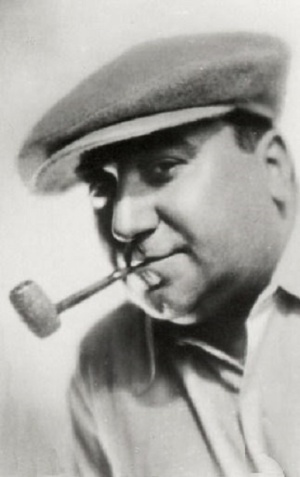
It's a credit to co-directors G. W. Pabst and Arnold Fanck that to some extent 'The white hell of Pitz Palu' feels like a film ahead of its time. To be sure, it bears idiosyncrasies of the silent era - subtitles, of course, but also singular close-ups of actors' faces, and a score that feels pointedly direct in its dramatic tenor. Some shots, especially of the surrounding environment, also carry a certain forthrightness to them - yet there are many others that employ a subtlety and keen eye that I think exceeds the film's contemporaries. More to the point, the screenplay seems open and expansive, a contrast to often more straightforward and strictly constructed scenes in other pictures of the era. Many moments in 'Pitz Palu' come and go not at an artificially defined pace, but at a more natural gait that allows the drama to play out according to its own devices. This also allows the cast to wholly embrace their roles, and inhabit the characters as they will. Even in just the fundamental craft - this pairing of film-making and storytelling styles - this movie is captivating.
While adeptly including measures of drama and romance, 'Pitz Palu' is concretely an adventure film, and in that slant as well it seems to echo features to come more than those that may have showed alongside it in theaters. At that, the narrative is solid in its simplicity - and more remarkable for the sense of thrills and daring that it imparts; kudos to Fanck and co-writer Ladislaus Vajda for outstanding, arguably visionary writing. And once more - Fanck and Pabst's realization of the material is just as exquisite. Intermittent shots of the mountains impart the looming grandeur and untamed danger of nature, and fine consideration of light and shadow serves the same purpose. We're treated to much excellent, eye-catching imagery generally, including thought for perspective (as in foreground versus background) that again seems ahead of its time, and the camera picks up every detail to be had.
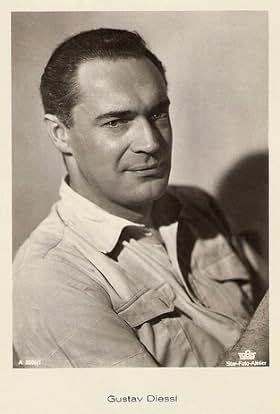
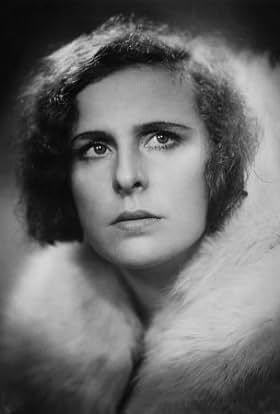
I personally would have somewhat preferred a bit more focus on the chief characters; instead there's a significant portion of the runtime that's concentrated elsewhere. The gravity of the scenario, and the overall impact of the story, is lessened as a result. Even then, though, the picture continues to emphasize the competing majesty and peril of the peak, as though the very mountain were a character - a passive, intrinsic antagonist. And where the top-billed cast is centered, they're superb. Gustav Diessl is great as Dr. Krafft, wielding hard-boiled determination and strength underscoring an unremitting sorrow. Ernst Petersen, as Hans, has a role that's marginally more dynamic, but also downplayed compared to his costars - yet he handles the mixed emotions and difficulties of the part well. Meanwhile - in retrospect, Leni Riefenstahl's involvement is rather dubious, and it's impossible not to view her contributions to cinema in light of her abhorrent mark on world history. Still, she was quite a good actress, and as Maria she bears steadiness, range, and nuance that lends much weight to the picture. If only Riefenstahl's legacy was strictly in the film industry at large, and not more so as a propagandist for the worst people in the world.
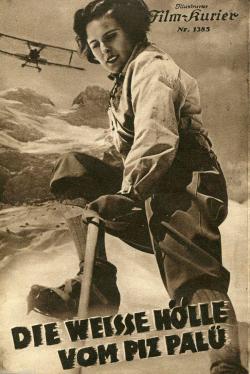
All this having been said - though not wholly perfect, at the end of the day 'The white hell of Pitz Palu' holds up, more than 90 years later. It's exciting and engrossing, and keeps our strong attention from start to finish. In the decades since there have been many features that can't begin to compare, and aren't nearly as absorbing. It's a testament to the immense skill of cast and crew alike that this remains so riveting. I can appreciate that silent films are more difficult to engage with for some viewers, yet I think it's a mistake to pass on this on that basis alone. For anyone willing and able to connect with pictures from so long ago, 'The white hell of Pitz Palu' is a fantastic adventure that's well worth checking out.


 Profitez de films et séries sans limite
 Téléchargez vos contenus favoris pour regarder hors ligne
 Interface simple et utilisation fluide




'%3e%3cpath%20id='Vector'%20d='M17.3996%2025.7999C17.3996%2025.9838%2017.3634%2026.1658%2017.293%2026.3357C17.2227%2026.5055%2017.1196%2026.6598%2016.9896%2026.7899C16.8596%2026.9199%2016.7052%2027.023%2016.5354%2027.0933C16.3655%2027.1637%2016.1835%2027.1999%2015.9996%2027.1999C15.8158%2027.1999%2015.6337%2027.1637%2015.4639%2027.0933C15.294%2027.023%2015.1397%2026.9199%2015.0097%2026.7899C14.8797%2026.6598%2014.7765%2026.5055%2014.7062%2026.3357C14.6358%2026.1658%2014.5996%2025.9838%2014.5996%2025.7999C14.5996%2025.4286%2014.7471%2025.0725%2015.0097%2024.81C15.2722%2024.5474%2015.6283%2024.3999%2015.9996%2024.3999C16.3709%2024.3999%2016.727%2024.5474%2016.9896%2024.81C17.2521%2025.0725%2017.3996%2025.4286%2017.3996%2025.7999Z'%20fill='white'/%3e%3cpath%20id='Union'%20fill-rule='evenodd'%20clip-rule='evenodd'%20d='M8.5%204H23.5C24.0523%204%2024.5%204.44772%2024.5%205V21.5H7.5V5C7.5%204.44772%207.94772%204%208.5%204ZM5.5%2022.5V5C5.5%203.34315%206.84315%202%208.5%202H23.5C25.1569%202%2026.5%203.34315%2026.5%205V22.5V27C26.5%2028.6569%2025.1569%2030%2023.5%2030H8.5C6.84315%2030%205.5%2028.6569%205.5%2027V22.5ZM24.5%2023.5V27C24.5%2027.5523%2024.0523%2028%2023.5%2028H8.5C7.94772%2028%207.5%2027.5523%207.5%2027V23.5H24.5Z'%20fill='white'/%3e%3cpath%20id='Union_2'%20fill-rule='evenodd'%20clip-rule='evenodd'%20d='M17%209C17%208.44772%2016.5523%208%2016%208C15.4477%208%2015%208.44772%2015%209V13.8258L13.1508%2012.2407C12.7315%2011.8813%2012.1002%2011.9299%2011.7408%2012.3492C11.3813%2012.7685%2011.4299%2013.3998%2011.8492%2013.7593L15.345%2016.7556C15.5205%2016.9079%2015.7495%2017%2016%2017C16.2506%2017%2016.4796%2016.9079%2016.6551%2016.7556L20.1508%2013.7593C20.5701%2013.3998%2020.6187%2012.7685%2020.2593%2012.3492C19.8999%2011.9299%2019.2686%2011.8813%2018.8492%2012.2407L17%2013.8258V9Z'%20fill='white'/%3e%3c/g%3e%3c/svg%3e)