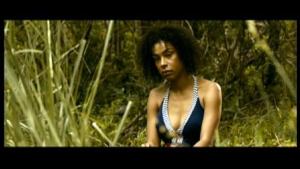
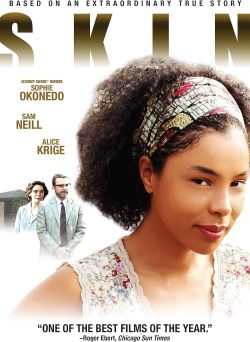
Based on the true story of a black girl who was born to two white Afrikaner parents in South Africa during the apartheid era.
More
6.9 /10
3833 people rated
Skin
2009
R
1 h 47 m
Royaume-Uni
Biography
Drame
Based on the true story of a black girl who was born to two white Afrikaner parents in South Africa during the apartheid era.
More
6.9 /10
3833 people rated
Regarder en ligne
Dans l’appli
Épisodes
Meilleurs acteurs
Avis des utilisateurs
Épisodes
Meilleurs acteurs
Avis des utilisateurs
Épisodes
film
lklk
Netflix
Plex
Meilleurs acteurs(18)
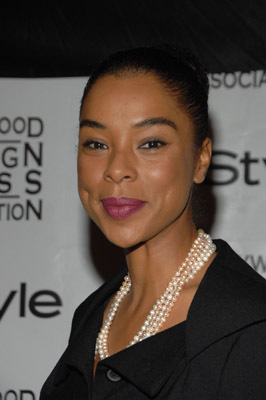
Sophie Okonedo
Sandra Laing
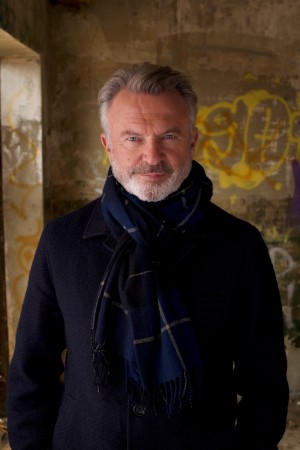
Sam Neill
Abraham Laing
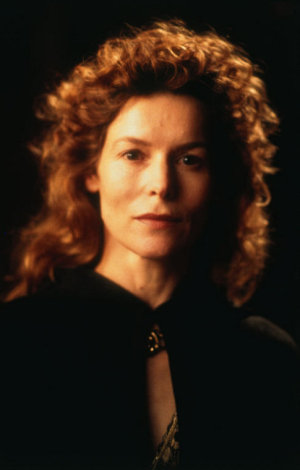
Alice Krige
Sannie Laing
Tony Kgoroge
Petrus Zwane
Ella Ramangwane
Young Sandra
Terri Ann Eckstein
Elsie Laing (aged 19)
Bongani Masondo
Henry Laing (aged 20)
Dan Robbertse
Factory Foreman
Jeremy Crutchley
Hugh Johnston
Jonathan Taylor
TV Sound Recordist
Nomathamsanga Baleka
Factory Worker 1
Valesika Smith
Factory Worker 2
Faniswa Yisa
Nora Molefe
Hannes Brummer
Leon Laing
Zamanthebe Sithebe
Young Thembi
Onida Cowan
Miss Van Uys
Leana Truitsman
Annie
Lauren Das Neves
Elize
Avis des utilisateurs
Bony Étté Adrien
22/01/2026 19:52
Skin-360P
KRkii8
25/07/2025 18:41
need it
Hardik Shąrmà
28/04/2023 05:22
I had never heard this true story before and wont go into what others on here have said about the story, but this is a well made movie.
Sophie Okonedo acts well although she does not look much like the real Sandra Laing and in fact was too old to play her in her teens. Then again neither does Sam Neil look like the real Dad. However the acting is all very convincing especially the young actress playing Sandra in her early years.
But none of this matters as much as this story needing to be told. The story shows how idiotic prejudices are based on color in particular.
Faya
28/04/2023 05:22
"I'm not black!" Sandra
The color of Sandra Laing (Sophie Okonedo) colors her life beyond what anyone might dream possible. Born black of white parents Sannie (Alice Krige) and Abraham (Sam Neill), who own a rural general store, Sandra is the center of Skin, a drama played against the harrowing years of Apartheid. She is breaking the law if she lives as a black with whites, so her dad devotes years to have her officially declared white.
But even for isolated Afrikaners like the Laings, life is complicated, especially when Sandra falls in love and has a baby with a black farmer, Petrus (Tony Kgoroge). Although the film becomes melodramatic or operatic at times, underneath is a core of truth about a human condition that fosters racial hatred and enslavement even in the modern world. It takes a Mandela to free blacks in Africa, but it is up to the strong of heart like Sandra to make that freedom a reality, day by day.
The film, sometimes playing like J. M. Coetzee Coeteze's violent white versus black world, does a credible job showing the contradictions in characters like her dad, who enforces the separation of black and whites but seems to know he is wrong. Yet, he cannot help himself; this is the strength of the film, the consistent struggle between righteous tradition (read separation) and goodness and fairness. Although we know apartheid will end, and Abraham will be a victim of his own willfulness, the film manages to retain the sense of futility for blacks, artistically not easy to do when history has made its statement.
The goodness often manifests itself in her mother, a loving woman driven by her husband to lose her daughter and watch him suffer remorse too strong to describe. The truth lies in the pain that an oppressed people have endured for hundreds of years on both sides of the Atlantic.
For that truth, Skin is worth experiencing.
chris
28/04/2023 05:22
Sandra Laing should be more widely known in South Africa. I doubt we value the lessons learned from the our own past as we do from school. Imagine a world where you are classified according to what the government laws dictate. That was the reality of Apartheid South Africa.
Even in 2013 we see glimpses of this Apartheid mentality because mixed race people in this country seems to have a Pavlovian disposition to feeling inferior and acting that way. The violence among "coloured people" is disproportional higher when looked at prison populations. So this movie is actually an important link between the past, the present and the future of mixed race people in South Africa.
What is striking about Sandra Laing is how her parents are both supremely dedicated and yet divided in how they treat their daughter. Everything manages to proceed as planned while she's in school, and even after she's asked to leave the school. Even her older brother stands by her even though he admits it's difficult.
How do we break free from our parents, from our roots and discover new ones? There is a Freudian element to Sandra's relationship with her father. He fights for her, he is strong-willed and takes on the government in one scene. Yet, he has doubts about whether she is indeed his biological child. At least this makes him human in sense. The family is surrounded by black people, some as labourers and some as clients in their shop in a rural part of the country.
As she matures into a young lady, her father arranges dates for her with young white men. After a terrible incident where she avoids being rapped, she eventually strikes up a sexual relationship with a black man with whom she has two children. His anger sparked by group areas act, and how it was enforced in by the Apartheid government eventually leads to him physically abusing Sandra. She leaves with her children and makes her way to Johannesburg, the big city.
The movie ends where it began with the 1994 elections. The dream that was dreamed by her parents is still alive in her, especially her father's motto of "never give up." She tells her mother on her death bed, that was all that kept her going during the 20 years of separation.
This is a story that speaks about all those things that makes us human: family, identity, uncertainty, choice and love. Without falling in love with a black man, Sandra would never have discovered herself. Her white father wanted her to be safe, to be protected and the never allowed her to be free, to find her own way.
Tshedy__m
28/04/2023 05:22
This movie is based on a real person and her true story. However the end credits points out that some characters and some situations were created for dramatic effect, that's the way movies are made. But I will assume most of it is accurate.
Sophie Okonedo is the adult Sandra Laing who, in 1955, was born during the period of apartheid in South Africa. The official teaching of the white South Africans, the Afrikans, was that white and black people were "different" and they should be kept apart. Apartheid.
This is important for this story because Sandra's parents were both white Afrikans, but Sandra was brown with black, kinky hair. Her skin was not as dark as the usual black but clearly in looks more black than white.
Although her parents and brother treated her and loved her all the same, this created many problems for Sandra growing up, starting with boarding school where the other students and even the faculty looked at her as black, and treated her that way. When she was a teen, desperate for acceptance and love, she met and ran off with a black man, which was strictly illegal since her parents had her officially classified by the government as "white". Plus her unyielding father rejected her, he so strongly upheld the ideals of apartheid.
South African actress Alice Krige is the mother, Sannie Laing. The Irish and New Zealander Sam Neill of Jurassic Park fame is the dad, Abraham Laing.
Very good movie, both for the quality of the story, and also for its significance for that period in history. All actors are superb.
Saw it on Netflix streaming.
Baptiste
28/04/2023 05:22
It's 1965 Eastern Transvaal, South Africa. Sandra Laing is the young daughter of white Afrikaner parents Abraham (Sam Neill) and Sannie Laing (Alice Krige). She is kicked out of her all-white school for her African features despite being born as white. She is reclassified as colored and Abraham overturns it in court. At 17 in 1973, she has a relationship with black Petrus which drives a rift in between her family.
It's a compelling intriguing real life story. It takes a look at Apartheid from a different angle. There is a tough question at the center of the movie that is left uncertain. It does leave the movie at a disadvantage dealing with real people. Nothing is quite as clean in real life.
fatima 🌺
28/04/2023 05:22
Set during the Apartheid era in South Africa, this film tells the story of Sandra Laing who is born black to white parents and spends much of her life fighting to be recognized. As a young school girl she is placed in a whites only school, yet is frowned upon; her parents don't 'see' her as black, even here birth certificate states she is white. But people see her differently and soon she is thrown from the school. As an older teenager she starts dating, with her parents choosing white men for her to see, but she is attracted to a young black man, whom she eventually falls in love with.
The story is tragic on so many levels. Sandra is treated so differently by everyone, including her family. She is classed as white, but is black and because of laws she is not allowed to marry a black man or go to buy a dress in a white's shop. The levels of racism are so multilayered, it's disturbing. Her father refuses to let her see a black man and threatens to kill him, he wants her to 'be' white. Racism towards one's own child tears the family apart and she settles down with Petrus and has children, but her estrangement from her family and especially her mother haunts her and this becomes a source hatred for Petrus, who thinks she is betraying him by longing to be with her white family. Racism upon racism.
The film is a well acted, beautifully shot one that portrays a singular life of despair among an era of despicable human behaviour. Towards the end it becomes quite moving as change sweeps a new South Africa and Sandra tries to reunite with her estranged family and makes you hope that events such as those never occur again.
More of my reviews at iheartfilms.weebly.com
Rakesh reddy
28/04/2023 05:22
This film follows the tragic story about a girl named Sandra Laing attempting to define who she is as a person during the repressive time of apartheid. Born into a white family, yet having a dark skin tone, commonly referred to scientifically as polygenetic inheritance, Sandra is constantly questioning her sense of identity and belonging amongst people that, supposedly, love her. The film powerfully encapsulates this woman's struggle throughout her arduous life, and as a viewer leaves you inspired by her courage and effort to simply live a happy and liberated life. In essence, it's a tragic yet inspiring story that should be heard and acknowledged by all people.
Soraya Momed
28/04/2023 05:22
I finally saw "Skin" last night. I won't recap the story here. I was fascinated by Sandra Liang's heartbreaking experience, but I missed the movie in the theatre. The actors – Neill, Krige, Okonedo and Kgoroge – performed their roles well. The film, overall, is not perfect. I agree that Sophie Okonedo was not completely believable as the teenage Sandra Laing, but that's a small quibble given Okonedo's gargantuan talent.
What really saddens me is that so many people are more concerned with debunking the notion that two white-looking people can (biologically) produce a black-looking child than with South Africa's brutal, hateful apartheid regime that tore this family apart, and turned a beautiful young girl's life into a living hell. All of my white friends summarily dismissed Sandra Laing's story and rejected the possibility that it could be true. For them, it's easier to question Sannie Laing's marital fidelity than to keep an open mind about polygenic inheritance (genetic throwback). They should know by now that we don't know everything about genetic curve balls.
The scenes that disturbed me the most were 1) Sandra enduring humiliating tests (measuring of her forehead and pencil stuck in her hair), 3) Sandra bleaching and seriously burning her skin with a dangerous homemade concoction of chemicals, and 3) Sandra's realization of her parents' deep denial of their own racism. It was painful to watch her attempt to survive relentless rejection. I'm convinced she loved Petrus in some way, but I believe she may have chosen to go with him at 15 years old to escape daily psychological and emotional torment.
Unfortunately, the "one-drop rule" and the notion of white racial purity (tying to white superiority) remain rampant today, and even in the good old US of A. We will likely solve world hunger and cure every disease imaginable before we eradicate that one!
Oh, and Tony Kgoroge is gorgeous. He has beautiful skin and a smile that could melt well, anything! I loved watching him in "Invictus".
Avis des utilisateurs
Bony Étté Adrien
22/01/2026 19:52
Skin-360P
KRkii8
25/07/2025 18:41
need it
Hardik Shąrmà
28/04/2023 05:22
I had never heard this true story before and wont go into what others on here have said about the story, but this is a well made movie.
Sophie Okonedo acts well although she does not look much like the real Sandra Laing and in fact was too old to play her in her teens. Then again neither does Sam Neil look like the real Dad. However the acting is all very convincing especially the young actress playing Sandra in her early years.
But none of this matters as much as this story needing to be told. The story shows how idiotic prejudices are based on color in particular.
Faya
28/04/2023 05:22
"I'm not black!" Sandra
The color of Sandra Laing (Sophie Okonedo) colors her life beyond what anyone might dream possible. Born black of white parents Sannie (Alice Krige) and Abraham (Sam Neill), who own a rural general store, Sandra is the center of Skin, a drama played against the harrowing years of Apartheid. She is breaking the law if she lives as a black with whites, so her dad devotes years to have her officially declared white.
But even for isolated Afrikaners like the Laings, life is complicated, especially when Sandra falls in love and has a baby with a black farmer, Petrus (Tony Kgoroge). Although the film becomes melodramatic or operatic at times, underneath is a core of truth about a human condition that fosters racial hatred and enslavement even in the modern world. It takes a Mandela to free blacks in Africa, but it is up to the strong of heart like Sandra to make that freedom a reality, day by day.
The film, sometimes playing like J. M. Coetzee Coeteze's violent white versus black world, does a credible job showing the contradictions in characters like her dad, who enforces the separation of black and whites but seems to know he is wrong. Yet, he cannot help himself; this is the strength of the film, the consistent struggle between righteous tradition (read separation) and goodness and fairness. Although we know apartheid will end, and Abraham will be a victim of his own willfulness, the film manages to retain the sense of futility for blacks, artistically not easy to do when history has made its statement.
The goodness often manifests itself in her mother, a loving woman driven by her husband to lose her daughter and watch him suffer remorse too strong to describe. The truth lies in the pain that an oppressed people have endured for hundreds of years on both sides of the Atlantic.
For that truth, Skin is worth experiencing.
chris
28/04/2023 05:22
Sandra Laing should be more widely known in South Africa. I doubt we value the lessons learned from the our own past as we do from school. Imagine a world where you are classified according to what the government laws dictate. That was the reality of Apartheid South Africa.
Even in 2013 we see glimpses of this Apartheid mentality because mixed race people in this country seems to have a Pavlovian disposition to feeling inferior and acting that way. The violence among "coloured people" is disproportional higher when looked at prison populations. So this movie is actually an important link between the past, the present and the future of mixed race people in South Africa.
What is striking about Sandra Laing is how her parents are both supremely dedicated and yet divided in how they treat their daughter. Everything manages to proceed as planned while she's in school, and even after she's asked to leave the school. Even her older brother stands by her even though he admits it's difficult.
How do we break free from our parents, from our roots and discover new ones? There is a Freudian element to Sandra's relationship with her father. He fights for her, he is strong-willed and takes on the government in one scene. Yet, he has doubts about whether she is indeed his biological child. At least this makes him human in sense. The family is surrounded by black people, some as labourers and some as clients in their shop in a rural part of the country.
As she matures into a young lady, her father arranges dates for her with young white men. After a terrible incident where she avoids being rapped, she eventually strikes up a sexual relationship with a black man with whom she has two children. His anger sparked by group areas act, and how it was enforced in by the Apartheid government eventually leads to him physically abusing Sandra. She leaves with her children and makes her way to Johannesburg, the big city.
The movie ends where it began with the 1994 elections. The dream that was dreamed by her parents is still alive in her, especially her father's motto of "never give up." She tells her mother on her death bed, that was all that kept her going during the 20 years of separation.
This is a story that speaks about all those things that makes us human: family, identity, uncertainty, choice and love. Without falling in love with a black man, Sandra would never have discovered herself. Her white father wanted her to be safe, to be protected and the never allowed her to be free, to find her own way.
Tshedy__m
28/04/2023 05:22
This movie is based on a real person and her true story. However the end credits points out that some characters and some situations were created for dramatic effect, that's the way movies are made. But I will assume most of it is accurate.
Sophie Okonedo is the adult Sandra Laing who, in 1955, was born during the period of apartheid in South Africa. The official teaching of the white South Africans, the Afrikans, was that white and black people were "different" and they should be kept apart. Apartheid.
This is important for this story because Sandra's parents were both white Afrikans, but Sandra was brown with black, kinky hair. Her skin was not as dark as the usual black but clearly in looks more black than white.
Although her parents and brother treated her and loved her all the same, this created many problems for Sandra growing up, starting with boarding school where the other students and even the faculty looked at her as black, and treated her that way. When she was a teen, desperate for acceptance and love, she met and ran off with a black man, which was strictly illegal since her parents had her officially classified by the government as "white". Plus her unyielding father rejected her, he so strongly upheld the ideals of apartheid.
South African actress Alice Krige is the mother, Sannie Laing. The Irish and New Zealander Sam Neill of Jurassic Park fame is the dad, Abraham Laing.
Very good movie, both for the quality of the story, and also for its significance for that period in history. All actors are superb.
Saw it on Netflix streaming.
Baptiste
28/04/2023 05:22
It's 1965 Eastern Transvaal, South Africa. Sandra Laing is the young daughter of white Afrikaner parents Abraham (Sam Neill) and Sannie Laing (Alice Krige). She is kicked out of her all-white school for her African features despite being born as white. She is reclassified as colored and Abraham overturns it in court. At 17 in 1973, she has a relationship with black Petrus which drives a rift in between her family.
It's a compelling intriguing real life story. It takes a look at Apartheid from a different angle. There is a tough question at the center of the movie that is left uncertain. It does leave the movie at a disadvantage dealing with real people. Nothing is quite as clean in real life.
fatima 🌺
28/04/2023 05:22
Set during the Apartheid era in South Africa, this film tells the story of Sandra Laing who is born black to white parents and spends much of her life fighting to be recognized. As a young school girl she is placed in a whites only school, yet is frowned upon; her parents don't 'see' her as black, even here birth certificate states she is white. But people see her differently and soon she is thrown from the school. As an older teenager she starts dating, with her parents choosing white men for her to see, but she is attracted to a young black man, whom she eventually falls in love with.
The story is tragic on so many levels. Sandra is treated so differently by everyone, including her family. She is classed as white, but is black and because of laws she is not allowed to marry a black man or go to buy a dress in a white's shop. The levels of racism are so multilayered, it's disturbing. Her father refuses to let her see a black man and threatens to kill him, he wants her to 'be' white. Racism towards one's own child tears the family apart and she settles down with Petrus and has children, but her estrangement from her family and especially her mother haunts her and this becomes a source hatred for Petrus, who thinks she is betraying him by longing to be with her white family. Racism upon racism.
The film is a well acted, beautifully shot one that portrays a singular life of despair among an era of despicable human behaviour. Towards the end it becomes quite moving as change sweeps a new South Africa and Sandra tries to reunite with her estranged family and makes you hope that events such as those never occur again.
More of my reviews at iheartfilms.weebly.com
Rakesh reddy
28/04/2023 05:22
This film follows the tragic story about a girl named Sandra Laing attempting to define who she is as a person during the repressive time of apartheid. Born into a white family, yet having a dark skin tone, commonly referred to scientifically as polygenetic inheritance, Sandra is constantly questioning her sense of identity and belonging amongst people that, supposedly, love her. The film powerfully encapsulates this woman's struggle throughout her arduous life, and as a viewer leaves you inspired by her courage and effort to simply live a happy and liberated life. In essence, it's a tragic yet inspiring story that should be heard and acknowledged by all people.
Soraya Momed
28/04/2023 05:22
I finally saw "Skin" last night. I won't recap the story here. I was fascinated by Sandra Liang's heartbreaking experience, but I missed the movie in the theatre. The actors – Neill, Krige, Okonedo and Kgoroge – performed their roles well. The film, overall, is not perfect. I agree that Sophie Okonedo was not completely believable as the teenage Sandra Laing, but that's a small quibble given Okonedo's gargantuan talent.
What really saddens me is that so many people are more concerned with debunking the notion that two white-looking people can (biologically) produce a black-looking child than with South Africa's brutal, hateful apartheid regime that tore this family apart, and turned a beautiful young girl's life into a living hell. All of my white friends summarily dismissed Sandra Laing's story and rejected the possibility that it could be true. For them, it's easier to question Sannie Laing's marital fidelity than to keep an open mind about polygenic inheritance (genetic throwback). They should know by now that we don't know everything about genetic curve balls.
The scenes that disturbed me the most were 1) Sandra enduring humiliating tests (measuring of her forehead and pencil stuck in her hair), 3) Sandra bleaching and seriously burning her skin with a dangerous homemade concoction of chemicals, and 3) Sandra's realization of her parents' deep denial of their own racism. It was painful to watch her attempt to survive relentless rejection. I'm convinced she loved Petrus in some way, but I believe she may have chosen to go with him at 15 years old to escape daily psychological and emotional torment.
Unfortunately, the "one-drop rule" and the notion of white racial purity (tying to white superiority) remain rampant today, and even in the good old US of A. We will likely solve world hunger and cure every disease imaginable before we eradicate that one!
Oh, and Tony Kgoroge is gorgeous. He has beautiful skin and a smile that could melt well, anything! I loved watching him in "Invictus".
Disclaimer: All videos and pictures on MovieBox are from the Internet, and their copyrights belong to the original creators. We only provide webpage services and do not store, record, or upload any content.


 Profitez de films et séries sans limite
 Téléchargez vos contenus favoris pour regarder hors ligne
 Interface simple et utilisation fluide




'%3e%3cpath%20id='Vector'%20d='M17.3996%2025.7999C17.3996%2025.9838%2017.3634%2026.1658%2017.293%2026.3357C17.2227%2026.5055%2017.1196%2026.6598%2016.9896%2026.7899C16.8596%2026.9199%2016.7052%2027.023%2016.5354%2027.0933C16.3655%2027.1637%2016.1835%2027.1999%2015.9996%2027.1999C15.8158%2027.1999%2015.6337%2027.1637%2015.4639%2027.0933C15.294%2027.023%2015.1397%2026.9199%2015.0097%2026.7899C14.8797%2026.6598%2014.7765%2026.5055%2014.7062%2026.3357C14.6358%2026.1658%2014.5996%2025.9838%2014.5996%2025.7999C14.5996%2025.4286%2014.7471%2025.0725%2015.0097%2024.81C15.2722%2024.5474%2015.6283%2024.3999%2015.9996%2024.3999C16.3709%2024.3999%2016.727%2024.5474%2016.9896%2024.81C17.2521%2025.0725%2017.3996%2025.4286%2017.3996%2025.7999Z'%20fill='white'/%3e%3cpath%20id='Union'%20fill-rule='evenodd'%20clip-rule='evenodd'%20d='M8.5%204H23.5C24.0523%204%2024.5%204.44772%2024.5%205V21.5H7.5V5C7.5%204.44772%207.94772%204%208.5%204ZM5.5%2022.5V5C5.5%203.34315%206.84315%202%208.5%202H23.5C25.1569%202%2026.5%203.34315%2026.5%205V22.5V27C26.5%2028.6569%2025.1569%2030%2023.5%2030H8.5C6.84315%2030%205.5%2028.6569%205.5%2027V22.5ZM24.5%2023.5V27C24.5%2027.5523%2024.0523%2028%2023.5%2028H8.5C7.94772%2028%207.5%2027.5523%207.5%2027V23.5H24.5Z'%20fill='white'/%3e%3cpath%20id='Union_2'%20fill-rule='evenodd'%20clip-rule='evenodd'%20d='M17%209C17%208.44772%2016.5523%208%2016%208C15.4477%208%2015%208.44772%2015%209V13.8258L13.1508%2012.2407C12.7315%2011.8813%2012.1002%2011.9299%2011.7408%2012.3492C11.3813%2012.7685%2011.4299%2013.3998%2011.8492%2013.7593L15.345%2016.7556C15.5205%2016.9079%2015.7495%2017%2016%2017C16.2506%2017%2016.4796%2016.9079%2016.6551%2016.7556L20.1508%2013.7593C20.5701%2013.3998%2020.6187%2012.7685%2020.2593%2012.3492C19.8999%2011.9299%2019.2686%2011.8813%2018.8492%2012.2407L17%2013.8258V9Z'%20fill='white'/%3e%3c/g%3e%3c/svg%3e)