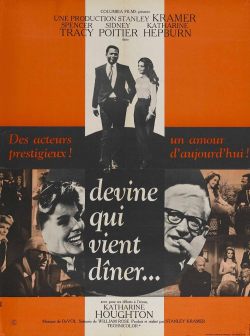
Joey vient chez ses parents pour leur présenter son récent fiancé John. Mais celui-ci est noir, veuf et plus âgé. Les parents, pourtant libéraux, ont quelques réserves. La situation se compliquera lorsque les parents de John arriv...
More
7.8 /10
52337 people rated
Devine qui vient dîner...
1967
R
1 h 48 m
États-Unis
Comédie
Drame
Joey vient chez ses parents pour leur présenter son récent fiancé John. Mais celui-ci est noir, veuf et plus âgé. Les parents, pourtant libéraux, ont quelques réserves. La situation se compliquera lorsque les parents de John arriv...
More
7.8 /10
52337 people rated
Regarder en ligne
Dans l’appli
Épisodes
Meilleurs acteurs
Avis des utilisateurs
Épisodes
Meilleurs acteurs
Avis des utilisateurs
Épisodes
film
lklk
Netflix
Plex
Meilleurs acteurs(18)
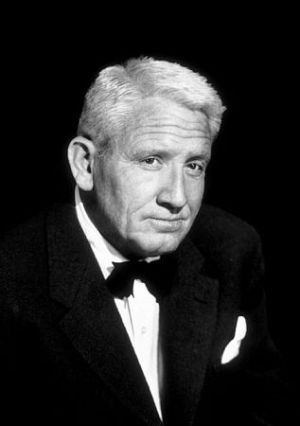
Spencer Tracy
Matt Drayton
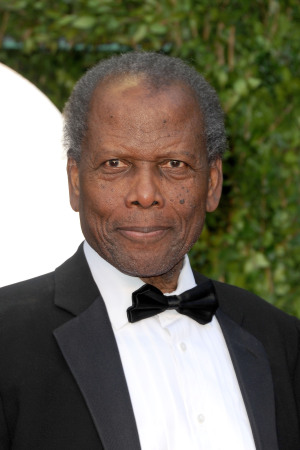
Sidney Poitier
John Prentice
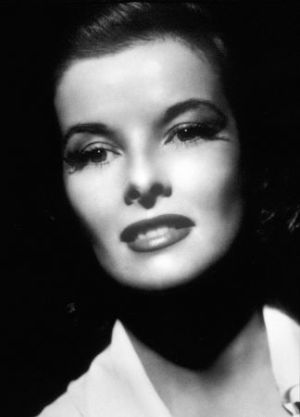
Katharine Hepburn
Christina Drayton
Katharine Houghton
Joey Drayton
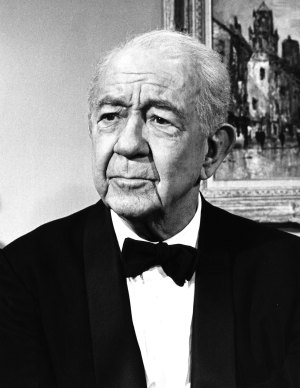
Cecil Kellaway
Monsignor Ryan
Beah Richards
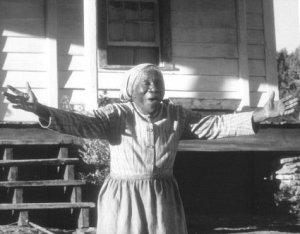
Mrs. Prentice
Roy Glenn
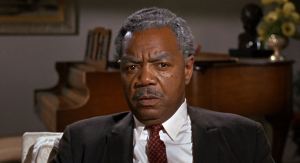
Mr. Prentice
Isabel Sanford
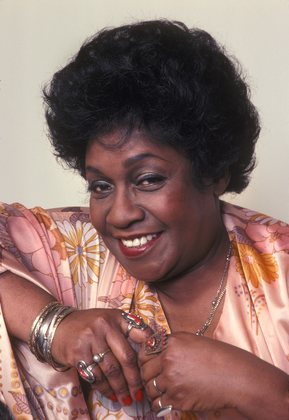
Tillie
Virginia Christine
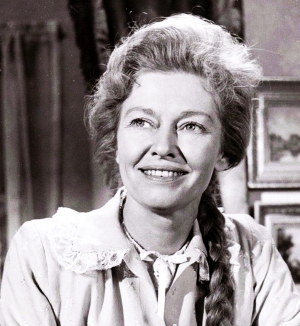
Hilary St. George
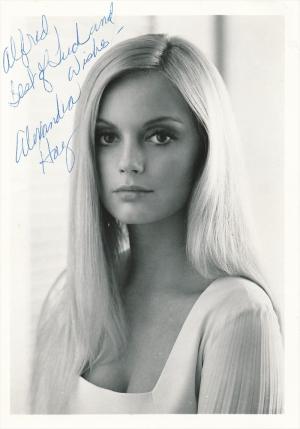
Alexandra Hay
Carhop
Barbara Randolph
Dorothy
D'Urville Martin
Frankie
Tom Heaton
Peter
Grace Gaynor
Judith
Skip Martin
Delivery Boy
John Hudkins
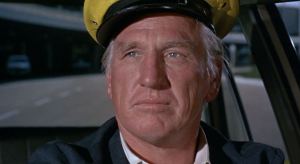
Cab Driver
Garrett Cassell
Mailman
Natalie Core
Small Role
Avis des utilisateurs
Marx Lee
29/05/2023 12:45
source: Guess Who's Coming to Dinner
Awa Jobe
23/05/2023 05:32
A 23 year-old lady (Katharine Houghton) brings home a surprise house guest--her black fiancé (Sidney Poitier)! While today such a thing isn't all that unusual, her liberal-minded parents are thrown by their decision. Not surprisingly, his parents are equally stunned. Can these two manage to get their parents' consent and live happily ever after.
I think that much of what "Guess Who's Coming to Dinner" is as a picture is lost on younger audiences. Today, the idea of interracial marriages isn't what it was back in 1967. Back then, it was so novel and so controversial that I doubt younger viewers could comprehend it. After all, just before this movie was released, it was against the law in many US states for such a marriage! Crazy, but true. So, while the reactions of everyone to this marriage might seem quaint today--back then it was truly an explosive issue. But even if this makes the film seem a tad dated, it is a marvelous film from start to finish because it features some of the best acting I can recall having seen in a movie. While Spencer Tracy and Katharine Hepburn (who won the Oscar for this film) are the people we think of today in the film, Beah Richards and Roy Glenn (as Sidney Poitier's parents) were simply dynamite. Together, this cast represents one of the higher points of the 1960s--not just for its social message but for its amazing acting. And, of course, the great dialog and direction made this a possibility. Simply terrific...just make sure to keep some Kleenexes handy for this one.
By the way, as a father of two daughters who are old enough to marry, what stunned me today about this couple was NOT the interracial angle but that they had only known each other for 10 days!! Now THAT was the crazy part to me!
zainab mortada 🦋
23/05/2023 05:32
This movie, and the reception to it, exemplify all the problems inherent in the dreaded "message movie". Whenever any filmmaker accomplishes the undoubtedly tremendously difficult task of actually getting a film made which has something to say about a hot topic, like racism, and that film manages to actually produce a profit, Hollywood then falls all over itself patting itself on the back and usually honoring the film in a way all out of proportion to its artistic merits. For example, this movie was nominated for an astounding 10 oscars! Ten oscar nominations for a movie with all the style and artistry of a tv sitcom!
"Guess Who's Coming to Dinner" is an impossibly sugar-coated pitch for racial tolerance and inter-racial relationships. Nothing wrong with its intentions, but the script is so terribly self-congratulatory in its liberal piousness, and everything just gets tied up in such a nice, neat, totally unreal way. The film's characters all seem to live in a self-contained and sheltered environment that the real world comes nowhere near. Then, to advance their cause, the filmmakers all but put Sidney Poitier in a red cape with a big "S" on his chest! He is so incredibly handsome and noble and pure that Strom Thurmond wouldn't object to him as a son-in-law, let alone those bastions of liberality Spencer Tracy and Katharine Hepburn! Pure malarkey...
I also have to say that Katharine Hepburn's oscar has to be one of the least deserved in the Academy's history. She is her usual self here, but its such a nothing role! All of the other actresses nominated in 1967 - Audrey Hepburn, Dame Edith Evans, Faye Dunaway in "Bonnie and Clyde" and Anne Bancroft in "The Graduate" - were each far more deserving of the honor. (Don't get me wrong, I like Kate - but she was much more deserving of the honor in 1962's "Long Day's Journey into Night" and 1968's "The Lion in Winter".)
Rupal Parmar Parekh
23/05/2023 05:32
Matt and Christina Drayton (Spencer Tracy and Katharine Hepburn) are a couple whose attitudes are challenged when their daughter brings home a fiancé (Sidney Poitier) who is black.
I had never seen this movie until last night, primarily because I never saw the point. The story seemed so obvious and cliché to me, having grown up decades after the film was released. Of course a family would react poorly when they see the racial difference of their daughter's chosen husband. But, I underestimated the whole thing.
The film is more complex, because as it turns out, the family is not actually racist -- at least not in theory. And this film allows theory to meet practice, which may be harder to overcome than they thought. Luckily, they have the advantage of the black man being a world-renowned doctor. Had he just been any old schmuck, the family might not have been as welcoming. It is a whole different story.
The two things I found most interesting about the film were: one, that the two people most opposed to interracial marriage were both black. That seemed quite the opposite of what you might expect. And two, I found it odd that the biggest problem was supposed to be the racial difference. The 14-year age gap and the fact they wanted to get married after only 10 days of knowing each other was largely ignored. I find that to be the much bigger problem -- how do you commit to a lifetime after only 10 days?
BryATK✨
23/05/2023 05:32
Although made in 1967, I was surprised how much I loved this movie, from the beginning to the end. This is a kind of a comedy I haven't seen maybe for years.
I felt the characters and the situation so alive and close to me, it is incredible. It remembered me when I had to make that first visit at a girlfriends house, meet the parents, be friendly to some completely unknown people, act as an adult, as a man, when there are four parents around... And there are scenes with a flip I will never forget, like Spencer Tracy eating his ice cream and changing his mind over it, Hilary being fired or the two fathers settling about the situation as 'the only reasonable people in the boat'.
The film also started me to think over how I would react as a parent in such a situation. Today, marriage between races is not that shocking, but I can easily imagine for my future daughter someone, who would shock me with his proposal. It easy to see others on screen struggling to break down their own walls and prejudices, but in real life it is so much harder. It is so true, what Mahatma Ghandi said - 'You must be the change you wish to see in the world'.
It's just a funny twist from life, that I've seen 'Kinsey' a few days ago, where Katharine Houghton also appears as Mrs. Spaulding, almost 40 years later (2005).
This movie became one of my favorites - 10/10.
Ali fneer
23/05/2023 05:32
This film is of course dated in many portions but still remains a powerful motion picture over thirty years after its release. Superb acting and dialog is what overcomes the dated aspect. Hepburn and Tracy are Matt and Christina Drayton a wealthy and successful couple who have a daughter named Joey played by Katherine Houghton who comes home and tells them she has met the man of her dreams. The only problem in the story is that he is of a different race. Sidney Poitier is John Wade Prentice a successful individual who is the man of Joeys dreams and is of the different race. The Draytons are people who in theory hold no prejudice toward any one regardless of their race, color or creed but now have those same views put harshly to the test when it's their own daughter involved. Sort of like the NIMBY philosophy "YES YES build more prisons, build more nuclear power plants, build more missile silos but Not In My BackYard! " Sure I believe in interracial marriage as long as it's not my daughter".
John Wades parents essentially share the same views as the Draytons. However Johns parents particularly his father played by Roy E. Glenn Sr. seems more realistic when speaking to his child about the situation than does Matt Drayton. He tells his son the way it really is and most likely will be. "You'll even be illegal in some states" he reminds his son. The two couples eventually come to grips with the fact that no matter what they say they will not be able to prevent their two children from going through with their plans. Spencer Tracy throughout his film career delivered many powerful lines of dialog. The final moments of this film he delivers perhaps his greatest. Which also turned out to be his last. AFI ranked this film number ninety-nine on their list of top one hundred. Because of it's powerful story and social issue it deserved to be higher. Other films that deal with interracial marriage to see are 1956's GIANT and 1961's Bridge to the Sun.
Neo Mobor Akpofure
23/05/2023 05:32
Risky film that could only sport the biggest and most respected names in Hollywood at the time. Sidney Poitier and Katharine Houghton have fallen in love and are all set to get married, but Poitier is African-American and Houghton is white. Get the picture? The couple's parents (Roy Glenn and Oscar-nominee Beah Richards as Poitier's parents and Oscar-winner Katharine Hepburn and Oscar-nominee Spencer Tracy as Houghton's) try to cope with the situation as the two seem determined to be together. Poitier knows the complications while Houghton seems really naive and innocent about the whole situation. Catholic priest Cecil Kellaway (also Oscar-nominated) tries to get the parents to understand what their children are feeling. A film that spawned controversy and more controversy in 1967 and still a film that strikes a nerve in many circles even today. The film just added to the excellence of Hepburn and Poitier while Houghton became more of an outcast in Hollywood. Many say that the movie drove Tracy to an early grave as he died shortly after production and did not even get to hear that he had received an Oscar nod. Stanley Kramer's striking direction and the Oscar-winning screenplay are both right on target. "Guess Who's Coming to Dinner" is a production that tackles interracial relationships in a frank and intriguing manner. The film is not kind to the older generations and it is also not kind to religious figures getting caught up in non-religious affairs. A strong film that stands strong with the other great films of 1967 ("In the Heat of the Night", "Bonnie and Clyde", "The Graduate", "In Cold Blood"). 4.5 out of 5 stars.
TIMA
23/05/2023 05:32
Guess Who's Coming to Dinner is the 1967 Sidney Poitier film about interracial marriage that made the AFI Top 100 list. So why the mediocre rating by this reviewer and many others? I mean we have the great Sidney Poitier, as well as Spencer Tracy and Katharine Hepburn. We have the decent director Stanley Kramer (who did On the Beach), we have the great era of the 1960s and we have a controversial theme. Well the key to the mediocrity lies in a very weak script by William Rose that doesn't ring true in many ways.
John Prentice (Poitier) wants to marry Joey Drayton (Katharine Houghton) and all hell breaks loose between the parents (Tracy, Hepburn, Beah Richards, and Roy Glenn). Problem is the script tries to be politically correct while ignoring any semblance of reality or non-nerdness (to coin a word).
For example: a 2-faced employee wishes the couple well with whispering asides to Hepburn (in a WAY over the top cartoonish manner for both the well wishes and the asides). Joey says "Mom, she was well, RUDE!" actually she wasn't rude at all, she was 2-faced...big difference lost on the writer. And to get the lady out of their collective hair Hepburn gives her $5000.00. Not much of a punishment for being 2-faced.
Then we get this wacky priest who drinks, sings "We can Work it Out" in the most pretentiously hip unhip touch of the film, and thinks its funny that Mr. Liberal (Tracy) has such a problem with the marriage. As far as Poitier's speech to his father, "You think of yourself as a black man, I think of myself as a man", I have this to say: I'm sure men have thought that, but I doubt they ever said it, i.e. it came out of the writer, not out of reality. And I have no idea why they left that scene in where Tracy rams a black guy's car and the guy yells "There oughta be a law!" It didn't make sense, it didn't fit into the film, and I suppose it was just an ill-concieved joke by the writer.
And Tracy's speech at the end is supposed to be so touching, and it reduces Hepburn to tears...but really it's big on schmaltz and low on substance. This film is TV movie quality and made it into the AFI Top 100; hey AFI, ever hear of this other Poitier film from 1967...a little film called In the Heat of the Night? Such is my BIG GRIPE. How does this film make it while one of the best films of the decade doesn't? Answer: Politics. This one was about subtle middle class racism, that one was about blatant Southern racism. Well all I can say is see both films and YOU decide.
BOKOSSA MABICKA
23/05/2023 05:32
I wrote a review for IMDb about the film Saratoga which I got some bad criticism for. It was obvious that Jean Harlow was seriously ill making this rather pedestrian film about folks at the racetrack. No serious drama of significance here, why wasn't the poor woman getting medical attention.
Looking at Spencer Tracy it also is obvious he's in pretty bad shape, but he at 67 was two generations older than his co-star Jean Harlow at MGM in their salad days. And this final film of his and final screen partnership with Katharine Hepburn had a lot more of a significant message than Saratoga did. It's enobling in its own way to see how much faith Spencer Tracy had in the project.
Oh, Guess Who's Coming to Dinner is certainly dated now. But back in 1967 it was daring enough. Tracy and Hepburn who for the fourth time in their nine films play a husband and wife from the start, get the news that their daughter Katharine Houghton is getting married to an older man who is a widower. Oh and by the way, she's marrying Sidney Poitier who's a doctor.
Getting a doctor for a son-in-law would be reason enough for celebration in most homes, but interracial marriage was still a daring topic. As Roy Glenn who is Poitier's father reminds him, he's still breaking the law in 1967 in about 17 states. The film is about how Tracy and Hepburn and Glenn and his wife Beah Richards deal with the news.
Hepburn won her second Oscar for this film and she's the character on screen most of the time. Her best moment comes when she fires Virginia Christine who works for her and rushes to Hepburn's side to express "concern" for her.
One of the things that made Spencer Tracy the great player he was, was that incredible ability he had to make the audience feel he was listening. My favorite scene of his in the film is when Beah Richards is alone with him on the porch and she compares him with her husband how the two of them have forgotten all about romance. As she speaks the two of them are profiled against the screen, Richards to the left and Tracy to the right. Though Richards is in the foreground your attention is completely on Tracy and is reactions even though we're only seeing half of his face. Stole the scene without speaking a word.
I know so many people who profess liberalism in all things, but never can quite walk the walk when necessary. Guess Who's Coming to Dinner is about that, putting your money where your mouth is.
Watching my VHS copy of it again this evening, the scene with Glenn and Poitier brought home something else to me. Just like Poitier and Houghton were illegal back in 1967 in some parts of America, it was only until 2003 that gay people were illegal in and of themselves in several states. And even now same sex couples battle for marriage rights and equality.
Maybe Guess Who's Coming to Dinner isn't quite so dated at that. And maybe Brokeback Mountain is the closest thing that gay people have to a Guess Who's Coming to Dinner right now.
But can you see in a few years a man or a woman bringing home a partner of the same sex to Mom and Dad and announcing they're getting married in Massachusetts?
Now that would be a great film.
Preetr 💗 harry
23/05/2023 05:32
Couldn't wait for this movie to end. Everyone's so perfect, so lefty- Hollywood-acceptable in their jabberings; Everyone's so wealthy, and so well-connected; Everyone's so "With It" in the lines they deliver, and so materially successful; Everyone's so happy (even when they're sad or mad) and either anti-faith or "Christian-lite"; Everyone's just so resistably plastic. GWCTD reeks of plot lines and 2-dimensional characters yanked out of sitcoms like Father Knows Best and light teenage flicks like The Parent Trap. From the first two scenes, we can tell that ersatz-profound speeches will eventually be heard in the final act, the music will come up, love will conquer all and they'll all live happily ever after -- lighting from one success to another, keeping their cheerful demeanor at all times, with the happy couple inevitably producing incredible children who'll go to Groton, Brown, Haavaud, Columbia or some other such gawdawful place and will make the inevitable remarkable contributions to western civilization and to cultural diversity. Can't we see people as they really are, at least in a movie that pretends to be serious? Nobody can make a flip or nasty remark. No one can doubt another's sincerity. No one has vices. All we get is what a Hollywood hack-writer considers to be meaningful dialog. We're embarrassed for both Tracy and Hepburn in this being their final movie. No wonder Hepburn cries real tears in the last scene, having to witness the horribly-dogmatic speech Tracy is forced to spew...after he had delivered so much fresh and timeless dialog in his professional life, to be reduced to recite so many hackneyed phrases in one sitting must have been torture for Hepburn to witness as his final act. "Judgement at Nurmburg" it ain't. We're also embarrassed for Poitier, following his raw and realistic work in such great movies as "Blackboard Jungle" "In the Heat of the Night" and "A Patch of Blue" this part must have been a disappointment to a great actor. Unlike some other reviewers here, I like most of Poitier's early work; he's usually portrayal of a successful black man who has more redeeming qualities than most of the whities he encounters, and most audiences cheer his various portrayals as both believable and sympathetic. But, to here portray a powerful and brilliant guy who's asked a girl of a different race to marry him, and then promise to her dad to abandon his commitment if her folks object just breaks his character down to nothing. The maid's part borders on junk, as well, not just because her dialog is shallow, but we also have to witness Tracy deliver the dishonest line that she's a "member of this family" when neither the daughter or her folks do or say anything that convinces us that she's considered much more than a servant. Scenes with the Catholic Priest are quite hard to buy, as he offers nothing from the Christian perspective to a situation that will require commitment far greater than mere conjugal love. Many people who don't like part of this movie fault Katherine Houghton's performance for being false and airheaded. Her character is just emblematic of what's wrong with the whole picture.
Avis des utilisateurs
Marx Lee
29/05/2023 12:45
source: Guess Who's Coming to Dinner
Awa Jobe
23/05/2023 05:32
A 23 year-old lady (Katharine Houghton) brings home a surprise house guest--her black fiancé (Sidney Poitier)! While today such a thing isn't all that unusual, her liberal-minded parents are thrown by their decision. Not surprisingly, his parents are equally stunned. Can these two manage to get their parents' consent and live happily ever after.
I think that much of what "Guess Who's Coming to Dinner" is as a picture is lost on younger audiences. Today, the idea of interracial marriages isn't what it was back in 1967. Back then, it was so novel and so controversial that I doubt younger viewers could comprehend it. After all, just before this movie was released, it was against the law in many US states for such a marriage! Crazy, but true. So, while the reactions of everyone to this marriage might seem quaint today--back then it was truly an explosive issue. But even if this makes the film seem a tad dated, it is a marvelous film from start to finish because it features some of the best acting I can recall having seen in a movie. While Spencer Tracy and Katharine Hepburn (who won the Oscar for this film) are the people we think of today in the film, Beah Richards and Roy Glenn (as Sidney Poitier's parents) were simply dynamite. Together, this cast represents one of the higher points of the 1960s--not just for its social message but for its amazing acting. And, of course, the great dialog and direction made this a possibility. Simply terrific...just make sure to keep some Kleenexes handy for this one.
By the way, as a father of two daughters who are old enough to marry, what stunned me today about this couple was NOT the interracial angle but that they had only known each other for 10 days!! Now THAT was the crazy part to me!
zainab mortada 🦋
23/05/2023 05:32
This movie, and the reception to it, exemplify all the problems inherent in the dreaded "message movie". Whenever any filmmaker accomplishes the undoubtedly tremendously difficult task of actually getting a film made which has something to say about a hot topic, like racism, and that film manages to actually produce a profit, Hollywood then falls all over itself patting itself on the back and usually honoring the film in a way all out of proportion to its artistic merits. For example, this movie was nominated for an astounding 10 oscars! Ten oscar nominations for a movie with all the style and artistry of a tv sitcom!
"Guess Who's Coming to Dinner" is an impossibly sugar-coated pitch for racial tolerance and inter-racial relationships. Nothing wrong with its intentions, but the script is so terribly self-congratulatory in its liberal piousness, and everything just gets tied up in such a nice, neat, totally unreal way. The film's characters all seem to live in a self-contained and sheltered environment that the real world comes nowhere near. Then, to advance their cause, the filmmakers all but put Sidney Poitier in a red cape with a big "S" on his chest! He is so incredibly handsome and noble and pure that Strom Thurmond wouldn't object to him as a son-in-law, let alone those bastions of liberality Spencer Tracy and Katharine Hepburn! Pure malarkey...
I also have to say that Katharine Hepburn's oscar has to be one of the least deserved in the Academy's history. She is her usual self here, but its such a nothing role! All of the other actresses nominated in 1967 - Audrey Hepburn, Dame Edith Evans, Faye Dunaway in "Bonnie and Clyde" and Anne Bancroft in "The Graduate" - were each far more deserving of the honor. (Don't get me wrong, I like Kate - but she was much more deserving of the honor in 1962's "Long Day's Journey into Night" and 1968's "The Lion in Winter".)
Rupal Parmar Parekh
23/05/2023 05:32
Matt and Christina Drayton (Spencer Tracy and Katharine Hepburn) are a couple whose attitudes are challenged when their daughter brings home a fiancé (Sidney Poitier) who is black.
I had never seen this movie until last night, primarily because I never saw the point. The story seemed so obvious and cliché to me, having grown up decades after the film was released. Of course a family would react poorly when they see the racial difference of their daughter's chosen husband. But, I underestimated the whole thing.
The film is more complex, because as it turns out, the family is not actually racist -- at least not in theory. And this film allows theory to meet practice, which may be harder to overcome than they thought. Luckily, they have the advantage of the black man being a world-renowned doctor. Had he just been any old schmuck, the family might not have been as welcoming. It is a whole different story.
The two things I found most interesting about the film were: one, that the two people most opposed to interracial marriage were both black. That seemed quite the opposite of what you might expect. And two, I found it odd that the biggest problem was supposed to be the racial difference. The 14-year age gap and the fact they wanted to get married after only 10 days of knowing each other was largely ignored. I find that to be the much bigger problem -- how do you commit to a lifetime after only 10 days?
BryATK✨
23/05/2023 05:32
Although made in 1967, I was surprised how much I loved this movie, from the beginning to the end. This is a kind of a comedy I haven't seen maybe for years.
I felt the characters and the situation so alive and close to me, it is incredible. It remembered me when I had to make that first visit at a girlfriends house, meet the parents, be friendly to some completely unknown people, act as an adult, as a man, when there are four parents around... And there are scenes with a flip I will never forget, like Spencer Tracy eating his ice cream and changing his mind over it, Hilary being fired or the two fathers settling about the situation as 'the only reasonable people in the boat'.
The film also started me to think over how I would react as a parent in such a situation. Today, marriage between races is not that shocking, but I can easily imagine for my future daughter someone, who would shock me with his proposal. It easy to see others on screen struggling to break down their own walls and prejudices, but in real life it is so much harder. It is so true, what Mahatma Ghandi said - 'You must be the change you wish to see in the world'.
It's just a funny twist from life, that I've seen 'Kinsey' a few days ago, where Katharine Houghton also appears as Mrs. Spaulding, almost 40 years later (2005).
This movie became one of my favorites - 10/10.
Ali fneer
23/05/2023 05:32
This film is of course dated in many portions but still remains a powerful motion picture over thirty years after its release. Superb acting and dialog is what overcomes the dated aspect. Hepburn and Tracy are Matt and Christina Drayton a wealthy and successful couple who have a daughter named Joey played by Katherine Houghton who comes home and tells them she has met the man of her dreams. The only problem in the story is that he is of a different race. Sidney Poitier is John Wade Prentice a successful individual who is the man of Joeys dreams and is of the different race. The Draytons are people who in theory hold no prejudice toward any one regardless of their race, color or creed but now have those same views put harshly to the test when it's their own daughter involved. Sort of like the NIMBY philosophy "YES YES build more prisons, build more nuclear power plants, build more missile silos but Not In My BackYard! " Sure I believe in interracial marriage as long as it's not my daughter".
John Wades parents essentially share the same views as the Draytons. However Johns parents particularly his father played by Roy E. Glenn Sr. seems more realistic when speaking to his child about the situation than does Matt Drayton. He tells his son the way it really is and most likely will be. "You'll even be illegal in some states" he reminds his son. The two couples eventually come to grips with the fact that no matter what they say they will not be able to prevent their two children from going through with their plans. Spencer Tracy throughout his film career delivered many powerful lines of dialog. The final moments of this film he delivers perhaps his greatest. Which also turned out to be his last. AFI ranked this film number ninety-nine on their list of top one hundred. Because of it's powerful story and social issue it deserved to be higher. Other films that deal with interracial marriage to see are 1956's GIANT and 1961's Bridge to the Sun.
Neo Mobor Akpofure
23/05/2023 05:32
Risky film that could only sport the biggest and most respected names in Hollywood at the time. Sidney Poitier and Katharine Houghton have fallen in love and are all set to get married, but Poitier is African-American and Houghton is white. Get the picture? The couple's parents (Roy Glenn and Oscar-nominee Beah Richards as Poitier's parents and Oscar-winner Katharine Hepburn and Oscar-nominee Spencer Tracy as Houghton's) try to cope with the situation as the two seem determined to be together. Poitier knows the complications while Houghton seems really naive and innocent about the whole situation. Catholic priest Cecil Kellaway (also Oscar-nominated) tries to get the parents to understand what their children are feeling. A film that spawned controversy and more controversy in 1967 and still a film that strikes a nerve in many circles even today. The film just added to the excellence of Hepburn and Poitier while Houghton became more of an outcast in Hollywood. Many say that the movie drove Tracy to an early grave as he died shortly after production and did not even get to hear that he had received an Oscar nod. Stanley Kramer's striking direction and the Oscar-winning screenplay are both right on target. "Guess Who's Coming to Dinner" is a production that tackles interracial relationships in a frank and intriguing manner. The film is not kind to the older generations and it is also not kind to religious figures getting caught up in non-religious affairs. A strong film that stands strong with the other great films of 1967 ("In the Heat of the Night", "Bonnie and Clyde", "The Graduate", "In Cold Blood"). 4.5 out of 5 stars.
TIMA
23/05/2023 05:32
Guess Who's Coming to Dinner is the 1967 Sidney Poitier film about interracial marriage that made the AFI Top 100 list. So why the mediocre rating by this reviewer and many others? I mean we have the great Sidney Poitier, as well as Spencer Tracy and Katharine Hepburn. We have the decent director Stanley Kramer (who did On the Beach), we have the great era of the 1960s and we have a controversial theme. Well the key to the mediocrity lies in a very weak script by William Rose that doesn't ring true in many ways.
John Prentice (Poitier) wants to marry Joey Drayton (Katharine Houghton) and all hell breaks loose between the parents (Tracy, Hepburn, Beah Richards, and Roy Glenn). Problem is the script tries to be politically correct while ignoring any semblance of reality or non-nerdness (to coin a word).
For example: a 2-faced employee wishes the couple well with whispering asides to Hepburn (in a WAY over the top cartoonish manner for both the well wishes and the asides). Joey says "Mom, she was well, RUDE!" actually she wasn't rude at all, she was 2-faced...big difference lost on the writer. And to get the lady out of their collective hair Hepburn gives her $5000.00. Not much of a punishment for being 2-faced.
Then we get this wacky priest who drinks, sings "We can Work it Out" in the most pretentiously hip unhip touch of the film, and thinks its funny that Mr. Liberal (Tracy) has such a problem with the marriage. As far as Poitier's speech to his father, "You think of yourself as a black man, I think of myself as a man", I have this to say: I'm sure men have thought that, but I doubt they ever said it, i.e. it came out of the writer, not out of reality. And I have no idea why they left that scene in where Tracy rams a black guy's car and the guy yells "There oughta be a law!" It didn't make sense, it didn't fit into the film, and I suppose it was just an ill-concieved joke by the writer.
And Tracy's speech at the end is supposed to be so touching, and it reduces Hepburn to tears...but really it's big on schmaltz and low on substance. This film is TV movie quality and made it into the AFI Top 100; hey AFI, ever hear of this other Poitier film from 1967...a little film called In the Heat of the Night? Such is my BIG GRIPE. How does this film make it while one of the best films of the decade doesn't? Answer: Politics. This one was about subtle middle class racism, that one was about blatant Southern racism. Well all I can say is see both films and YOU decide.
BOKOSSA MABICKA
23/05/2023 05:32
I wrote a review for IMDb about the film Saratoga which I got some bad criticism for. It was obvious that Jean Harlow was seriously ill making this rather pedestrian film about folks at the racetrack. No serious drama of significance here, why wasn't the poor woman getting medical attention.
Looking at Spencer Tracy it also is obvious he's in pretty bad shape, but he at 67 was two generations older than his co-star Jean Harlow at MGM in their salad days. And this final film of his and final screen partnership with Katharine Hepburn had a lot more of a significant message than Saratoga did. It's enobling in its own way to see how much faith Spencer Tracy had in the project.
Oh, Guess Who's Coming to Dinner is certainly dated now. But back in 1967 it was daring enough. Tracy and Hepburn who for the fourth time in their nine films play a husband and wife from the start, get the news that their daughter Katharine Houghton is getting married to an older man who is a widower. Oh and by the way, she's marrying Sidney Poitier who's a doctor.
Getting a doctor for a son-in-law would be reason enough for celebration in most homes, but interracial marriage was still a daring topic. As Roy Glenn who is Poitier's father reminds him, he's still breaking the law in 1967 in about 17 states. The film is about how Tracy and Hepburn and Glenn and his wife Beah Richards deal with the news.
Hepburn won her second Oscar for this film and she's the character on screen most of the time. Her best moment comes when she fires Virginia Christine who works for her and rushes to Hepburn's side to express "concern" for her.
One of the things that made Spencer Tracy the great player he was, was that incredible ability he had to make the audience feel he was listening. My favorite scene of his in the film is when Beah Richards is alone with him on the porch and she compares him with her husband how the two of them have forgotten all about romance. As she speaks the two of them are profiled against the screen, Richards to the left and Tracy to the right. Though Richards is in the foreground your attention is completely on Tracy and is reactions even though we're only seeing half of his face. Stole the scene without speaking a word.
I know so many people who profess liberalism in all things, but never can quite walk the walk when necessary. Guess Who's Coming to Dinner is about that, putting your money where your mouth is.
Watching my VHS copy of it again this evening, the scene with Glenn and Poitier brought home something else to me. Just like Poitier and Houghton were illegal back in 1967 in some parts of America, it was only until 2003 that gay people were illegal in and of themselves in several states. And even now same sex couples battle for marriage rights and equality.
Maybe Guess Who's Coming to Dinner isn't quite so dated at that. And maybe Brokeback Mountain is the closest thing that gay people have to a Guess Who's Coming to Dinner right now.
But can you see in a few years a man or a woman bringing home a partner of the same sex to Mom and Dad and announcing they're getting married in Massachusetts?
Now that would be a great film.
Preetr 💗 harry
23/05/2023 05:32
Couldn't wait for this movie to end. Everyone's so perfect, so lefty- Hollywood-acceptable in their jabberings; Everyone's so wealthy, and so well-connected; Everyone's so "With It" in the lines they deliver, and so materially successful; Everyone's so happy (even when they're sad or mad) and either anti-faith or "Christian-lite"; Everyone's just so resistably plastic. GWCTD reeks of plot lines and 2-dimensional characters yanked out of sitcoms like Father Knows Best and light teenage flicks like The Parent Trap. From the first two scenes, we can tell that ersatz-profound speeches will eventually be heard in the final act, the music will come up, love will conquer all and they'll all live happily ever after -- lighting from one success to another, keeping their cheerful demeanor at all times, with the happy couple inevitably producing incredible children who'll go to Groton, Brown, Haavaud, Columbia or some other such gawdawful place and will make the inevitable remarkable contributions to western civilization and to cultural diversity. Can't we see people as they really are, at least in a movie that pretends to be serious? Nobody can make a flip or nasty remark. No one can doubt another's sincerity. No one has vices. All we get is what a Hollywood hack-writer considers to be meaningful dialog. We're embarrassed for both Tracy and Hepburn in this being their final movie. No wonder Hepburn cries real tears in the last scene, having to witness the horribly-dogmatic speech Tracy is forced to spew...after he had delivered so much fresh and timeless dialog in his professional life, to be reduced to recite so many hackneyed phrases in one sitting must have been torture for Hepburn to witness as his final act. "Judgement at Nurmburg" it ain't. We're also embarrassed for Poitier, following his raw and realistic work in such great movies as "Blackboard Jungle" "In the Heat of the Night" and "A Patch of Blue" this part must have been a disappointment to a great actor. Unlike some other reviewers here, I like most of Poitier's early work; he's usually portrayal of a successful black man who has more redeeming qualities than most of the whities he encounters, and most audiences cheer his various portrayals as both believable and sympathetic. But, to here portray a powerful and brilliant guy who's asked a girl of a different race to marry him, and then promise to her dad to abandon his commitment if her folks object just breaks his character down to nothing. The maid's part borders on junk, as well, not just because her dialog is shallow, but we also have to witness Tracy deliver the dishonest line that she's a "member of this family" when neither the daughter or her folks do or say anything that convinces us that she's considered much more than a servant. Scenes with the Catholic Priest are quite hard to buy, as he offers nothing from the Christian perspective to a situation that will require commitment far greater than mere conjugal love. Many people who don't like part of this movie fault Katherine Houghton's performance for being false and airheaded. Her character is just emblematic of what's wrong with the whole picture.
Disclaimer: All videos and pictures on MovieBox are from the Internet, and their copyrights belong to the original creators. We only provide webpage services and do not store, record, or upload any content.


 Profitez de films et séries sans limite
 Téléchargez vos contenus favoris pour regarder hors ligne
 Interface simple et utilisation fluide




'%3e%3cpath%20id='Vector'%20d='M17.3996%2025.7999C17.3996%2025.9838%2017.3634%2026.1658%2017.293%2026.3357C17.2227%2026.5055%2017.1196%2026.6598%2016.9896%2026.7899C16.8596%2026.9199%2016.7052%2027.023%2016.5354%2027.0933C16.3655%2027.1637%2016.1835%2027.1999%2015.9996%2027.1999C15.8158%2027.1999%2015.6337%2027.1637%2015.4639%2027.0933C15.294%2027.023%2015.1397%2026.9199%2015.0097%2026.7899C14.8797%2026.6598%2014.7765%2026.5055%2014.7062%2026.3357C14.6358%2026.1658%2014.5996%2025.9838%2014.5996%2025.7999C14.5996%2025.4286%2014.7471%2025.0725%2015.0097%2024.81C15.2722%2024.5474%2015.6283%2024.3999%2015.9996%2024.3999C16.3709%2024.3999%2016.727%2024.5474%2016.9896%2024.81C17.2521%2025.0725%2017.3996%2025.4286%2017.3996%2025.7999Z'%20fill='white'/%3e%3cpath%20id='Union'%20fill-rule='evenodd'%20clip-rule='evenodd'%20d='M8.5%204H23.5C24.0523%204%2024.5%204.44772%2024.5%205V21.5H7.5V5C7.5%204.44772%207.94772%204%208.5%204ZM5.5%2022.5V5C5.5%203.34315%206.84315%202%208.5%202H23.5C25.1569%202%2026.5%203.34315%2026.5%205V22.5V27C26.5%2028.6569%2025.1569%2030%2023.5%2030H8.5C6.84315%2030%205.5%2028.6569%205.5%2027V22.5ZM24.5%2023.5V27C24.5%2027.5523%2024.0523%2028%2023.5%2028H8.5C7.94772%2028%207.5%2027.5523%207.5%2027V23.5H24.5Z'%20fill='white'/%3e%3cpath%20id='Union_2'%20fill-rule='evenodd'%20clip-rule='evenodd'%20d='M17%209C17%208.44772%2016.5523%208%2016%208C15.4477%208%2015%208.44772%2015%209V13.8258L13.1508%2012.2407C12.7315%2011.8813%2012.1002%2011.9299%2011.7408%2012.3492C11.3813%2012.7685%2011.4299%2013.3998%2011.8492%2013.7593L15.345%2016.7556C15.5205%2016.9079%2015.7495%2017%2016%2017C16.2506%2017%2016.4796%2016.9079%2016.6551%2016.7556L20.1508%2013.7593C20.5701%2013.3998%2020.6187%2012.7685%2020.2593%2012.3492C19.8999%2011.9299%2019.2686%2011.8813%2018.8492%2012.2407L17%2013.8258V9Z'%20fill='white'/%3e%3c/g%3e%3c/svg%3e)