A recognized classic in its day, "The Lavender Hill Mob" is a thick, plodding attempt at showing while crime doesn't pay, it can be fun with the right people involved. Alas, the mob here makes for unengaging company in a film rife with forced humor and labored coincidence.
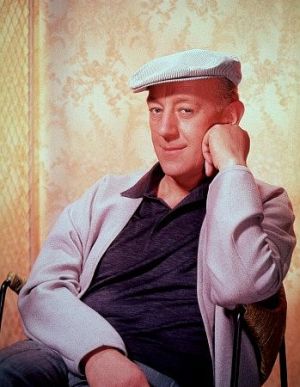
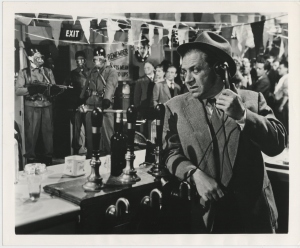
Henry Holland (Alec Guinness) is a junior clerk charged with accompanying bars of gold bullion to his employer's bank. A self- confessed "non-entity," he is taken for granted by all. "His one and only virtue is honesty," a bank executive says. "He's no imagination, no initiative." Unbeknownst to them, however, Holland plans to mastermind the crime of the century, stealing the bullion out of the country in the form of cheap tourist souvenirs with the help of pal Pendlebury (Stanley Holloway), a fed-up gewgaw maker. Can they get away with it?
While clever in concept, the plan suffers from lame execution, less by the perpetrators than by screenwriter T. E. B. Clarke, who gives us a comedy of errors where the main joke is how lightly Holland is regarded by those around him. The plot plays out in perfunctory ways, complicated by annoying bolts from the blue like a little girl who won't give up what is a vital piece of evidence simply because she's set on giving it to a friend who happens to be a policeman. The usually brilliant Guinness makes for an awkward lead, with shifting eyes, an annoying lisp (all his R's come out W's), and no real soul. As an actor, Guinness was known for his intellectual approach, but here there's no sense of anything deeper driving the man. He just wants to make a big score because he's the sort no one expects that from.
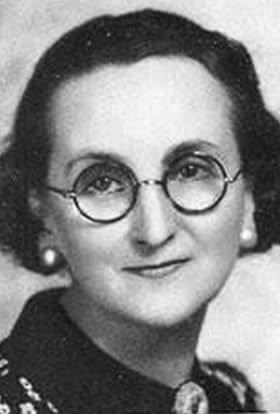
Keith Moyes did a fine job laying out the film's many story weaknesses in his May 2009 review here; my main gripe is its failure to establish much of a rooting interest for either the ill-defined mob (a couple of Cockney caricatures fill out the gang) or the police. Little bits of recognizably pleasing Ealing Studios humor occasionally wiggle up in the background, like an old lady named Mrs. Chalk (Marjorie Fielding) who likes to knit while Holland reads her hard-boiled detective fiction. A run down a spiral staircase at the Eiffel Tower late in the film provides a bracing bit of pure cinema accentuated by Douglas Slocombe's clever lens-work, but the movie kills that excitement by following it with a protracted scene of Holland and Pendlebury running around a French customs house. Many such dull moments weigh down the pacing; while director Charles Crichton's overuse of close-ups add nothing to the comedy.
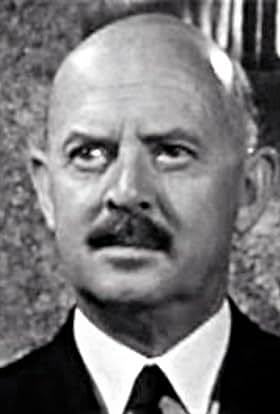
For a studio that released such genially twisted farces as "Kind Hearts And Coronets" and "The Ladykillers" (with Guinness in both films finding ample comedy stores lacking here), one expects more, like some play with the concept of disorganized criminals working out why they are doing what they do. The film provides us with cinema's first chance in seeing two favorite actors of mine, Audrey Hepburn and Robert Shaw, but too many of the secondary players other than Mrs. Chalk are just there to feed lines and push a plot which runs out of the little steam it has after forty minutes or so.
The final resolution is a lame sop to 1950s convention that adds nothing to the story. Educated viewers understand this today, and many accept it, but it just doesn't work. Rick couldn't run off with Ilsa at the end of "Casablanca," either, but credit those guys for making that convention play.
I didn't dislike the movie that much for what it is; it's pleasant, however dull, in its understated way. But I don't get why it stands out so much given the many finely worked-out and engagingly acted British comedies of the period that don't get half the attention. Back then the idea of rooting for the criminal cut against the grain of the time; today it just feels like a museum piece with no real vitality of its own.


 Mag-enjoy sa walang hanggang pelikula at palabas
 I-download ang paborito mong palabas para panoorin offline
 Simpleng disenyo at maayos na takbo





'%3e%3cpath%20id='Vector'%20d='M17.3996%2025.7999C17.3996%2025.9838%2017.3634%2026.1658%2017.293%2026.3357C17.2227%2026.5055%2017.1196%2026.6598%2016.9896%2026.7899C16.8596%2026.9199%2016.7052%2027.023%2016.5354%2027.0933C16.3655%2027.1637%2016.1835%2027.1999%2015.9996%2027.1999C15.8158%2027.1999%2015.6337%2027.1637%2015.4639%2027.0933C15.294%2027.023%2015.1397%2026.9199%2015.0097%2026.7899C14.8797%2026.6598%2014.7765%2026.5055%2014.7062%2026.3357C14.6358%2026.1658%2014.5996%2025.9838%2014.5996%2025.7999C14.5996%2025.4286%2014.7471%2025.0725%2015.0097%2024.81C15.2722%2024.5474%2015.6283%2024.3999%2015.9996%2024.3999C16.3709%2024.3999%2016.727%2024.5474%2016.9896%2024.81C17.2521%2025.0725%2017.3996%2025.4286%2017.3996%2025.7999Z'%20fill='white'/%3e%3cpath%20id='Union'%20fill-rule='evenodd'%20clip-rule='evenodd'%20d='M8.5%204H23.5C24.0523%204%2024.5%204.44772%2024.5%205V21.5H7.5V5C7.5%204.44772%207.94772%204%208.5%204ZM5.5%2022.5V5C5.5%203.34315%206.84315%202%208.5%202H23.5C25.1569%202%2026.5%203.34315%2026.5%205V22.5V27C26.5%2028.6569%2025.1569%2030%2023.5%2030H8.5C6.84315%2030%205.5%2028.6569%205.5%2027V22.5ZM24.5%2023.5V27C24.5%2027.5523%2024.0523%2028%2023.5%2028H8.5C7.94772%2028%207.5%2027.5523%207.5%2027V23.5H24.5Z'%20fill='white'/%3e%3cpath%20id='Union_2'%20fill-rule='evenodd'%20clip-rule='evenodd'%20d='M17%209C17%208.44772%2016.5523%208%2016%208C15.4477%208%2015%208.44772%2015%209V13.8258L13.1508%2012.2407C12.7315%2011.8813%2012.1002%2011.9299%2011.7408%2012.3492C11.3813%2012.7685%2011.4299%2013.3998%2011.8492%2013.7593L15.345%2016.7556C15.5205%2016.9079%2015.7495%2017%2016%2017C16.2506%2017%2016.4796%2016.9079%2016.6551%2016.7556L20.1508%2013.7593C20.5701%2013.3998%2020.6187%2012.7685%2020.2593%2012.3492C19.8999%2011.9299%2019.2686%2011.8813%2018.8492%2012.2407L17%2013.8258V9Z'%20fill='white'/%3e%3c/g%3e%3c/svg%3e)