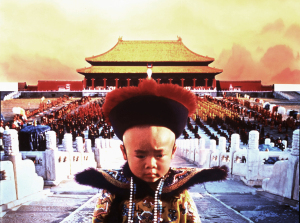
يتناول العمل قصة القائد المضطرب بو يي، آخر إمبراطور للصين، بعد أن أسره الجيش الأحمر كمجرم حرب في عام 1950، فيبدأ بو في تذكر الماضي منذ الطفولة والشباب وحتى النهاية.
More
7.7 /10
118491 people rated
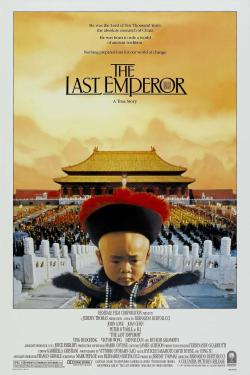
الإمبراطور الأخير
1988
R
2 h 43 m
الصين
Biography
دراما
تاريخ
يتناول العمل قصة القائد المضطرب بو يي، آخر إمبراطور للصين، بعد أن أسره الجيش الأحمر كمجرم حرب في عام 1950، فيبدأ بو في تذكر الماضي منذ الطفولة والشباب وحتى النهاية.
More
7.7 /10
118491 people rated
شاهد أونلاين
شاهد في التطبيق
الحلقات
أفضل الممثلين
تقييمات المستخدمين
الحلقات
أفضل الممثلين
تقييمات المستخدمين
الحلقات
film
lklk
Netflix
Plex
أفضل الممثلين(18)
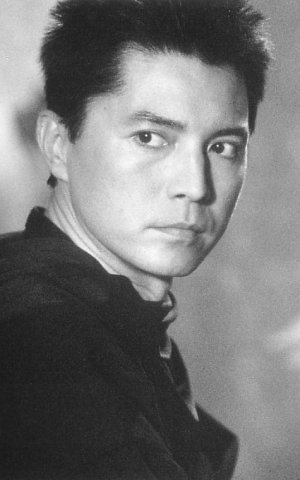
John Lone
Pu Yi (Adult)
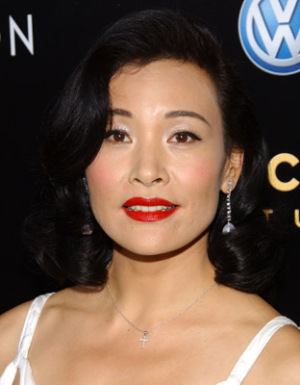
Joan Chen
Wan Jung
Peter O'Toole
Reginald Johnston (R.J.)
Ruocheng Ying
The Governor
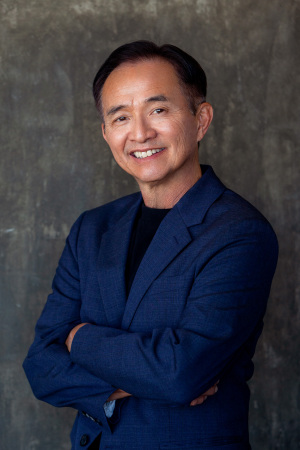
Victor Wong
Chen Pao Shen
Dennis Dun
Big Li
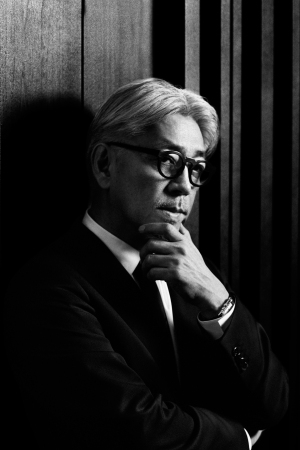
Ryuichi Sakamoto
Amakasu
Maggie Han
Eastern Jewel
Ric Young
Interrogator
Vivian Wu
Wen Hsiu
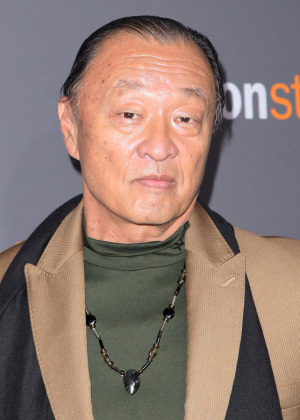
Cary-Hiroyuki Tagawa
Chang
Jade Go
Ar Mo
Fumihiko Ikeda
Yoshioka
Richard Vuu
Pu Yi (3 years)
Tsou Tijger
Pu Yi (8 years)
Tao Wu
Pu Yi (15 years)
Guang Fan
Pu Chieh (Adult)
Henry Kyi
Pu Chieh (7 years)
تقييمات المستخدمين
Nisha
18/12/2023 16:00
This film is one of only three total Best Picture winners that won every one of the awards for which it was nominated, but strangely enough it received no nominations for acting. I found this odd, since I thought that one of the film's finer points were its performances.
In this film, Pu-Yi grows to a man who was deposed as the last emperor of China while still a child, and thus he wanders from country to country as a young man who is wealthy but without purpose. Thus, never really coming to terms with the fact that he is no longer king, he jumps at the chance to sell himself out as a puppet to the Japanese when they offer him the opportunity to rule at least part of China again. As Emperor of Manchukuo, Pu-Yi is blind to the barbarous acts and experiments that the Japanese perform upon his subjects, blind to the fact that his wife has an affair with a servant to produce a royal heir, and most of all, blind to his role as puppet in the Japanese scheme for world domination. Not until the end of World War II does he seem to even have an inkling of what has been going on.
Now for the part of the movie to which I really object. Although it is compelling to see Pu-Yi slowly owe up to his responsibility for what happened in China during the Japanese occupation and come to terms with the fact that he is, after all, just a man like any other man, I strongly object to the Maoists as the good-guys in this quest for redemption. The Communist Chinese did the same type of reindoctrination on many other people - among them Christian missionaries, Buddhist monks, and believers in democracy and a free press - anyone who simply got in their way and needed their world view "readjusted". On top of that, how the Communists reindoctrinate people in this film is G-rated compared to what really went on in such camps. For details, consult the novel "1984". These points are completely whitewashed. Without the flaw of the portrayal of the Communist Chinese as the patient and kindly savers of lost souls this would have pretty much been a perfect film.
Chancelvie Djemissi
18/12/2023 16:00
The life and times of Pu Yi, the boy Emperor of China whose life-of-destiny was overtaken over by the Chinese Cultural Revolution.
This is one of the most difficult movies I have ever had to review because, while I cannot ignore the majestic flow and vision of the film and the man mountain of film awards, I also cannot also ignore my own heart and aching bottom. While I can quote clichés about the "meaning of film" all day long, I believe that all movies (whatever the aims and nature) should be enjoyable while watching them and you shouldn't be glad when the final credits roll - indeed you should be sad!
Bernardo Bertolucci believes that cinema is mostly vision and atmosphere - and believe me he is master of his limited focus - but there is also a need for a story. Something that passes him by. If we are lucky a story that changes pace, informs, excites and thrills.
This film has moments that will stay in the memory forever and when I first saw them as TV clips I thought "this is going to be something else - an epic." However they are simply impressive props and backdrops for a story that would be better told as a documentary.
The film opens up on the story of a little boy born with a destiny. Not many people are born with a destiny outside of royalty and they should be treat with sympathy because, while they may seem fated, they also live in a gilded cage. Even if history had not taken over events Pi would have lived a life of quiet impotence - despite the title he would have had no powers and would have had no influence on his countries' affairs. A living and breathing statue. The revolution probably did him the best favour that he ever had.
I always think that a life spent on holiday is most intelligent person's version of hell. A life spent on holiday while trapped inside a prison camp must be the worst. Filming took place in the real Forbidden City, but I am not that impressed by it. It could have been built in a studio and we would not have known. Vast amounts of money have been spent and it is all up there on the screen, but that, by itself, doesn't really impress me.
I won't go through the changes in the Emperor's life on a stage-by-stage basis (as so many have done) because that would take away some of few things that will carry you through the (very long) movie.
It is a comment on the nature of this film that people are quite happy to explain it scene-by-scene as if this doesn't take away anything from it. It does and frankly does a disservice to the film or maybe this is one of these "great art pieces" in which such spoiler rules don't apply.
Bernardo Bertolucci is pretty overrated as a director and as a story teller he couldn't work on TV. He is a bit of a fossil in that he takes hours to say what could be said in five minutes. The acting is steady, and in Peter O'Toole we have excellence, but I couldn't get inside anybody - they either had a brown nosing or duty-to-do role and no-one is really allowed to be themselves. The acting is - in the main - cold and seems swamped by the oriental mysticism that the director wants us to bath in.
This is an important film and well worth seeing, but I wasn't entertained and after the opening - which looks at a unique childhood - I became bored and restless. Usually childhood is most boring part of any biography and the story usually picks up when they take up the sword of whatever made them famous. Here we have boy/man on the road to nowhere or nothing. A sad tale of a boy/man who seemed to have everything but in fact had nothing.
Sorry, I was left with a numb brain and a numb bottom - and I didn't even see the "long" version! To borrow a very famous review line "there is so much to admire here that I only wish I could have liked it more..."
Joeboy
18/12/2023 16:00
When this came out I liked it because it flattered my pretensions about being worldly. In retrospect, I can't find anything in it that made me sit through it twice. 30 minutes in, it still hasn't gotten moving. It has no forward impulse. The emperor Pu-Yi is such a passive historical figure, it's hard to care about him... or even to relate to him. It's harder still when Bertolucci is done with him. Even as Pu-Yi tries on ill-fitting personas. Even with an editorializing score, telling you where you're supposed to feel something, the movie is numbing and rambling. No amount of shouting Chinese revolutionaries can inject drama into what is hopelessly undramatic and undramatized. You'd think Bertolucci knew his task was to find a throughline for this muddle, but instead he's a muddle amplifier. He's found nothing to dramatize; or perhaps more correctly, his entire dramatizing urge is crushed by his anomie urge. For a Marxist, Bertolucci is way too impressed by opulence, and gleaming surfaces. 1987's brightest; Ryuichi Sakamoto & David Byrne both contribute efforts that did powerfully little for their careers.
Jordan
18/12/2023 16:00
This is a unique film because it is a unique story. Aisin-Gioro Pu Yi (also known as Henry Pu Yi) was the last emperor of China, who spent most of his early life as a puppet of others. He was then re-educated into an ordinary citizen (He worked as a gardener) in the People's Republic of China. The exciting thing from our point of view is that Henry Pu Yi wrote an autobiography ("From Emperor to Citizen"), and it is largely on this book that the film is based.
The colourful pageantry in this film is superb - utterly unforgettable. Unfortunately the characterisation is not so well thought out. Only as the cheerful gardener does Pu Yi become anything approaching real - which may be the truth anyway. Otherwise the film becomes a series of historical events, which could well bamboozle anyone who does not know their history, since it is often not quite clear what is actually going on. Having said this, the tragedy of Pu Yi's life - and it was mostly tragedy - comes through well. As well as the end, that although stripped of title, riches, wife, etc, Pu Yi the gardener, the citizen of Red China, is now a free man, comes through well, too.
One can find faults with this film - or to be more exact, what one would think are faults - but to list these would prove nothing. This film treads new ground. It is difficult to make, with three actors playing the same person. You have to watch this film, because it will improve the way you view other people, and you will see the tragedy of monarchy: that the monarch himself becomes little more than a specimen in a zoo - rather like the cricket kept in the jar underneath the throne. It will also whet your appetite to read "From Emperor to Citizen" which contains much information that the film could not show.
Franckie Lyne
18/12/2023 16:00
Back when I was a university student studying a course in the Far East we learned the term 'Heaven's Mandate'. It was said that when one dynasty overthrew another, the mandate from powers above to rule China had been lost and a new mandate was given to the winners. It was a self fulfilling idea because if the Mings went out and the Manchus went in it was because the Manchus now had the Mandate. The Last Emperor is the story of Young emperor Pu Yi who was the last Manchu Emperor, crowned at the age of 3 in 1908 and removed in 1911 during the revolution. Pu Yi spent half the rest of his life trying to gain that back and the other half trying to roll with the punches for making some very bad choices in trying for the former. By that time if you want to extend the idea, the mandate now fell to Mao Tse-tung and the Chinese Communists. Still very few people had as colorful, as tumultuous, and as epic a life as Pu Yi as portrayed by Chinese actor John Lone. Whatever else Pu Yi was, he was a survivor and maybe if he hasn't got Heaven's mandate any more, he's at least got a heavenly place. From 1911 until he was kicked out, the young Emperor was still permitted to run a kind of fairyland kingdom in the Forbidden City area of Peking which was the exclusive domain of the Chinese Emperors for centuries. During that time he had an English tutor in Peter O'Toole, the one major occidental player in The Last Emperor. The relationship here is similar to the one shown in Seven Years In Tibet between Brad Pitt as Heinrich Harrer and the young Dalai Lama. Here though the emphasis is on the pupil not the tutor. The Last Emperor is an epic international achievement, not possible during the years of Mao Tse-tung's rule. As a film it received great international respect winning nine Oscars including Best Picture and Best Director for Bernardo Bertolucci. That's quite a mandate in and of itself. Though the film is more than two and half hours long I guarantee your interest will not flag. And it really is worth it to see at the very end the elderly Emperor's meeting with the new Red Guards of Mao's Cultural Revolution and that bit of symbolism with the cricket. Absolutely priceless, just as the film is.
Karima Gouit
18/12/2023 16:00
This sweeping account of the life of Pu Yi (John Lone), the last emperor of China, follows the leader's tumultuous reign. After being captured by the Red Army as a war criminal in 1950, Pu Yi recalls his childhood from prison. He remembers his lavish youth in the Forbidden City, where he was afforded every luxury but unfortunately sheltered from the outside world and complex political situation surrounding him. As revolution sweeps through China, the world Pu Yi knew is dramatically upended.
This is a by-the-numbers movie when comes to making a film that will most likely get you the major awards.
If you like this film then check out the even longer version!
If you want a Big Movie event to see then Watch "Lawerence of Arabia". There is several elements from that film that the director stole from.
If you you cant find anything else to watch on TV read a book! Call a friend! Clean your closet! Plan your future! Dust! Do laundry! Clean the cat box! Clean your trash cans! Scrub the toilet! Check your smoke alarms! Call your mother.
Washing out the garbage cans is more entertaining!
Avoid! Avoid! Avoid!
may clara
18/12/2023 16:00
I have to say I was severely disappointed in watching "The Last Emperor" last night. Having never seen it before, but always being aware that it was a well-reviewed and critically acclaimed film led me to believe like most films that fit into his category, it too would be enjoyable even though it took me years to get around to viewing it.
All I can say it that I really do NOT understand the High rating or how this film won 9 Academy Awards!! Whilst I can see that the subject matter was quite interesting and had Great potential to be a very very interesting film and highly entertaining, I found it to be slow paced,lacking in detail of the many occurrences/conflict points in the film, and general overall lack of making you care about the characters in the film.
I can see that the film should have been great, and certainly had the potential to be great based on an extremely interesting subject matter, but I just felt like the lack of true emotional connection to the characters or their situations (due to poor explanation on the film's part in my opinion) make it impossible to enjoy this film the way I should have or would have liked to.
I can see on paper that the sheer scope of this film warrants some attention and praise, but I thought the execution in practice was very very poor and the film uninteresting.
I really do not understand the high praise this film receives (other than it being the "epic" type of film Hollywood like to praise from time to time), as I thought it was poorly acted (other than the younger children), poorly conceived, and lacked any real emotion from what should have been a powerful powerful film.
Just my take on what I was hoping would be the epic film I had heard so much about.
عاشق وفني ال4×4🚙🛠️
18/12/2023 16:00
I guess I'm the only one who watched this from a worn out-of-print VHS copy. No matter what the quality, THE LAST EMPEROR is arguably among the best of the foreign pictures. The sights and sounds of The Forbidden City are sharp and beautifully screened right on with the provocative events that unfold the coming-of-age life of Pu Yi. It has plentiful moments including his romantic affairs with concubines and how he learns the way of the world as a child. His chronicle of a young emperor boy paints a colorful picture for the first half, only leading to more conflicting matters later, which is the most exciting part. Don't expect to see heads getting chopped off, like I thought would happen (unless you have the longer DVD version), but the intensity of the talk surrounding it sounds horrifying and true. Nevertheless, the dialogue is clearly mystical. Every minute is a feel-good breeze through crafty cinematic art, but it ends too fast, and the narration from Pu Yi in his prison term could use a lot more detailing. Maybe I'll stick around longer and wait to see the Director's Cut which has more. Definitely a winning treat not to be missed for foreign movie lovers and collectors of premium filmfare.
Alex Gonzaga
18/12/2023 16:00
This is somewhat long and generally lacking in excitement, but it's beautifully filmed and it serves as a fascinating look at the life of Pu Yi - the last Emperor of China, who came to the throne in 1908 when he was three years old, and finally died in 1967 as a gardener in Communist China, after serving 10 years in a PRC prison being ideologically "re- educated." Much of the story is told in flash-backs taken from his interrogation by Communist officials in the PRC prison. Much attention is paid to Reginald Johnston's book "Twilight in the Forbidden City." Johnston (played in the movie by Peter O'Toole) was Pu Yi's Scottish tutor.
John Lone's performance as Pu Yi was very good. Not surprising perhaps for someone who became an emperor at such a young age, Pu Yi is depicted as one who is used to comfort and used to having his way - a characteristic he seems to have retained for most of his life, although he doesn't really come across as bad or arrogant; just as someone who never learned how to care for himself or treat others as equals. I suppose it would be hard to expect a child who was treated almost like a god from the age of 3 to grow up psychologically well adjusted. He was actually overthrown not much more than a decade after coming to the throne but I appreciated learning that although he abdicated when the Nationalist revolution took place, he retained his title and it seems as though the Forbidden City remained his "Empire." He continued to rule this little enclave within Beijing, much as the Pope rules a little enclave within Rome. That was very interesting.
There was a lot of attention to Pu Yi's accession as "Emperor of Manchukuo" in 1934. He became a puppet of the Japanese, who placed him on the throne to give Manchukuo a semblance of credibility but no freedom, was captured by the Soviets at the end of the war, and finally handed over to PRC officials in 1950, his transfer to Chinese authority being where the movie begins.
Near the end of the movie there's a truly fascinating scene depicting a small portion of the work of Mao's "Red Guards" during the so-called Cultural Revolution that was quite sobering. I was disappointed, though, with the way this ended. It chose to conclude on a sort of fantasy scene, where Pu Yi returns to the Forbidden City. I suppose it was meant as a way of saying that at his death he returned home, but I found it a weak ending rather than a heartwarming one, perhaps because while his life was interesting, I can't say that I developed any warm feelings or sympathy for Pu Yi by watching this.
Tyler Kamau Mbaya
18/12/2023 16:00
I saw this movie at the cinema when I was 17 years old. I was completely overwhelmed by the movie (I already had a fascination for China) that I decided to visit china in 1992 just to see the forbidden palace (and the rest of China of course).
The music in the movie is brilliant, the cinematography outstanding, the story very moving (the end of the movie broke my heart).
Don´t expect an action-packed or high paced movie and be ready to sit through 3+ hours. If you´re all that, it might be worth a look for you as well:)
تقييمات المستخدمين
Nisha
18/12/2023 16:00
This film is one of only three total Best Picture winners that won every one of the awards for which it was nominated, but strangely enough it received no nominations for acting. I found this odd, since I thought that one of the film's finer points were its performances.
In this film, Pu-Yi grows to a man who was deposed as the last emperor of China while still a child, and thus he wanders from country to country as a young man who is wealthy but without purpose. Thus, never really coming to terms with the fact that he is no longer king, he jumps at the chance to sell himself out as a puppet to the Japanese when they offer him the opportunity to rule at least part of China again. As Emperor of Manchukuo, Pu-Yi is blind to the barbarous acts and experiments that the Japanese perform upon his subjects, blind to the fact that his wife has an affair with a servant to produce a royal heir, and most of all, blind to his role as puppet in the Japanese scheme for world domination. Not until the end of World War II does he seem to even have an inkling of what has been going on.
Now for the part of the movie to which I really object. Although it is compelling to see Pu-Yi slowly owe up to his responsibility for what happened in China during the Japanese occupation and come to terms with the fact that he is, after all, just a man like any other man, I strongly object to the Maoists as the good-guys in this quest for redemption. The Communist Chinese did the same type of reindoctrination on many other people - among them Christian missionaries, Buddhist monks, and believers in democracy and a free press - anyone who simply got in their way and needed their world view "readjusted". On top of that, how the Communists reindoctrinate people in this film is G-rated compared to what really went on in such camps. For details, consult the novel "1984". These points are completely whitewashed. Without the flaw of the portrayal of the Communist Chinese as the patient and kindly savers of lost souls this would have pretty much been a perfect film.
Chancelvie Djemissi
18/12/2023 16:00
The life and times of Pu Yi, the boy Emperor of China whose life-of-destiny was overtaken over by the Chinese Cultural Revolution.
This is one of the most difficult movies I have ever had to review because, while I cannot ignore the majestic flow and vision of the film and the man mountain of film awards, I also cannot also ignore my own heart and aching bottom. While I can quote clichés about the "meaning of film" all day long, I believe that all movies (whatever the aims and nature) should be enjoyable while watching them and you shouldn't be glad when the final credits roll - indeed you should be sad!
Bernardo Bertolucci believes that cinema is mostly vision and atmosphere - and believe me he is master of his limited focus - but there is also a need for a story. Something that passes him by. If we are lucky a story that changes pace, informs, excites and thrills.
This film has moments that will stay in the memory forever and when I first saw them as TV clips I thought "this is going to be something else - an epic." However they are simply impressive props and backdrops for a story that would be better told as a documentary.
The film opens up on the story of a little boy born with a destiny. Not many people are born with a destiny outside of royalty and they should be treat with sympathy because, while they may seem fated, they also live in a gilded cage. Even if history had not taken over events Pi would have lived a life of quiet impotence - despite the title he would have had no powers and would have had no influence on his countries' affairs. A living and breathing statue. The revolution probably did him the best favour that he ever had.
I always think that a life spent on holiday is most intelligent person's version of hell. A life spent on holiday while trapped inside a prison camp must be the worst. Filming took place in the real Forbidden City, but I am not that impressed by it. It could have been built in a studio and we would not have known. Vast amounts of money have been spent and it is all up there on the screen, but that, by itself, doesn't really impress me.
I won't go through the changes in the Emperor's life on a stage-by-stage basis (as so many have done) because that would take away some of few things that will carry you through the (very long) movie.
It is a comment on the nature of this film that people are quite happy to explain it scene-by-scene as if this doesn't take away anything from it. It does and frankly does a disservice to the film or maybe this is one of these "great art pieces" in which such spoiler rules don't apply.
Bernardo Bertolucci is pretty overrated as a director and as a story teller he couldn't work on TV. He is a bit of a fossil in that he takes hours to say what could be said in five minutes. The acting is steady, and in Peter O'Toole we have excellence, but I couldn't get inside anybody - they either had a brown nosing or duty-to-do role and no-one is really allowed to be themselves. The acting is - in the main - cold and seems swamped by the oriental mysticism that the director wants us to bath in.
This is an important film and well worth seeing, but I wasn't entertained and after the opening - which looks at a unique childhood - I became bored and restless. Usually childhood is most boring part of any biography and the story usually picks up when they take up the sword of whatever made them famous. Here we have boy/man on the road to nowhere or nothing. A sad tale of a boy/man who seemed to have everything but in fact had nothing.
Sorry, I was left with a numb brain and a numb bottom - and I didn't even see the "long" version! To borrow a very famous review line "there is so much to admire here that I only wish I could have liked it more..."
Joeboy
18/12/2023 16:00
When this came out I liked it because it flattered my pretensions about being worldly. In retrospect, I can't find anything in it that made me sit through it twice. 30 minutes in, it still hasn't gotten moving. It has no forward impulse. The emperor Pu-Yi is such a passive historical figure, it's hard to care about him... or even to relate to him. It's harder still when Bertolucci is done with him. Even as Pu-Yi tries on ill-fitting personas. Even with an editorializing score, telling you where you're supposed to feel something, the movie is numbing and rambling. No amount of shouting Chinese revolutionaries can inject drama into what is hopelessly undramatic and undramatized. You'd think Bertolucci knew his task was to find a throughline for this muddle, but instead he's a muddle amplifier. He's found nothing to dramatize; or perhaps more correctly, his entire dramatizing urge is crushed by his anomie urge. For a Marxist, Bertolucci is way too impressed by opulence, and gleaming surfaces. 1987's brightest; Ryuichi Sakamoto & David Byrne both contribute efforts that did powerfully little for their careers.
Jordan
18/12/2023 16:00
This is a unique film because it is a unique story. Aisin-Gioro Pu Yi (also known as Henry Pu Yi) was the last emperor of China, who spent most of his early life as a puppet of others. He was then re-educated into an ordinary citizen (He worked as a gardener) in the People's Republic of China. The exciting thing from our point of view is that Henry Pu Yi wrote an autobiography ("From Emperor to Citizen"), and it is largely on this book that the film is based.
The colourful pageantry in this film is superb - utterly unforgettable. Unfortunately the characterisation is not so well thought out. Only as the cheerful gardener does Pu Yi become anything approaching real - which may be the truth anyway. Otherwise the film becomes a series of historical events, which could well bamboozle anyone who does not know their history, since it is often not quite clear what is actually going on. Having said this, the tragedy of Pu Yi's life - and it was mostly tragedy - comes through well. As well as the end, that although stripped of title, riches, wife, etc, Pu Yi the gardener, the citizen of Red China, is now a free man, comes through well, too.
One can find faults with this film - or to be more exact, what one would think are faults - but to list these would prove nothing. This film treads new ground. It is difficult to make, with three actors playing the same person. You have to watch this film, because it will improve the way you view other people, and you will see the tragedy of monarchy: that the monarch himself becomes little more than a specimen in a zoo - rather like the cricket kept in the jar underneath the throne. It will also whet your appetite to read "From Emperor to Citizen" which contains much information that the film could not show.
Franckie Lyne
18/12/2023 16:00
Back when I was a university student studying a course in the Far East we learned the term 'Heaven's Mandate'. It was said that when one dynasty overthrew another, the mandate from powers above to rule China had been lost and a new mandate was given to the winners. It was a self fulfilling idea because if the Mings went out and the Manchus went in it was because the Manchus now had the Mandate. The Last Emperor is the story of Young emperor Pu Yi who was the last Manchu Emperor, crowned at the age of 3 in 1908 and removed in 1911 during the revolution. Pu Yi spent half the rest of his life trying to gain that back and the other half trying to roll with the punches for making some very bad choices in trying for the former. By that time if you want to extend the idea, the mandate now fell to Mao Tse-tung and the Chinese Communists. Still very few people had as colorful, as tumultuous, and as epic a life as Pu Yi as portrayed by Chinese actor John Lone. Whatever else Pu Yi was, he was a survivor and maybe if he hasn't got Heaven's mandate any more, he's at least got a heavenly place. From 1911 until he was kicked out, the young Emperor was still permitted to run a kind of fairyland kingdom in the Forbidden City area of Peking which was the exclusive domain of the Chinese Emperors for centuries. During that time he had an English tutor in Peter O'Toole, the one major occidental player in The Last Emperor. The relationship here is similar to the one shown in Seven Years In Tibet between Brad Pitt as Heinrich Harrer and the young Dalai Lama. Here though the emphasis is on the pupil not the tutor. The Last Emperor is an epic international achievement, not possible during the years of Mao Tse-tung's rule. As a film it received great international respect winning nine Oscars including Best Picture and Best Director for Bernardo Bertolucci. That's quite a mandate in and of itself. Though the film is more than two and half hours long I guarantee your interest will not flag. And it really is worth it to see at the very end the elderly Emperor's meeting with the new Red Guards of Mao's Cultural Revolution and that bit of symbolism with the cricket. Absolutely priceless, just as the film is.
Karima Gouit
18/12/2023 16:00
This sweeping account of the life of Pu Yi (John Lone), the last emperor of China, follows the leader's tumultuous reign. After being captured by the Red Army as a war criminal in 1950, Pu Yi recalls his childhood from prison. He remembers his lavish youth in the Forbidden City, where he was afforded every luxury but unfortunately sheltered from the outside world and complex political situation surrounding him. As revolution sweeps through China, the world Pu Yi knew is dramatically upended.
This is a by-the-numbers movie when comes to making a film that will most likely get you the major awards.
If you like this film then check out the even longer version!
If you want a Big Movie event to see then Watch "Lawerence of Arabia". There is several elements from that film that the director stole from.
If you you cant find anything else to watch on TV read a book! Call a friend! Clean your closet! Plan your future! Dust! Do laundry! Clean the cat box! Clean your trash cans! Scrub the toilet! Check your smoke alarms! Call your mother.
Washing out the garbage cans is more entertaining!
Avoid! Avoid! Avoid!
may clara
18/12/2023 16:00
I have to say I was severely disappointed in watching "The Last Emperor" last night. Having never seen it before, but always being aware that it was a well-reviewed and critically acclaimed film led me to believe like most films that fit into his category, it too would be enjoyable even though it took me years to get around to viewing it.
All I can say it that I really do NOT understand the High rating or how this film won 9 Academy Awards!! Whilst I can see that the subject matter was quite interesting and had Great potential to be a very very interesting film and highly entertaining, I found it to be slow paced,lacking in detail of the many occurrences/conflict points in the film, and general overall lack of making you care about the characters in the film.
I can see that the film should have been great, and certainly had the potential to be great based on an extremely interesting subject matter, but I just felt like the lack of true emotional connection to the characters or their situations (due to poor explanation on the film's part in my opinion) make it impossible to enjoy this film the way I should have or would have liked to.
I can see on paper that the sheer scope of this film warrants some attention and praise, but I thought the execution in practice was very very poor and the film uninteresting.
I really do not understand the high praise this film receives (other than it being the "epic" type of film Hollywood like to praise from time to time), as I thought it was poorly acted (other than the younger children), poorly conceived, and lacked any real emotion from what should have been a powerful powerful film.
Just my take on what I was hoping would be the epic film I had heard so much about.
عاشق وفني ال4×4🚙🛠️
18/12/2023 16:00
I guess I'm the only one who watched this from a worn out-of-print VHS copy. No matter what the quality, THE LAST EMPEROR is arguably among the best of the foreign pictures. The sights and sounds of The Forbidden City are sharp and beautifully screened right on with the provocative events that unfold the coming-of-age life of Pu Yi. It has plentiful moments including his romantic affairs with concubines and how he learns the way of the world as a child. His chronicle of a young emperor boy paints a colorful picture for the first half, only leading to more conflicting matters later, which is the most exciting part. Don't expect to see heads getting chopped off, like I thought would happen (unless you have the longer DVD version), but the intensity of the talk surrounding it sounds horrifying and true. Nevertheless, the dialogue is clearly mystical. Every minute is a feel-good breeze through crafty cinematic art, but it ends too fast, and the narration from Pu Yi in his prison term could use a lot more detailing. Maybe I'll stick around longer and wait to see the Director's Cut which has more. Definitely a winning treat not to be missed for foreign movie lovers and collectors of premium filmfare.
Alex Gonzaga
18/12/2023 16:00
This is somewhat long and generally lacking in excitement, but it's beautifully filmed and it serves as a fascinating look at the life of Pu Yi - the last Emperor of China, who came to the throne in 1908 when he was three years old, and finally died in 1967 as a gardener in Communist China, after serving 10 years in a PRC prison being ideologically "re- educated." Much of the story is told in flash-backs taken from his interrogation by Communist officials in the PRC prison. Much attention is paid to Reginald Johnston's book "Twilight in the Forbidden City." Johnston (played in the movie by Peter O'Toole) was Pu Yi's Scottish tutor.
John Lone's performance as Pu Yi was very good. Not surprising perhaps for someone who became an emperor at such a young age, Pu Yi is depicted as one who is used to comfort and used to having his way - a characteristic he seems to have retained for most of his life, although he doesn't really come across as bad or arrogant; just as someone who never learned how to care for himself or treat others as equals. I suppose it would be hard to expect a child who was treated almost like a god from the age of 3 to grow up psychologically well adjusted. He was actually overthrown not much more than a decade after coming to the throne but I appreciated learning that although he abdicated when the Nationalist revolution took place, he retained his title and it seems as though the Forbidden City remained his "Empire." He continued to rule this little enclave within Beijing, much as the Pope rules a little enclave within Rome. That was very interesting.
There was a lot of attention to Pu Yi's accession as "Emperor of Manchukuo" in 1934. He became a puppet of the Japanese, who placed him on the throne to give Manchukuo a semblance of credibility but no freedom, was captured by the Soviets at the end of the war, and finally handed over to PRC officials in 1950, his transfer to Chinese authority being where the movie begins.
Near the end of the movie there's a truly fascinating scene depicting a small portion of the work of Mao's "Red Guards" during the so-called Cultural Revolution that was quite sobering. I was disappointed, though, with the way this ended. It chose to conclude on a sort of fantasy scene, where Pu Yi returns to the Forbidden City. I suppose it was meant as a way of saying that at his death he returned home, but I found it a weak ending rather than a heartwarming one, perhaps because while his life was interesting, I can't say that I developed any warm feelings or sympathy for Pu Yi by watching this.
Tyler Kamau Mbaya
18/12/2023 16:00
I saw this movie at the cinema when I was 17 years old. I was completely overwhelmed by the movie (I already had a fascination for China) that I decided to visit china in 1992 just to see the forbidden palace (and the rest of China of course).
The music in the movie is brilliant, the cinematography outstanding, the story very moving (the end of the movie broke my heart).
Don´t expect an action-packed or high paced movie and be ready to sit through 3+ hours. If you´re all that, it might be worth a look for you as well:)
Disclaimer: All videos and pictures on MovieBox are from the Internet, and their copyrights belong to the original creators. We only provide webpage services and do not store, record, or upload any content.


 استمتع بأفلام وبرامج بلا حدود
 حمل ما تحب وشاهد بدون إنترنت
 واجهة بسيطة وأداء سلس


















'%3e%3cpath%20id='Vector'%20d='M17.3996%2025.7999C17.3996%2025.9838%2017.3634%2026.1658%2017.293%2026.3357C17.2227%2026.5055%2017.1196%2026.6598%2016.9896%2026.7899C16.8596%2026.9199%2016.7052%2027.023%2016.5354%2027.0933C16.3655%2027.1637%2016.1835%2027.1999%2015.9996%2027.1999C15.8158%2027.1999%2015.6337%2027.1637%2015.4639%2027.0933C15.294%2027.023%2015.1397%2026.9199%2015.0097%2026.7899C14.8797%2026.6598%2014.7765%2026.5055%2014.7062%2026.3357C14.6358%2026.1658%2014.5996%2025.9838%2014.5996%2025.7999C14.5996%2025.4286%2014.7471%2025.0725%2015.0097%2024.81C15.2722%2024.5474%2015.6283%2024.3999%2015.9996%2024.3999C16.3709%2024.3999%2016.727%2024.5474%2016.9896%2024.81C17.2521%2025.0725%2017.3996%2025.4286%2017.3996%2025.7999Z'%20fill='white'/%3e%3cpath%20id='Union'%20fill-rule='evenodd'%20clip-rule='evenodd'%20d='M8.5%204H23.5C24.0523%204%2024.5%204.44772%2024.5%205V21.5H7.5V5C7.5%204.44772%207.94772%204%208.5%204ZM5.5%2022.5V5C5.5%203.34315%206.84315%202%208.5%202H23.5C25.1569%202%2026.5%203.34315%2026.5%205V22.5V27C26.5%2028.6569%2025.1569%2030%2023.5%2030H8.5C6.84315%2030%205.5%2028.6569%205.5%2027V22.5ZM24.5%2023.5V27C24.5%2027.5523%2024.0523%2028%2023.5%2028H8.5C7.94772%2028%207.5%2027.5523%207.5%2027V23.5H24.5Z'%20fill='white'/%3e%3cpath%20id='Union_2'%20fill-rule='evenodd'%20clip-rule='evenodd'%20d='M17%209C17%208.44772%2016.5523%208%2016%208C15.4477%208%2015%208.44772%2015%209V13.8258L13.1508%2012.2407C12.7315%2011.8813%2012.1002%2011.9299%2011.7408%2012.3492C11.3813%2012.7685%2011.4299%2013.3998%2011.8492%2013.7593L15.345%2016.7556C15.5205%2016.9079%2015.7495%2017%2016%2017C16.2506%2017%2016.4796%2016.9079%2016.6551%2016.7556L20.1508%2013.7593C20.5701%2013.3998%2020.6187%2012.7685%2020.2593%2012.3492C19.8999%2011.9299%2019.2686%2011.8813%2018.8492%2012.2407L17%2013.8258V9Z'%20fill='white'/%3e%3c/g%3e%3c/svg%3e)