moviebox header nav
moviebox search icon
muted

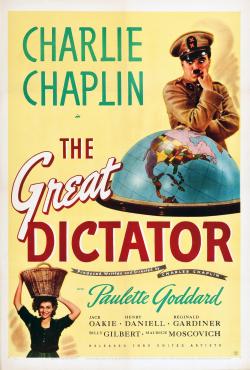
الديكتاتور العظيم

1941

R

2 h 5 m

الولايات المتحدة

كوميديا

دراما

War

عقب مرور 20 عاما على الحرب العالمية الأولى، يتمكن الديكتاتور هينكل من السيطرة على البلد، ويقرر التخلص من جميع اليهود، في نفس الوقت يخرج حلاق يهودي من المستشفى بعد أن فقد الذاكرة، ويحاول العيش في هدوء، لكن نتيجة للشبه الكبير بينه وبين هينكل يعتقد الجنود أنه هو الإمبراطور، ويحدث مفارقة حيث يتم القبض على هينكل لنفس الاعتقاد.
More

8.4 /10

257635 people rated

شاهد أونلاين

شاهد في التطبيق

الحلقات

أفضل الممثلين

تقييمات المستخدمين

الحلقات
أفضل الممثلين
تقييمات المستخدمين

الحلقات

film
lklk
Netflix
Plex
أفضل الممثلين(19)
starring avatar
Charles Chaplin
Hynkel - Dictator of Tomania
starring avatar
Charles Chaplin
A Jewish Barber
starring avatar
Paulette Goddard
Hannah
starring avatar
Jack Oakie
Napaloni - Dictator of Bacteria
starring avatar
Reginald Gardiner
Schultz
starring avatar
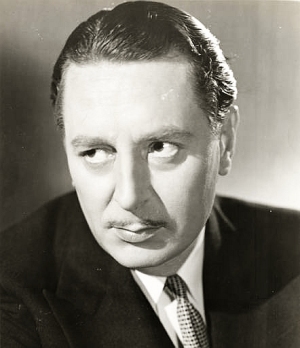
Henry Daniell
Garbitsch
starring avatar
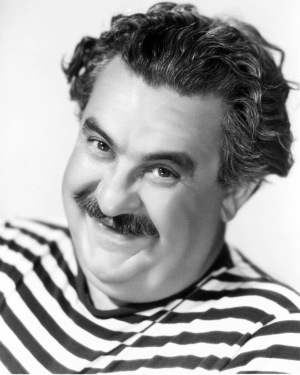
Billy Gilbert
Herring
starring avatar
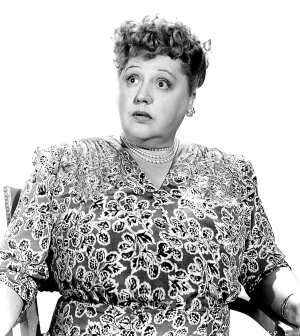
Grace Hayle
Madame Napaloni
starring avatar
Carter DeHaven
Bacterian Ambassador
starring avatar
Maurice Moscovitch
Mr. Jaeckel
starring avatar
Emma Dunn
Mrs. Jaeckel
starring avatar
Bernard Gorcey
Mr. Mann
starring avatar
Paul Weigel
Mr. Agar
starring avatar
Chester Conklin
Barber's Customer
default avatar
Esther Michelson
Jewish Woman
starring avatar
Hank Mann
Storm Trooper Stealing Fruit
default avatar
Florence Wright
Blonde Secretary
starring avatar
Eddie Gribbon
Tomanian Storm Trooper
starring avatar
Rudolph Anders
Tomanian Commandant at Osterlich

تقييمات المستخدمين

author avatar

Asampana

18/06/2025 15:19
The Great Dictator_360P
author avatar

KWgNed

28/01/2024 15:47
ETHIopia
author avatar

Lya prunelle 😍

29/05/2023 13:28
source: The Great Dictator
author avatar

leila Sucre d'or

23/05/2023 06:02
The Great Dictator is Chaplin's parody about the Nazi Germany with scenes that make you laugh no matter in what mood you are. Beside this ,from my point of view the movie's best part is the superb speech by the Jewish Barber ,a speech's thoughts that if would existed a little bit in Hitler's mind too it would had a chance for the world too pas a second world war. The Speech: "I'm sorry but I don't want to be an emperor. That's not my business. I don't want to rule or conquer anyone. I should like to help everyone: Jew, gentile, black man, white. We all want to help one another. Human beings are like that. We want to live by each other's happiness, not misery. We don't want to hate one another. In this world, the good earth is rich and can provide for everyone. The way of life can be free and beautiful but we have lost the way. Greed has poisoned men's souls, has barricaded the world with hate, has goose-stepped us into bloodshed. We have developed speed but have shut ourselves in. Machinery has left us in want. Our knowledge has made us cynical, our cleverness, hard and unkind. We think too much and feel too little. More than machinery we need humanity. More than cleverness we need kindness and gentleness. Without these qualities, life will be violent and all will be lost... The airplane and radio have brought us closer. These inventions cry out for the goodness in man, cry out for universal brotherhood, for the unity of us all. Even now my voice is reaching millions, millions of despairing men, women and children, victims of a system that makes men torture and imprison innocent people. To those who can hear me I say, do not despair. The misery upon us is but the passing of greed, the bitterness of men who fear the way of human progress. The hate of men will pass, and dictators die, and the power they took will return to the people. So long as men die liberty will never perish. Soldiers, don't give yourselves to brutes, men who despise you, enslave you, regiment your lives, tell you what to think and feel, who drill you, treat you like cattle and use you as cannon fodder. Don't give yourselves to these men, machine men with machine minds and machine hearts. You are not machines, you are not cattle, you are men! You have the love of humanity in you. Don't hate. Only the unloved and the unnatural hate. Soldiers, don't fight for slavery, fight for liberty! St Luke says, "The Kingdom of God is within man." Not in one man nor a group of men, but in all men. In you! You have the power to create machines, the power to create happiness. You have the power to make this life free and beautiful, to make this life a wonderful adventure. In the name of democracy, let us use that power. Let us all unite, let us fight for a new world, a world that will give men a chance to work, that will give youth a future and old age security. Promising these things, brutes have risen. But they lie! They do not fulfill that promise. They never will! Dictators free themselves but they enslave the people. Now let us fight to fulfill that promise! Let us fight to free the world, to do away with national barriers, to do away with greed, with hate and intolerance. Let us fight for a world of reason, a world where science and progress will lead to the happiness of all. Soldiers, in the name of democracy, let us unite!"
author avatar

Cyrille

23/05/2023 06:02
The tagline of 'The Great Dictator' is 'the comedy masterpiece', and I couldn't think of a better line to sum this film up. It's a hilarious political satire, but it also delivers a vitally important message. This film was released at the time when Hitler was at the height of his power and the main character, dictator Hynkel, is obviously a reference to him. Charlie Chaplin is simply outstanding in this film in what was his first spoken role. To play two completely different characters, Hynkel and the Jewish barber, so convincingly in the same film is truly remarkable. Chaplin's speech at the end, which is very much HIS speech even though he's playing a character, is a piece of cinema I will never forget. Such a powerful, moving and compelling speech that remains relevant even today. Making a comedy out of such a tragedy is risky business, but Chaplin's anti-fascist message ensured it wasn't taken the wrong way. 'The Great Dictator' is a hilarious but meaningful and powerful film. A brilliant piece of cinema.
author avatar

Patricia Lawela

23/05/2023 06:02
I find this film remarkable. Here you have a man at the peak of his celebrity who has some moral responsibility. How rare! Imagine Michael Jordan risking all (and eventually losing all) in order to do the right thing. This film is a multidimensional risk: he is trying to master the talkie (though his talent is in the visual), he is trying to mix tragedy and comedy (always a hard mix, and nearly impossible when using current events) and he is trying to actually effect his audience, to counter evil in the land. One must remember that when this was started, Hitler was generally admired in the US and essentially no one at all was standing up for the Jews. (In the film: `first we get the Jews, and then the brunettes.') I think he succeeds so far as the talkie, but he doesn't stand at the top of the heap, and several years before, the Marx brothers had made their own, superior, antiwar movie (Duck Soup). He succeeds in mixing comedy and tragedy only by alternating, and extending the length of the film. Concerning his effectiveness in countering evil: his impassioned speech at the end is powerful. But it appears to have had no effect whatsoever. This is the man that McCarthy and friends drove from the US! I think one of his mistakes was portraying the pogrom and invasions as the work of one man, rather than of a whole nation: Germans, not Nazis.
author avatar

Tariq azmi

23/05/2023 06:02
Here we have the inimitable Charlie Chaplin forsaking his slapstick past to tackle the serious subject of anti-Semitism, and intolerance in general. He portrays two characters - the sweet, innocent Jewish barber - a war veteran, and the raving and ruthless dictator, Adenoid Hynkel. The Jewish ghetto in this country is not safe for long, due to the whims of Hynkel and his armed thugs, who routinely rough up its residents, or leave them alone, dependent upon his mood that day or week. The barber is among them, but is befriended by his former commanding officer, Schultz (Reginald Gardner), who seems to keep things quiet for a while, until Hynkel condemns him to a concentration camp. He seeks refuge with the Jews in the ghetto, most specifically the barber, and the feisty young woman, Hannah (Paulette Goddard). The premise will be - who will be the one among these Jews to put their lives on the line to get rid of Hynkel and his cronies? We needn't guess too hard to know the answer; the barber is a dead ringer for the dictator, and he is outfitted in his image, accompanied by Schultz, also in full military gear. Hannah escapes with several of her ghetto friends to the country of Osterlich, where Mr Jaeckel's (Maurice Moscovich) cousin has a farm, and they can live peaceably for a while. At this point, Hynkel himself has been arrested by his armed forces, thinking him to be the notorious barber. The latter, meanwhile, has been escorted with Schultz to a podium, to make a speech announcing the conquest of Osterlich. The ensuing ten minutes is pure Chaplin himself, speaking from his heart of tolerance, love and freedom, and denigrating greed and hatred. Albeit Chaplin started production on the film in 1937, it can be forgiven some naivete. He was allegedly unaware of the gravity of this persecution and hatred, and said had he known the full extent, he would never have made the film, because he most likely believed it would have trivialized the situation. He has a marvelous supporting cast: Reginald Gardner, Henry Daniell as Garbitsch, his aide-de-camp, the always wonderful Billy Gilbert as the bumbling Herring, Paulette Goddard, Jack Oakie as the dictator Napaloni, his rival for conquest, veteran European actors David Gorcey (Leo's father), Maurice Moscovich, among others. The scene he choreographed with globe, with just a musical accompaniment is sheer, luminous inspiration, and luminous, as well, is Paulette Goddard at the film's end, smiling through her tears. I have seen this film before, but there is always something new in it for me. Last evening, when it finished, I sat there in tears. I defy anyone not to be moved by it.
author avatar

user378722817270

23/05/2023 06:02
This ingenious and innovate comedy packs many priceless moments and great sense of pace , though overlong . Chaplin's satire with several classic scenes , he has dual role as a Jewish barber and dictator Hynkel , an offensive portrayal of Hitler . Then the barber is mistaken for the Hitlerian tyrant and there happens bemusing events . Funny and extraordinary acting all around , as the stunning co-stars Jack Oakie as Napolini (Mussolini-alike) , Henry Daniel as Gasbstich (Himmler-alike) and Billy Gilbert as Herring (Goering) . Chaplin's first spoken film is brilliantly photographed by Karl Struss . This splendid film contains numerous amusing scenes , the funniest are the followings : 1) The one when during the WWI the barber-soldier along with a co-pilot are flying in a turned plane without to be aware 2) When Dictator Adenoid Hynkel tells overacting speeches , including a twisted microphone 3) Hynkel playing with an enormous world balloon 4) The Jew-barber shaving a man while fitting to Hungarian Dance : number 5 by Brahms 5) when Hynkel and Napolini each try to keep his body higher than other in a barber's chair , among them . Production on the movie started in 1937 and shot in 539 days when not nearly as many people believed Nazism was a menace , as was the case when it was released in 1940 ; however , this film was ultimately upstaged as the first anti-Nazi film satire . Hitler banned movie exhibition to the Germans due to its satire of him , and put him in his death list after his proposed conquest of America . The movie is co-starred by Paulette Goddard , third of his four wives , they were married in 1936 , although no announcement of the marriage was made later, one time finished The Great Dictator . The picture was released in 1940 , when Chaplin had survived a moral scandal by a paternity suit but a brush with the House of Un-American Activities was the signal for the USA to refuse him re-entry from Britain and he fled to Switzerland . This movie was Charles Chaplin's biggest-ever box-office hit , grossing about $5 million at the time.
author avatar

user1597547516656

23/05/2023 06:02
I'm not exactly a Chaplin fan, and perhaps that's part of why I didn't find The Great Dictator to be that good. The film feels too long to begin with. It's not a good thing when you sort of drift in and out of the film, suddenly realising that you weren't paying attention, and also realising that you didn't really miss anything. This almost always happened when the barber was on screen, rather than dictator Hynkel. I really didn't care for the melodramatic stuff, which is too much on the sappy side for my taste. The real joy of watching this movie comes from the crazed antics of Adenoid Hynkel. Things pick up pace every time he appears and Chaplin's satire take on Hitler is really good. In his scenes, the film lives up to its classic stature. The film feels very well made for its time, so I have no problem there either. The famous ending speech by Chaplin ruins a lot, though. It's all done with the best of intentions, but today it feels very naive and doesn't fit in with the rest of the movie. It's like Chaplin just ends the film with a propaganda speech, rather than to bring closure to the story. A more subtle approach towards getting out his message would have been much better. [4/10]
author avatar

Yassmin Issufo

23/05/2023 06:02
Since enough plot elements have been discussed in previous reviews, suffice it to say that although I enjoyed this legendary Chaplin film, it is by no means a masterpiece. It's slow in getting started and then becomes a series of heavy-handed vignettes about life in the ghetto contrasted with the life of The Great Dictator, giving Chaplin a chance to emote in high style as both the tramp-like Jewish barber and as Adenoid Hynkel. His funniest bits are of course whenever he does a brilliant piece of "silent" acting with gestures timed to the background music--notably in the barbershop scene where a nervous customer gets a close shave. Unfortunately, none of the dialogue is as brilliant as his use of pantomime. Indeed, there is a heavy handedness about much of the story's pace and direction. It almost seems as though Chaplin told his actors to play against his comedy by keeping a sober straight face uppermost in mind--watch how Henry Daniell and Reginald Gardiner play their parts with that stiff upper lip approach. An exception is Jack Oakie as Napaloni, doing a brilliant take-off on Mussolini. As a poor Jewish waif, Paulette Goddard shows all the vivaciousness that made her a star in subsequent films throughout the '40s. She adds warmth to all of her scenes with Chaplin. Some of the gags are carried on at too great a length, outlasting their comic value. And criticism can be made of some of the sequences played against fake scenery when obviously a good deal of money was spent on the main sets. The station scene featuring Napaloni's arrival is staged on an obviously fake studio set where the painted scenery stands out like a sore thumb. Jack Oakie got his only Supporting Role Oscar nomination for this one and Chaplin won a Best Actor nomination. Whatever the shortcomings, it does manage to keep afloat with some very amusing sequences. Chaplin deserves credit for even attempting such a satire--especially considering this was near the outbreak of the U.S. entry into war. His scene with the globe shows off his rare comic timing. A final note: the six minute speech at the end seems improbable coming from the timid Jewish barber and strikes a false note because it's so out of character. Obviously, Chaplin intended it to give the film a personal message of hope.
Disclaimer: All videos and pictures on MovieBox are from the Internet, and their copyrights belong to the original creators. We only provide webpage services and do not store, record, or upload any content.