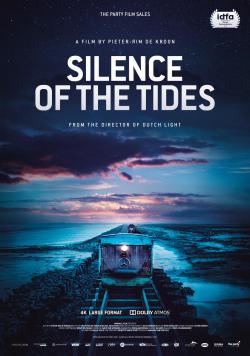
SILENCE OF THE TIDES is a cinematic portrait for international cinema about the Unesco World Heritage Site, the Wadden Sea, one of the largest wetlands, tidal and coastal systems in the world.
More
7.6 /10
329 people rated
Silence of the Tides
2021
R
1 h 42 m
Netherlands
فيلم وثائقي
SILENCE OF THE TIDES is a cinematic portrait for international cinema about the Unesco World Heritage Site, the Wadden Sea, one of the largest wetlands, tidal and coastal systems in the world.
More
7.6 /10
329 people rated
شاهد أونلاين
شاهد في التطبيق
الحلقات
أفضل الممثلين
تقييمات المستخدمين
الحلقات
أفضل الممثلين
تقييمات المستخدمين
الحلقات
film
lklk
Netflix
Plex
أفضل الممثلين(18)
Birgit Wildeman
Self - Organist
Johann Petersen
Self - Postman Hanni
Jan van Rees
Self - Vessel trafic operator
Freek Töpfer
Self - Fisherman cockels
Bote Teerling
Self - Fisherman cockels
Eva Kok
Self - Redknot rechearcher
Ezra Goudzwaard
Self - Yoga teacher
Alexandra Hector
Self - Pastor Pellworm
Jan Willem Bakker
Self - Sheep Farmer
Anton Bakker
Self - Tracktor driver
Sander Holthuijsen
Self - NIOZ rechearcher
Job ten Horn
Self - Redknot rechearcher
Angelica Kühn
Self - Bird ringer
Ralf Lukkien
Self - F16 Pilot
Jorgen Nommensen
Self - Lighthousekeeper Oland
Bianca Rasch
Self - NIOZ lab rechearcher
Lotte Sanders
Self - NIOZ rechearcher
Maria Schiffer
Self - Bird ringer
تقييمات المستخدمين
TACHA🔱🇳🇬🇬🇭
29/05/2023 07:32
source: Silence of the Tides
Sodi Ganesh
23/05/2023 03:26
Beautiful shots of many aspects of life inside and around the Wadden sea, a unique tidal area. Stunning cinematic vistas and a varied glimpse into the rural culture of the people living there.
Sometimes an almost meditative experience accompanied by droning organ music, highly recommended to see on the big screen.
Belle_by92🌺🌹❤️
23/05/2023 03:26
"Silence of the tides" is a documentary about the Wadden region. The Wadden region is a unique wedland, one of the biggest in the World. It consists of a Dutch, German and Danish part. I was well acquinted with the Dutch part because of many holidays spent in this region. It was nice to get to know the German and Danish part a little better.
The central word in this documetary is rythm. Rythm between ebb and flow. Rhytm between the seasons of the year. Rhytm between birth and death. With respect to the last we see the birth and slaughter of a lamb, but also a baptism and a funeral in a Church on a German Wadden island. This illustrates another aspect of the documentary, the balanced mix between nature, animals and humans.
So far I called the film a documentary. That would certainly have aggrieved the director. He tried his best to avoid characteristic documentary elements.
There is no voice over. The problem with a voice over is that different spectators have a different levels of knowledge about the subject. Also a voice over easiy becomes pedantic.
The cameraposition is static, there is no camera movement. Cameramovements, such as zooming in, focus attention on a specific area of the image. With a static camera it is up to the spectator on which area of the image to focus his / her attention. There are however beautiful time lapse montages to stress the difference between ebb and flow.
The horizon is placed in the upper part of the frame. The emphasis is on the capricious plains of the Wadden Sea. In his documentary "Dutch light" (2003), about (among other things) Dutch painters from the 17th century, director Pieter Rim de Kroon placed the horizon low in the frame to put emphasis on the sky.
Initially the film would also be without filmmusic, only natural sounds. Filmmusic would manipulate the emotions of the spectators too much. It is in this respect that de Kroon made some compromises. During the making of the film he met Birgit Wildeman, an organist from one of the German Wadden Islands. Eventually she made some music to capture the mood of the sea and the islands.
The film has no storyline, but with Birgit Wildeman it does have an anchorwoman. The other two anchormen are Johann Petersen as postman Hanni and Jan van Rees as the Dutch vessel traffic operator. Postman Hanni almost makes you believe you are watching a Bela Tarr movie.
Ahmed Elshaafi
23/05/2023 03:26
For me this movie gave a great peek into a part of the world to which I live close by, 'de Wadden'. I used to come to the Zeedijk (Sea Front) quite often when I was young, but never knew there was so much going on behind the Dykes.
Like I said, this movies gives us an intimate peek into the tides of the Wadden Sea and what the changing of the tides brings. Great time lapses I have never seen before and animals both below and above sea level were brought to us visually and audibly as never before in all their beauty. Nevertheless, I did not completely understand the *silence* in the movies title, as there were quite some upsetting images among most of the beauty and amazement the movie had to offer us.
Personally I could do without the cruelty that was shown and had expected more of a connection between one image and another, like a thread weaving all the separate images together if you will. It seemed to me more a summary of all that goes on and can be observed in this region, not much more.
Somehow I hoped for more of a connecting element or something, which is why I only give it 7 out of 10 stars.
🔹آلــفــــسْ ١🔹
23/05/2023 03:26
The most beautiful image of 2020. Nature as the main character in all its splendor and a bit of a human along with his/her everyday life.
<_JULES_>
20/02/2023 06:02
source: Silence of the Tides
Bad chatty ⚡️
20/02/2023 06:02
"Silence of the tides" is a documentary about the Wadden region. The Wadden region is a unique wedland, one of the biggest in the World. It consists of a Dutch, German and Danish part. I was well acquinted with the Dutch part because of many holidays spent in this region. It was nice to get to know the German and Danish part a little better.
The central word in this documetary is rythm. Rythm between ebb and flow. Rhytm between the seasons of the year. Rhytm between birth and death. With respect to the last we see the birth and slaughter of a lamb, but also a baptism and a funeral in a Church on a German Wadden island. This illustrates another aspect of the documentary, the balanced mix between nature, animals and humans.
So far I called the film a documentary. That would certainly have aggrieved the director. He tried his best to avoid characteristic documentary elements.
There is no voice over. The problem with a voice over is that different spectators have a different levels of knowledge about the subject. Also a voice over easiy becomes pedantic.
The cameraposition is static, there is no camera movement. Cameramovements, such as zooming in, focus attention on a specific area of the image. With a static camera it is up to the spectator on which area of the image to focus his / her attention. There are however beautiful time lapse montages to stress the difference between ebb and flow.
The horizon is placed in the upper part of the frame. The emphasis is on the capricious plains of the Wadden Sea. In his documentary "Dutch light" (2003), about (among other things) Dutch painters from the 17th century, director Pieter Rim de Kroon placed the horizon low in the frame to put emphasis on the sky.
Initially the film would also be without filmmusic, only natural sounds. Filmmusic would manipulate the emotions of the spectators too much. It is in this respect that de Kroon made some compromises. During the making of the film he met Birgit Wildeman, an organist from one of the German Wadden Islands. Eventually she made some music to capture the mood of the sea and the islands.
The film has no storyline, but with Birgit Wildeman it does have an anchorwoman. The other two anchormen are Johann Petersen as postman Hanni and Jan van Rees as the Dutch vessel traffic operator. Postman Hanni almost makes you believe you are watching a Bela Tarr movie.
Marki kelil
20/02/2023 06:02
Beautiful shots of many aspects of life inside and around the Wadden sea, a unique tidal area. Stunning cinematic vistas and a varied glimpse into the rural culture of the people living there.
Sometimes an almost meditative experience accompanied by droning organ music, highly recommended to see on the big screen.
Siku Nkhoma
20/02/2023 06:02
For me this movie gave a great peek into a part of the world to which I live close by, 'de Wadden'. I used to come to the Zeedijk (Sea Front) quite often when I was young, but never knew there was so much going on behind the Dykes.
Like I said, this movies gives us an intimate peek into the tides of the Wadden Sea and what the changing of the tides brings. Great time lapses I have never seen before and animals both below and above sea level were brought to us visually and audibly as never before in all their beauty. Nevertheless, I did not completely understand the *silence* in the movies title, as there were quite some upsetting images among most of the beauty and amazement the movie had to offer us.
Personally I could do without the cruelty that was shown and had expected more of a connection between one image and another, like a thread weaving all the separate images together if you will. It seemed to me more a summary of all that goes on and can be observed in this region, not much more.
Somehow I hoped for more of a connecting element or something, which is why I only give it 7 out of 10 stars.
MOHAMED 94
20/02/2023 06:02
The most beautiful image of 2020. Nature as the main character in all its splendor and a bit of a human along with his/her everyday life.
تقييمات المستخدمين
TACHA🔱🇳🇬🇬🇭
29/05/2023 07:32
source: Silence of the Tides
Sodi Ganesh
23/05/2023 03:26
Beautiful shots of many aspects of life inside and around the Wadden sea, a unique tidal area. Stunning cinematic vistas and a varied glimpse into the rural culture of the people living there.
Sometimes an almost meditative experience accompanied by droning organ music, highly recommended to see on the big screen.
Belle_by92🌺🌹❤️
23/05/2023 03:26
"Silence of the tides" is a documentary about the Wadden region. The Wadden region is a unique wedland, one of the biggest in the World. It consists of a Dutch, German and Danish part. I was well acquinted with the Dutch part because of many holidays spent in this region. It was nice to get to know the German and Danish part a little better.
The central word in this documetary is rythm. Rythm between ebb and flow. Rhytm between the seasons of the year. Rhytm between birth and death. With respect to the last we see the birth and slaughter of a lamb, but also a baptism and a funeral in a Church on a German Wadden island. This illustrates another aspect of the documentary, the balanced mix between nature, animals and humans.
So far I called the film a documentary. That would certainly have aggrieved the director. He tried his best to avoid characteristic documentary elements.
There is no voice over. The problem with a voice over is that different spectators have a different levels of knowledge about the subject. Also a voice over easiy becomes pedantic.
The cameraposition is static, there is no camera movement. Cameramovements, such as zooming in, focus attention on a specific area of the image. With a static camera it is up to the spectator on which area of the image to focus his / her attention. There are however beautiful time lapse montages to stress the difference between ebb and flow.
The horizon is placed in the upper part of the frame. The emphasis is on the capricious plains of the Wadden Sea. In his documentary "Dutch light" (2003), about (among other things) Dutch painters from the 17th century, director Pieter Rim de Kroon placed the horizon low in the frame to put emphasis on the sky.
Initially the film would also be without filmmusic, only natural sounds. Filmmusic would manipulate the emotions of the spectators too much. It is in this respect that de Kroon made some compromises. During the making of the film he met Birgit Wildeman, an organist from one of the German Wadden Islands. Eventually she made some music to capture the mood of the sea and the islands.
The film has no storyline, but with Birgit Wildeman it does have an anchorwoman. The other two anchormen are Johann Petersen as postman Hanni and Jan van Rees as the Dutch vessel traffic operator. Postman Hanni almost makes you believe you are watching a Bela Tarr movie.
Ahmed Elshaafi
23/05/2023 03:26
For me this movie gave a great peek into a part of the world to which I live close by, 'de Wadden'. I used to come to the Zeedijk (Sea Front) quite often when I was young, but never knew there was so much going on behind the Dykes.
Like I said, this movies gives us an intimate peek into the tides of the Wadden Sea and what the changing of the tides brings. Great time lapses I have never seen before and animals both below and above sea level were brought to us visually and audibly as never before in all their beauty. Nevertheless, I did not completely understand the *silence* in the movies title, as there were quite some upsetting images among most of the beauty and amazement the movie had to offer us.
Personally I could do without the cruelty that was shown and had expected more of a connection between one image and another, like a thread weaving all the separate images together if you will. It seemed to me more a summary of all that goes on and can be observed in this region, not much more.
Somehow I hoped for more of a connecting element or something, which is why I only give it 7 out of 10 stars.
🔹آلــفــــسْ ١🔹
23/05/2023 03:26
The most beautiful image of 2020. Nature as the main character in all its splendor and a bit of a human along with his/her everyday life.
<_JULES_>
20/02/2023 06:02
source: Silence of the Tides
Bad chatty ⚡️
20/02/2023 06:02
"Silence of the tides" is a documentary about the Wadden region. The Wadden region is a unique wedland, one of the biggest in the World. It consists of a Dutch, German and Danish part. I was well acquinted with the Dutch part because of many holidays spent in this region. It was nice to get to know the German and Danish part a little better.
The central word in this documetary is rythm. Rythm between ebb and flow. Rhytm between the seasons of the year. Rhytm between birth and death. With respect to the last we see the birth and slaughter of a lamb, but also a baptism and a funeral in a Church on a German Wadden island. This illustrates another aspect of the documentary, the balanced mix between nature, animals and humans.
So far I called the film a documentary. That would certainly have aggrieved the director. He tried his best to avoid characteristic documentary elements.
There is no voice over. The problem with a voice over is that different spectators have a different levels of knowledge about the subject. Also a voice over easiy becomes pedantic.
The cameraposition is static, there is no camera movement. Cameramovements, such as zooming in, focus attention on a specific area of the image. With a static camera it is up to the spectator on which area of the image to focus his / her attention. There are however beautiful time lapse montages to stress the difference between ebb and flow.
The horizon is placed in the upper part of the frame. The emphasis is on the capricious plains of the Wadden Sea. In his documentary "Dutch light" (2003), about (among other things) Dutch painters from the 17th century, director Pieter Rim de Kroon placed the horizon low in the frame to put emphasis on the sky.
Initially the film would also be without filmmusic, only natural sounds. Filmmusic would manipulate the emotions of the spectators too much. It is in this respect that de Kroon made some compromises. During the making of the film he met Birgit Wildeman, an organist from one of the German Wadden Islands. Eventually she made some music to capture the mood of the sea and the islands.
The film has no storyline, but with Birgit Wildeman it does have an anchorwoman. The other two anchormen are Johann Petersen as postman Hanni and Jan van Rees as the Dutch vessel traffic operator. Postman Hanni almost makes you believe you are watching a Bela Tarr movie.
Marki kelil
20/02/2023 06:02
Beautiful shots of many aspects of life inside and around the Wadden sea, a unique tidal area. Stunning cinematic vistas and a varied glimpse into the rural culture of the people living there.
Sometimes an almost meditative experience accompanied by droning organ music, highly recommended to see on the big screen.
Siku Nkhoma
20/02/2023 06:02
For me this movie gave a great peek into a part of the world to which I live close by, 'de Wadden'. I used to come to the Zeedijk (Sea Front) quite often when I was young, but never knew there was so much going on behind the Dykes.
Like I said, this movies gives us an intimate peek into the tides of the Wadden Sea and what the changing of the tides brings. Great time lapses I have never seen before and animals both below and above sea level were brought to us visually and audibly as never before in all their beauty. Nevertheless, I did not completely understand the *silence* in the movies title, as there were quite some upsetting images among most of the beauty and amazement the movie had to offer us.
Personally I could do without the cruelty that was shown and had expected more of a connection between one image and another, like a thread weaving all the separate images together if you will. It seemed to me more a summary of all that goes on and can be observed in this region, not much more.
Somehow I hoped for more of a connecting element or something, which is why I only give it 7 out of 10 stars.
MOHAMED 94
20/02/2023 06:02
The most beautiful image of 2020. Nature as the main character in all its splendor and a bit of a human along with his/her everyday life.
Disclaimer: All videos and pictures on MovieBox are from the Internet, and their copyrights belong to the original creators. We only provide webpage services and do not store, record, or upload any content.


 استمتع بأفلام وبرامج بلا حدود
 حمل ما تحب وشاهد بدون إنترنت
 واجهة بسيطة وأداء سلس




'%3e%3cpath%20id='Vector'%20d='M17.3996%2025.7999C17.3996%2025.9838%2017.3634%2026.1658%2017.293%2026.3357C17.2227%2026.5055%2017.1196%2026.6598%2016.9896%2026.7899C16.8596%2026.9199%2016.7052%2027.023%2016.5354%2027.0933C16.3655%2027.1637%2016.1835%2027.1999%2015.9996%2027.1999C15.8158%2027.1999%2015.6337%2027.1637%2015.4639%2027.0933C15.294%2027.023%2015.1397%2026.9199%2015.0097%2026.7899C14.8797%2026.6598%2014.7765%2026.5055%2014.7062%2026.3357C14.6358%2026.1658%2014.5996%2025.9838%2014.5996%2025.7999C14.5996%2025.4286%2014.7471%2025.0725%2015.0097%2024.81C15.2722%2024.5474%2015.6283%2024.3999%2015.9996%2024.3999C16.3709%2024.3999%2016.727%2024.5474%2016.9896%2024.81C17.2521%2025.0725%2017.3996%2025.4286%2017.3996%2025.7999Z'%20fill='white'/%3e%3cpath%20id='Union'%20fill-rule='evenodd'%20clip-rule='evenodd'%20d='M8.5%204H23.5C24.0523%204%2024.5%204.44772%2024.5%205V21.5H7.5V5C7.5%204.44772%207.94772%204%208.5%204ZM5.5%2022.5V5C5.5%203.34315%206.84315%202%208.5%202H23.5C25.1569%202%2026.5%203.34315%2026.5%205V22.5V27C26.5%2028.6569%2025.1569%2030%2023.5%2030H8.5C6.84315%2030%205.5%2028.6569%205.5%2027V22.5ZM24.5%2023.5V27C24.5%2027.5523%2024.0523%2028%2023.5%2028H8.5C7.94772%2028%207.5%2027.5523%207.5%2027V23.5H24.5Z'%20fill='white'/%3e%3cpath%20id='Union_2'%20fill-rule='evenodd'%20clip-rule='evenodd'%20d='M17%209C17%208.44772%2016.5523%208%2016%208C15.4477%208%2015%208.44772%2015%209V13.8258L13.1508%2012.2407C12.7315%2011.8813%2012.1002%2011.9299%2011.7408%2012.3492C11.3813%2012.7685%2011.4299%2013.3998%2011.8492%2013.7593L15.345%2016.7556C15.5205%2016.9079%2015.7495%2017%2016%2017C16.2506%2017%2016.4796%2016.9079%2016.6551%2016.7556L20.1508%2013.7593C20.5701%2013.3998%2020.6187%2012.7685%2020.2593%2012.3492C19.8999%2011.9299%2019.2686%2011.8813%2018.8492%2012.2407L17%2013.8258V9Z'%20fill='white'/%3e%3c/g%3e%3c/svg%3e)