moviebox header nav
moviebox search icon
muted

All Watched Over by Machines of Loving Grace

2011

R

المملكة المتحدة

فيلم وثائقي

A series of films about how humans have been colonized by the machines we have built. Although we don't realize it, the way we see everything in the world today is through the eyes of the computers.
More

8.3 /10

2320 people rated

شاهد أونلاين

شاهد في التطبيق

الحلقات

أفضل الممثلين

تقييمات المستخدمين

الحلقات
أفضل الممثلين
تقييمات المستخدمين

الحلقات

film
lklk
Netflix
Plex
أفضل الممثلين(19)
starring avatar
Adam Curtis
Self - Presenter
starring avatar
Adam Curtis
Self - Narrator
starring avatar
Stewart Brand
Self - Global Business Network
starring avatar
David Attenborough
Self
starring avatar
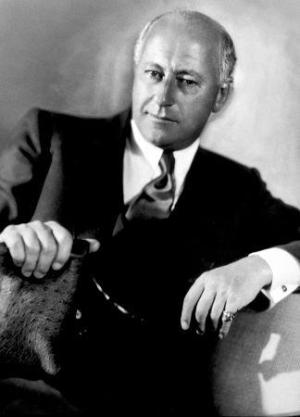
Cecil B. DeMille
Self
starring avatar
Monica Lewinsky
Self
default avatar
Dian Fossey
Self
starring avatar
Bill Clinton
Self
starring avatar
Al Gore
Self - Former Vice-President of the United States
starring avatar
Mike Wallace
Self
starring avatar
Ayn Rand
Self
starring avatar
Richard Dawkins
Self
starring avatar
Alan Greenspan
Self
starring avatar
Edward Teller
Self
starring avatar
Mobutu Sese Seko
Self
starring avatar
Loren Carpenter
Self
default avatar
Joseph Stiglitz
Self - Head of the Council of Economic Advisers 1995-1997
starring avatar
Patrice Lumumba
Self
starring avatar
Robin Day
Self

تقييمات المستخدمين

author avatar

Aminata

29/05/2023 15:22
source: All Watched Over by Machines of Loving Grace
author avatar

A.B II

22/11/2022 11:32
big ideas. At some point though, I began to feel that the narrator is manipulating information to conform to his conclusions. For instance, he attacks the global financial system and its architects, and portrays them as causing only suffering. But he leaves out the huge increase in global prosperity that has occurred over the last decades. He says that China kept its exchange rate artificially low, and used the trade surplus to lend back to the US instead of helping its own citizens. He leaves out that average Chinese citizen's income is maybe 7 to 10 times what it was 25 years ago. There's a story here and it's not all good or bad. The characters highlighted in the film are interesting and important - but the film misses an opportunity to reveal something more profound about the mysteries of our times - instead I think it leads viewers to simplistic conclusions that can perhaps be as damaging or more than Ayn Rand's philosophies.
author avatar

Mastewalwendesen

22/11/2022 11:32
Like other reviewers I feel that Curtis failed to tie all the events described in All Watched Over by Machines into a coherent hole. The documentary argues that ideological beliefs have a significant impact on historical and political outcomes, but looks like money has had a greater impact on historical events described than any set of ideological beliefs political influence and influential scientists may have ever had. Money and the movement of capital, in my opinion, had a greater impact on the Congolese civil wars and the Belgian occupation of Rwanda than any set of ideological beliefs. The documentary, in particular, highlights the ideological belief in Western science that humans are just biological automata whose behavior is entirely dictated and controlled by selfish genes that supply their minds with software-like instructions. I doubt that western ideologies such as Objectivism and the balance of nature theory - the idea that ecosystems are in a state of perpetual equilibrium - had as much of an impact on the 21st century than global capitalism. I also doubt that the tendency for western powers to impose their ideological beliefs and values upon other cultures can explain any of the things that happened at the start of the 21st century. And lastly, I think Adam Curtis fails to realize that the belief in the balance of nature theory, the gene-centered genetic determinism espoused by George Price, and the belief that both nature's and humanity's behavior is as easily predictable and quantifiable as the behavior of a human-built computer system are all attempts to avoid uncertainty. There are some historical that would have really helped support some of Curtis' themes if they were mentioned. For example, George Price's religious belief in gene-centered genetic determinism parallels a religious belief commonly found on wall street that financial markets are as predictable as computer simulations of the movement of sub-atomic particles. You can find a description of this belief in the following book: When Genius Failed: The Rise and Fall of Long-Term Capital Management. This documentary made me realize that humans hate uncertainty and that they will distort their perception of reality in order to avoid having to come to grips with the reality of the chaos and mayhem that regularly plagues human politics and the natural world.
author avatar

Djubi carimo

22/11/2022 11:32
I agree with a lot of what has been written about this documentary, but I think some people miss the point. The documentary starts out being almost a Terminator inspired sub-title "The rise of the machines" and describes all the evil machines, but at the end the conclusion is *we* are the machines, the our DNA is the program. Viewed in that light, computers are mere extensions of ourselves and in a way are an attempt to make the computational abilities of the brain more perfect. There are still many, many things the organic brain can do better than a computer, subtle things like social intelligence, body language, emotional intelligence. These are more difficult to encode in a computer because they don't follow the same rules as simply adding 1+1. It is clear evidence that we don't exactly understand the process ourselves, which is why we can't program it into a computer. As I watched this documentary, I was floored by the similarities to a audibook I was listening to by the Dalai Lahma which talked about altruism and how it fits into the selfish gene model. Obviously Dalai Lahma takes a very different view on altruism, believing that it represents a higher function of human existence that cannot be explained by Darwinian view of the selfish gene. This documentary takes the counter view that altruism is just another way of preserving the gene, but it stumbles a little bit by only giving altruistic examples where the individual sacrifices itself for the continuation of it's relatives or the destruction of non-relatives. What about altruistic acts which are for the benefit of non-relatives? There is no adequate scientific explanation for this, yet it happens continuously throughout history. Then again, perhaps it is just another form of insanity. In any case, this documentary is not about computers taking over the world, it is about the belief of HUMANS AS MACHINES and this BELIEF taking over the world. Curtis does not go back farther than Ayn Rand and the 1930s, but surely this idea started with Nietszche and Darwin. In fact then Rand said that Aristotle was the only philosopher that influenced her, I found that hard to believe, because her ideas sound very similar to Nietszche's. This struggle is often interpreted politically as right vs left, materialism vs idealism, capitalism vs socialism. When Curtis ventures into the realm of the online world, here too he stumbles, he attempts to show that "cyberspace" was developed to try and imitate the stable natural ecosystem, but in reality was extremely chaotic. Yes, the online world of blogs, email, texts and tweets can be a mess, but if you look at the growth of illegal downloading, this is surprisingly stable, coherent and efficient. This system of peer-to-peer downloading arose completely spontaneously, and has developed into an extremely reliable way of downloading content, which has built in self regulating processes. This is surprisingly similar to the way a natural ecosystem might develop, including the existence of viruses and anti-viruses. Even with all it's flaws, I can't help but be awe-struck by the Herculean and virtuosic editing techniques used by Curtis, and the unique and incredibly moving use of music to juxtapose against various images. It can be cliché to superimpose happy music over tragic images, but Curtis does it such a way that it just seems brilliant. It's like Tarantino meets David Attenborough meets Radiohead. I would be very surprised if Curtis chooses the music himself, it's hard to imagine someone with such a stuffy English accent could be so hip, but appearances can be deceiving. I highly encourage anyone seeing this to watch his other documentaries, they are all done in his trademark style, which is unique and, at least artistically, unmatched in the documentary world.
author avatar

Fena Gitu

22/11/2022 11:32
I generally watch documentaries based upon the topic or theme e.g. nuclear issues, language studies, ancient history, climate change and so on. Rarely do I watch one based upon the title only. This three-part examination of the relationship of computers to society is an exception: I was so intrigued by the title, having come from career of forty years in computers prior to my escape from corporate life, that I just had to see it. I wasn't disappointed. The writer/director (Adam Curtis) combines stock footage of computers, city and urban scenes, moody or discordant music, crowd scenes, famous people and a clever, cogent argument in an attempt to show the extent to which humanity has become entrapped by the IT revolution since the 1950s. It's a three part series and definitely worth every minute of your time. But, it's not only about computers... For starters, in Part 1, I could easily relate to Curtis's slant on the link between the extreme socio-economic philosophy of Ayn Rand that helped to influence Alan Greenspan's view of the world before and after various financial calamities, and up to the catastrophe of 2008. All of which was only possible – a crucially important fact – by pervasive, global computer technology used by greedy and opportunistic bankers, speculators and investors, all acting in their own self-interest. I can vouch for that, having been an insider with the online IT divisions of various banks in the UK and North America for fifteen years in the 1970s and 1980s. The standing joke in banks: you can't trust bankers. Wink, wink, nudge, nudge... Part 2 debunks the idea that nature is in equilibrium or seeks to find equilibrium. Instead, nature is in a constant state of flux and change, chaotic and unpredictable – and hence dangerous. (And, like it or not, humanity is part of nature.) This should be obvious – think of daily weather patterns globally. Curtis here links the emerging social networks as analogous to the chaos of nature which, coupled with our cancerous over-dependency upon computer technology, can only result in more unpredictability, uncertainty and opportunity for disaster. It's more than likely, I think, that Curtis is correct. To what extent, ultimately, is obviously opaque. Part 3 finishes the job in a somewhat elliptical fashion: you must follow the logic closely as we are introduced to an eminent scientist, William D. Hamilton and a brilliant mathematical genius, George R. Price. They argued that the real culprit in our chaotic existence is The Selfish Gene, a description that is now the title of Richard Dawkins's book that made him famous globally (It's an interesting, persuasive book and worth reading.) Humanity is then characterized as "soft" computer driven automata, explicitly removing the possibility of any spiritual or divine influence in human affairs. I can live with that, having decided long ago that we are all but organic machines with brains far, far superior to those "brains" of digital computers – thankfully. And the conclusion that crystallizes the essence of altruism – Ayn Rand's mortal enemy – is a tour de force of ironic tragedy. Graphically horrific images from recent depravities in Africa are interwoven to illustrate and prove the case; but it would totally spoil the finale to say anymore. Perhaps the editing of the series and some jump cutting are a mite fast at times; and the sound appears to fade occasionally. Apart from that, I highly recommend investing the three hours. Is Curtis showing us heaven on earth? See the movie. You be the judge. November 2011.
author avatar

user1674643873044

22/11/2022 11:32
Adam Curtis' recent documentary series disappointed some. Compared to his work on The Century Of The Self and The Power Of Nightmares, it seemed hodge podge, lacking a central framework idea and bouncing all over the place. After twenty minutes of the first episode, I may have been inclined to agree – the documentary seemed to lack focus and carried over the experimental mix of music and image that had been used so successfully for the interactive theatre piece "It Felt Like A Kiss". However, having seen the full piece, I now beg to differ. If anything, the series is a broader and more satisfying development of areas touched on in his previous pieces, particularly Century Of The Self. As with Curtis' other work, it explores the far reaching and (for the most part) unintended consequences of big ideas. In this case, the idea that nature can be explained and entertainingly presents a series of case studies to explore whether this idea is flawed or not. Unlike his previous pieces, the period under discussion is very recent and the ideas explored so varied that each episode does not really follow a linear timeline and the debates bounce from the 1950s to the 1990s to the 1960s to the present day. This is a powerful and thought provoking piece, Curtis never comes across to me as polemical and seems happier drawing your attention that things may not be quite as they seem rather than hitting you over the head as he proves everything you know is wrong. Everything you know isn't necessarily wrong but it may be that you aren't fully informed of all the facts. The opening sequence may be the the weakest of the series, linking Ayn Rand's ideas of Objectivism to the development of moden computing. However, clever dick that Curtis is, it only becomes apparent with the patience to sit through this that the central character isn't Rand at all but a member of her social circle, Alan Greenspan – who, as chairman of the US Federal Reserve became, through a series of unforeseen events, the most powerful man in the world for a brief period. The subsequent rattle through the economic crises in the Far East in the 90's and the knock on effect to the current economic crisis in the West (and China's part in it) is eye opening to say the least. And it goes on, finding short degrees of separation from a multitude of players on the world stage, linked by the rise and consequences of ideas relating to systems. The second episode then explores the theory of self organising networks through cybernetics, eco politics, the geodesic dome, the 60s counterculture, maximum population growth to the Facebook/Twitter revolutions of the 2000s. I was especially impressed with the final episode exploring the theory of the selfish gene, moving from the initial theory through Anglo- American intervention in the Congo, myths on the origins of the AIDS virus, the Belgians role in the genocide of Rwanda through Richard Dawkins and Dian Fossey. Fascinating stuff and well worth three hours of anyone's time.
author avatar

Zinnadene Zwartz

22/11/2022 11:32
This miniseries claims to be about machines and how our use of them and misinterpretation of them has not led to the positive results we'd expected. And of course this is true. I majored in Computer Science, and yet my experiences in the "real world" developing and testing computer software have left me wondering whether this is what we, or at least I, ought to be doing, because it doesn't seem to be making anything better, and I can count the lives made worse by the software I worked on (working correctly). So I was perhaps one of the ideal viewers of this program. However, it doesn't seem to really get into the connection between computers and other machines, and the problems we've let them cause. Instead, he takes human failings, and notices that computers don't fix them, and then blames the computers and the thinking that led to them, for the original human problems. He also doesn't seem to give any credit for humans who correct past errors in thinking, which is a function of philosophy and science. The show seems to come off as fuzzily religious. The "villains" famous enough to already be known to the audience tend to be either atheist or frequent targets of religious fanatics. They are made guilty by association with genocide. It's a not-so-subtle propaganda, with the living accused not given any time to respond. Let me just say that the people who carried out the genocide carry the blame themselves. They believed foreigners who told them they were two separate people, despite their own history. They then decided it was OK to wipe each other out. Even if this idea of genocide came from the Belgians, which is unclear to me, they still accepted it and carried it out. That is their own doing, and is on them, nobody else. I've given this a score as high as 6 because I did find the stories of Ayn Rand and Africa to be interesting, aside from the rest of the content. I'll probably seek out more reliable sources to follow up on that information.
author avatar

FAHAPicturesHD

22/11/2022 11:32
I am a fan or Mr. Curtis' previous work but this documentary series was a disappointment for me. The thing I dislike the most is the biased and simple opinion on computers this documentary tries to promote. Apparently "computers" are powerful things that dehumanize our world, we put our faith in computers and they have failed us, completely ignoring the fact that computers are human made, human programmed and human controlled in every aspects. I expected a much more complex and realistic dissection of the topic. This idea is also poorly presented and motivated, for example when briefly talking about the internet, we are presented with the negative opinion of an early internet user, the scene is made in such a way as to suggest that indeed the internet is what that distressed user says. Similar to the cheap techniques a News program would use to influence the public opinion. Throughout the documentary I had the feeling that too much emphasis is put on the soundtrack and on the synchronizing of suggestive footage with music rather than actual relevant content and information. To summarize, "All Watched Over by Machines of Loving Grace" is tendentious, the idea presented is overly simplified and biased. It gave me the impression it was a bad propaganda movie against computers.
author avatar

Nunkwin

22/11/2022 11:32
ALL WATCHED OVER MY MACHINES OF LOVING GRACE is a documentary purporting to explain the negative impact of computers and computer thinking on our society. But as this is Adam Curtis making it the result is a documentary that ranges from gorillas in the Congo to Ayn Rand rather than taking a straight A-Z. Unfortunately, in common with much of his other work, despite the sheer breadth of material covered and Curtis's undoubted skills in melding image and music, the actual argument is extremely dubious, poorly argued, lacking in evidence and frequently incoherent. Instead the documentary relies on Curtis's soothing tones (he does the v/o) and constant changes in ideas, music and images, in order to bamboozle the audience. This method of constant change prevents you thinking clearly as your attention is always being called to something else. Once the programme stops and you begin to think about it without the benefit of music, image and voice, you realise just how dodgy the whole argument is. My other usual problem is that, whenever Mr Curtis touches on a subject with which I am familiar, I usually discover he is wrong or at least generalising to a dangerous degree. Thus the entire section on the decolonisation of the Congo basically blames the Belgians and more generally the West for the near immediate collapse of that unhappy country. There is no hint that the inhabitants of the Congo could even think or act for themselves. Curtis paints a picture of local tribes living in perfect pre-European harmony (conveniently forgetting the original inhabitants of the Congo - the pygmies) that is at odds with reality. There are a large number of similar errors. My worry is that, if Curtis is so often wrong when he talks about things that I know well, then is he also wrong about the things I don't know well? The sad thing is that every poor Adam Curtis documentary is an opportunity lost. The BBC has frankly given up on even trying to make documentaries on such complex subjects (even BBC4 is more arts than intellect). And nobody else has access to such a great amount of archive or the funds to really sift through it (hence why you always see the same archive on documentaries).
author avatar

abida.mussaa

22/11/2022 11:32
Bombarded with images, sounds, and ideas that at times overgeneralizes and in other instances create bizarre connections, Curtis's documentary is deceptive, its true purpose buried in impressive editing and storytelling. This documentary is not actually a documentary, but is a story about how stories take on lives of their own and infect the imaginations of many human beings, especially those whose influence on the world makes the infections all the more dangerous. Flitting from idea to idea, Curtis weaves a narrative by linking somewhat disparate topics and attempts to convince us, the viewers, that his story is true. The world has been manipulated by an elite via computer networks. The idea of a balance in nature contributes to our misguided attempts at understanding nature. We become machines ourselves in the subjugation and erroneous divisions of colonized territories. But ah, these are just stories. Be careful of stories and ideas, Curtis warns, for they have a habit of dictating reality. In presenting us a somewhat plausible explanation of various events in recent history, he presents a story that may or may not be wholly factual, but satisfies that conspiracy theorist lurking underneath us all. The possibility of us accepting a "story" for "fact" is perhaps the essential point of this documentary. So when viewing All Watched Over, be mindful of that you are watching is simply a narrative about how narratives, if taken too religiously, could have terrible consequences.
Disclaimer: All videos and pictures on MovieBox are from the Internet, and their copyrights belong to the original creators. We only provide webpage services and do not store, record, or upload any content.